
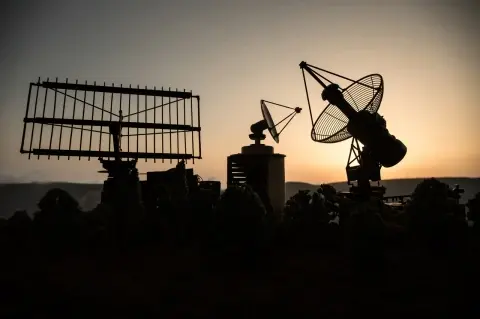
European Sky Shield Initiative | Capacities, Criticisms, and Türkiye’s Contribution

European Sky Shield Initiative | Capacities, Criticisms, and Türkiye’s Contribution

The European Sky Shield Initiative (ESSI), spearheaded by Germany, emerged in response to escalating missile threats, particularly from Russia, following Moscow’s aggressive actions in Ukraine
Share:
File
(2.12 M)
Browse

The European Sky Shield Initiative (ESSI), spearheaded by Germany, emerged in response to escalating missile threats, particularly from Russia, following Moscow’s aggressive actions in Ukraine. ESSI’s central objective is to establish a unified, ground-based air and missile defense system across Europe to bolster collective security. Proposed by Chancellor Olaf Scholz in 2022, the initiative now includes 21 member countries, including recent entrants like Türkiye and Greece. ESSI is designed to enhance NATO’s air defense capabilities through the deployment of multi-layered systems capable of addressing both short and long-range missile threats. However, the initiative must navigate several strategic, technical, and political challenges to achieve its full operational potential and effectively counter emerging threats, particularly Russia’s advanced missile systems like the Iskander and Kinzhal.

Türkiye’s accession to ESSI in February 2024 significantly strengthens the initiative, given its strategic geographic location and advanced air defense capabilities. Over the past decade, Türkiye has made substantial investments in developing indigenous air defense systems, including the HİSAR and SİPER projects, which address short to long-range missile threats. These systems, which leverage domestic technology and innovation, fill critical gaps in ESSI, particularly in the area of short-range defense, a key necessity for many member countries. Türkiye’s longstanding experience in managing complex security environments on its borders, combined with its sophisticated air defense infrastructure, positions it as a valuable contributor to the initiative. However, its historically delicate relations with Russia introduce a layer of complexity to its role within ESSI, especially given its balanced stance in the Russia-Ukraine conflict.

Despite the promise of ESSI, it faces critiques from within Europe, particularly from France, which argues that the initiative overly relies on non-European defense systems, thereby undermining the continent’s strategic autonomy. The lack of a coherent, integrated strategy across member states, coupled with varying system requirements, has also been identified as a significant obstacle to ESSI’s success. Moreover, political challenges, including the management of leadership and coordination within the initiative, require careful handling to ensure its effectiveness. While ESSI represents a major step forward in strengthening Europe’s air defense, these challenges must be addressed to ensure the initiative delivers on its promise of enhanced collective security.

#German Chancellor#Olaf Scholz#NATO Secretary General#Australia U.K. and U.S. Security Pact (AUKUS)#Permanent Structured Cooperation (PESCO)#German Council on Foreign Relations (DGAP)#German Institute for International and Security Affairs (SWP)#NATO Support and Procurement Agency (NSPA)#China Precision Machinery Import-Export Corporation (CPMIEC)#Shephard News Team#Kommersant Newspaper#TASS Russian News Agency#Next Web#American Presidency Project#U.S. Presidency Project#U.S. Department of State#U.S. Army Center of Military History#Bundesministerium der Finanzen#Bundesministerium der Verteidigung#Switzerland Federal Administration#Radio Free Europe Radio Liberty#Global Voices#Sputnik TR#Euronews#Anadolu Ajansı#TRT Haber#Yeni Şafak#Hurriyet Daily News#Milliyet#Savunma SanayiST#Defence Turkey#Space Daily#Express#Bloomberg#Politico#Times of Israel#Washington Post#Whilby Gazette#RAND Corporation#Center for Strategic and International Studies (CSIS)#Missile Defense Advocacy#Army Recognition#Shephard Media#Defense Post#Spectator#Jerusalem Post#Guardian#Breaking Defense#Defense News#Al Jazeera#Reuters#BBC#Anadolu Agency#European Council on Foreign Relations (ECFR)#IFO Institute#Stockholm International Peace Research Institute (SIPRI)#Russia Tactical Missiles Corporation#Defense Advanced Research Projects Agency (DARPA)#U.S. Missile Defense Agency#U.S. Department of Defense#Weibel Scientific#Terma#Rosoboronexport#Israel Aerospace Industries (IAI)#Rafael Advanced Defense Systems#Thales#Kongsberg Defence & Aerospace#Rheinmetall#Diehl Defence#Eurosam#MBDA#Lockheed Martin#Raytheon#TÜBİTAK SAGE#Roketsan#Aselsan#NATO#European Union (EU)#Aspide#Sparrow#Rapier#Oerlikon Skyguard#Oerlikon GDF#MANTIS#Skyranger 30#SPYDER#Barak MX#David’s Sling#I-HAWK#ZIPKIN#ATILGAN#Sungur/PorSav#Korkut KKA#Korkut SSA#Çelik Kubbe (Steel Dome)#SİPER#HİSAR-O#HİSAR-A#Taktisches Luftverteidigungssystem (TLVS)#Medium Extended Air Defense System (MEADS)#Terminal High Altitude Area Defense (THAAD)#Arrow 3#IRIS-T SLM#National Advanced Surface-to-Air Missile System (NASAMS)#SAMP/T#S-300#S-400#Patriot Advanced Capability (PAC)#European Sky Shield Initiative (ESSI)#Türkiye#Germany#Russia#Ukraine#Belgium#Greece#France#Italy#Poland#Slovakia#Slovenia#Czech Republic#Denmark#Estonia#Latvia#Lithuania#Finland#Norway#Sweden#Austria#Switzerland#Romania#Bulgaria#Hungary#Netherlands#Israel#China#Iran#Iraq#Syria#Belarus#Australia#Saudi Arabia#Qatar#South Korea#United Kingdom (UK)#United States (US)#Vladimir Putin#Russian President#Recep Tayyip Erdoğan#Turkish President#Jens Stoltenberg#Emmanuel Macron#French President#Boris Pistorius#German Defense Minister#Christine Lambrecht#Former German Defense Minister#Sergey Chemezov#CEO of Rostech#Yoav Gallant#Israeli Defense Minister#Alexander Lukashenko#Belarusian President#Wladyslaw Kosiniak-Kamysz#Polish Defense Minister#Robert Kalinak#Slovakian Defense Minister#Haluk Görgün#President of Turkish Defense Industry Agency#İsmail Demir#Head of Turkish Defense Industry#Boris Viktorovich Obnosov#CEO of Tactical Missiles Corporation#PDF#SETA PDF
Share:
RELATED PUBLICATIONS