Situation Overview: Controlled Succession and Regionalized Conflict
On Day 2, the conflict has moved into a phase of sustained high-intensity engagement characterized by a surprisingly orderly Iranian succession and a deliberate expansion of the theater of operations. Contrary to initial expectations of internal collapse, the Iranian state has maintained institutional coherence despite the confirmed loss of its top leadership.
The operational and political picture for Day 2 indicates the following:
- Confirmed Succession and Institutional Stability: Iran has officially announced the death of Supreme Leader Ayatollah Ali Khamenei. To prevent a power vacuum, a Temporary Leadership Council has been activated. This body has assumed the power and duties of the late Supreme Leader Ali Khamenei, signaling that the clerical and security apparatus remains functional and has avoided the anticipated domestic chaos. The next Supreme Leader will be elected by the Assembly of Experts as soon as possible.
- Decapitation Salvo and Command Attrition: It has become evident that US-Israel’s “Day One” chain of targeted killings was devastatingly effective. Reports suggest that almost the entire initial list of the Iranian command structure was killed in a massive, synchronized salvo. This “decapitation strike” forced the Iranian leadership to immediately appoint new operational commanders to maintain the war effort.
- Target Evolution and Regionalization of Conflict: Iran has moved to a strategy of simultaneous regional escalation. By launching coordinated strikes against multiple Gulf countries simultaneously, Tehran is attempting to break the U.S. regional military ecosystem. This is no longer a bilateral exchange between Israel and Iran, but a broad assault on the Gulf security architecture intended to make the cost of hosting U.S. assets unbearable for Arab capitals. On the other hand, Iran’s retaliatory tempo against Israel appears to be having a devastating effect.
- Diplomatic Re-emergence: Despite the kinetic intensity, there are early signs of a potential return to diplomatic negotiations. President Trump announced that the Iran’s new leadership wants to talk with him and that he plans to do so. Third-party mediators, specifically through the Oman channel, have signaled that both the U.S. and the new Iranian transitionary body may be looking for an “off-ramp” to prevent a total regional conflagration, provided certain “survival” conditions are met. However, Ali Larijani, Secretary of Iran’s Supreme National Security Council, rejected claims of negotiations and stated that they would continue the war. Thus, the prospect that the conflict will not de-escalate in the short term has gained further strength.
Military Assessment: Kinetic Expansion and Economic Chokeholds
On Day 2, the military logic has shifted from a “limited strike” framework to a total theater engagement. The Iranian military response, despite the decapitation of its top-tier command, has demonstrated a high degree of pre-planned autonomy, focusing on the global economic stakes of the conflict. While the Iranian military response has focused on global economic stakes and regionalized retaliation, Israel has responded by intensifying its campaign to achieve absolute air superiority and the systematic dismantlement of the remaining Iranian state apparatus.
a. Iranian Offensive: Theater Expansion and Maritime Denial
Iran’s military response is no longer merely retaliatory; it is a calculated attempt to dismantle the regional security and economic order. Despite the decapitation of its top-tier command, the Iranian military response has demonstrated a high degree of pre-planned autonomy by activating a Decentralized Offence to maximize global economic pain and domestic pressure within Israel. Utilizing autonomous provincial units, the IRGC has launched a sophisticated offense package designed to saturate and penetrate multi-layered air defense systems. According to the different open sources and numerous video footages in social media platforms, the Day-2 phase of military salvo utilized a diverse array of platforms. Iran’s “War of Salvos” relies on a mix of high-end precision and low-cost saturation. Despite U.S.-Israeli claims of destroying over 200 launchers, Tehran maintains a “vast quantity of munitions” hidden in underground “missile cities.”
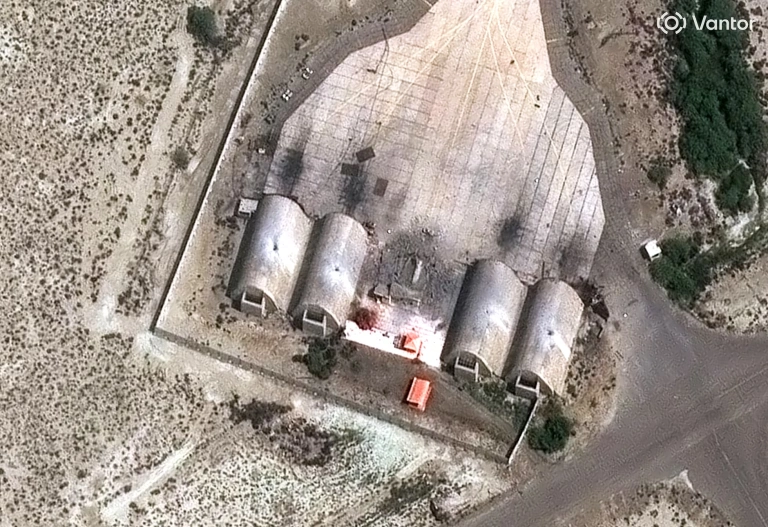
Photo 1: Satellite image distributed by Vantor showing precision strikes on aircraft shelters at Konarak Air Base in Iran this https://english.elpais.com/international/2026-03-02/the-key-to-irans-military-response-missile-cities-hidden-inside-the-mountains.html
Iran deployed Fattah-1 and missiles and Ghadr-H medium-range ballistic missiles to target high-value Israeli sites. Unlike traditional ballistic missiles, a hypersonic glide vehicle can manoeuvre unpredictably during flight, making it far more difficult to intercept. Compared to Day 1, these salvos prioritized velocity to bypass the Iron Dome and Arrow batteries. It is also claimed that Iran used very first time Fattah-2 Hypersonic Missiles to attack US Bases in the Middle East. Like 12-day war in last June, hundreds of Shahed-136 drones were used as “kinetic decoys” to exhaust interceptor inventories before the arrival of the ballistic waves. The retaliatory tempo has had a devastating effect on the Israeli side. For the first time, a high volume of munitions breached defenses in central Israel, with and further fatalities reported in the Tel Aviv area from shrapnel and direct hits. The IRGC claims to have successfully struck the Tel Nof Airbase and the HaKirya command headquarters in Tel Aviv.
In terms of the economic warfare and maritime + aviation denial, Iran has transitioned to a strategy of total economic externalization, aiming to make the global cost of the U.S.-Israeli campaign unsustainable. On Day 2 of the conflict, the IRGC has operationalized its long-standing “chokehold” doctrine, transitioning from rhetorical threats to a kinetic blockade. This move is designed to internationalize the conflict by leveraging global energy dependence as a counter-weight to U.S.-Israeli military superiority. According to the EU Naval Mission (Aspides) and the UK Maritime Trade Operations (UKMTO), IRGC naval forces began broadcasting urgent VHF radio messages to all commercial vessels on March 1, 2026, stating: “No ship is allowed to pass the Strait of Hormuz. While Iranian state-affiliated outlets like Tasnim and Al Mayadeen have confirmed the blockade, the official government in Tehran (now under a transitional leadership council) has stopped short of a formal, legally binding closure. This creates a “gray zone” that triggers massive insurance hikes and voluntary shipping suspensions without a formal declaration of war against neutral states.
Iran’s policy aims to trigger a Global Stagflation Shock to force Western populations to pressure their governments for a ceasefire. he closure has sent Brent crude oil prices gapping upward. Analysts from Rystad Energy and Goldman Sachs warn that a sustained blockade will push prices toward the $120-$130 per barrel range.
On Day 2, the Iranian military response has achieved a systemic shutdown of the Middle Eastern aviation corridor. By utilizing a high-volume salvo tempo of loitering munitions and ballistic missiles, Tehran has effectively transformed the region’s busiest transit hubs into active combat zones, triggering the largest aviation disruption since the COVID-19 pandemic. The persistent threat from Iranian missile and drone waves has forced a near-total suspension of operations across the Gulf’s “Big Three” transit points (Dubai, Abu Dhabi, and Doha). As the world’s busiest international hub, DXB has suspended all operations following direct impacts. In Abu Dhabi, Etihad Airways suspended every outbound flight through March 1, 2026. Qatar Airways suspended all flights as Qatari airspace was declared closed. Reports indicate that over 3,400 flights were cancelled across the seven primary Middle Eastern airports (DXB, DOH, AUH, SHJ, KWI, BAH, DWC) in a single 24-hour period. In addition to that, major global carriers have suspended all services to the Gulf hubs until at least March 4-8, 2026. Iran’s has successfully transformed the Gulf from a global crossroads into a kinetic no-go zone. By targeting the safety of civil aviation, the Iranian transitionary body is demonstrating that the "cost of war" is not just a military calculation, but a total disruption of the globalized economy.
By expanding the target list to nine countries, Iran is attempting to overwhelm the regional “Integrated Air and Missile Defense” (IAMD) architecture and prove that no U.S. partner is a safe haven. Iranian missile units have maintained high operational tempo through Mosaic Defense, a doctrine where operate autonomously. This “distributed lethality” allowed for simultaneous strikes on, even while the central command in Tehran remained under bombardment. As of March 2, 2026, Iran and its proxies have launched direct strikes or attempted incursions against nine separate countries and maritime zones. On the second day of the conflict, the UAE has emerged as the most heavily targeted nation in the Gulf. This intensity reflects a deliberate Iranian strategy to punish the UAE for its role as a primary host of U.S. military assets and its deep integration into the regional “Abrahamic” security. According to official reports from the UAE Ministry of Defense and the Emirates News Agency (WAM), the UAE Armed Forces have faced a massive, multi-wave assault since the onset of the strike on Iran.
|
Category |
Total Detected |
Successfully Intercepted |
Failed / Fell into Sea |
Impacts / Landed in Territory |
Key Interception Systems |
|
Ballistic Missiles |
137 |
132 |
5 (Sea) |
0 (Direct Hits) |
THAAD / Patriot PAC-3 |
|
Drones (UAVs) |
209 |
195 |
0 |
14 |
Pantsir-S1 / Mirage 2000-9 |
|
Total Projectiles |
346 |
327 (94.5% rate) |
5 |
14 |
Integrated Air Defense |
Table 1: Iranian Offensive Operations Against the UAE (Day 1 & 2)
|
Country |
Key Locations Targeted |
Reported Impact / Casualties |
|
Israel |
Tel Aviv, Beit Shemesh, Haifa Oil Refinery, Tel Nof Airbase. |
9+ fatalities in Beit Shemesh; widespread structural damage in Tel Aviv; population in shelters for 48+ hours. |
|
United Arab Emirates |
Dubai (DXB) Airport, Al Dhafra Air Base, Fairmont The Palm, Burj Al Arab. |
1 fatality (Asian national) in Abu Dhabi; 4 injuries at DXB; total aviation paralysis. |
|
Bahrain |
U.S. 5th Fleet HQ (Manama), Crowne Plaza Hotel, residential towers. |
Direct hit on Navy service center; fires in residential areas; high-level sovereignty protest. |
|
Qatar |
Al Udeid Air Base, Hamad International Airport, early warning radar. |
Multiple interceptions; 46+ missiles detected; civilian airport operations suspended. |
|
Kuwait |
Kuwait International Airport, Ali Al-Salem Air Base. |
Minor injuries at airport terminal; reports of US warplanes crashing (unconfirmed). |
|
Saudi Arabia |
Riyadh Region, Eastern Province, Prince Sultan Air Base. |
Interceptions reported; MBS authorized full military response if attacks continue. |
|
Jordan |
Muwaffaq Salti Air Base, Amman and Irbid. |
Debris/shrapnel fell in residential areas; Jordan actively intercepted projectiles over its airspace. |
|
Iraq |
Al-Harir (Erbil) and Ain al-Asad bases. |
Combined direct IRGC hits and 16+ operations by pro-Iran militias. |
|
Oman |
Duqm Port, Oil Tanker "Skylight." |
1 injury at port; 4 crew members injured on "Skylight" tanker; maritime traffic warned to avoid the area. |
Table 2: Day 2 Iranian offensive salvo
b. Israel’s Offensive Salvo
Day-2 reporting suggests a transition from initial air-defense suppression towards operational exploitation of reduced Iranian air-space contestation. Israeli officials announced late on February 28 that their forces were operating with a high degree of freedom over Tehran, directly. While independent confirmation of full air superiority remains limited, the volume and geographic spread of follow-on strikes indicate significantly degraded Iranian air-defense effectiveness.
If sustained, this pattern would imply that the Day One focus on A2/AD systems and long-range strike capabilities has produced an exploitable degree of air-control over western and central Iran, allowing joint forces to expand the target set and kill-chain beyond high-value strategic assets.
Operational Shift
With the reduced air-defense pressure, Day Two activity suggest that joint campaign is moving further down the operation kill chain- Reporting indicates a broader target logic encompassing:
- Secondary Military Infrastructure
- Internal Security and Regime Protection Institutions
- Command Facilities outside the immediate core
- State information and control architecture
This shift reflects a move from capability denial toward regime change pressure through systemic disruption of state institutions.
A disciplined classification suggests three operational baskets:
Residual military infrastructure: Strikes were reported against multiple airfields, bases, and logistical facilities across western and central Iran, including sites in Isfahan, Kermanshah, Mashhad, Tabriz, and Tehran. The geographic dispersion suggests an effort to reduce operational depth, complicate force redistribution, and deny the regime safe rear areas.
Internal Security and Regime Control Apparatus: Reported Strikes on facilities linked to the internal coercive system, including police special forces and headquarters, border guard command centers, the Tehran Revolutionary Court, and the IRIB Headquarters, indicate a shift toward degrading the regime’s domestic control architecture. While these targets hold limited conventional military value, their operation logic lies in disrupting internal coordination, increasing the regime’s uncertainty, and raising the perceived cost of internal repression during crisis conditions.
Command and regime protection nodes: Strikes on Tharallah Headquarters and internal security general staff elements suggest continued, though lower-intensity, pressure on regime protection command structures, consistent with a broader strategy of cumulative leadership and control stress.
Reports suggest that during March 1st, Israel and the United States targeted the following facilities: Military Facilities (8 Facilities): Konarak Air and Naval Base (Konarak), Zahedan Airbase (Zehedan), Isfahan Airfield (Isfahan), Mount Sofeh Military Base (Isfahan), Kerend Military Base (Kermanshah), Mashhad airport (Mashhad), Tabriz Airport (Tabriz), Garmdareh Missile Base (Tehran), Iran Armed Forces General Staff HQ (Tehran), Vali-Asr Garrison (Tehran)
Internal Security Facilities (7 Facilities): Mehran Border Guard HQ (Ilam), General Staff for Internal Security (Tabriz), Islamic Regime Police Special Forces HQ (Urmia), Tehran Revolutionary Court (Tehran), IRIB HQ (Tehran), Tharallah HQ (Tehran), General Staff for Internal Security (Tehran)
Geographic Expansion
Day-2 Israeli strike pattern shows a gradual shift beyond Tehran toward peripheral regions. This dispersion likely serves multiple purposes, including reducing the regime’s ability to relocate assets away from the capital, expanding psychology and operational pressure nationwide, forcing the Iranian command system to manage a wider defensive area. By stretching response requirements across multiple regions, the campaign increases the likelihood of local gaps in air defense coverage and slows Iranian decision and coordination cycles.
If this trend continues a transition from capital centric shock effects toward system-wide disruption is possible, targeting Iran’s ability to generate, move and protect military and security capabilities across the national territory.
A second geographic dynamic to monitor is the eastward operational expansion. As air-defense and long-range strike assets in western and central Iran are degraded, follow-on waves may increasingly prioritize southwestern and eastern regions, denying strategic depth, prevent the relocation or reconstitution of surviving capabilities outside the primary strike regions, and to push for the destabilization of the regime, as these are the most prone to regime change.
U.S. operational shaping
Parallel reporting indicates continued U.S. activity against elements of Iran’s navy and coastal defense infrastructure, reducing risks toward forward U.S. naval positioning, expand operational freedom in the Gulf and adjacent waters, and support sustained strike tempo from sea-based platforms.
The degradation of Iran’s coastal and maritime defenses could enable for a broader southern strike architecture. If U.S. naval forces asses reduced risk from coastal anti-ship, air-defense, and ISR capabilities, the operational tempo of sea-based strike operations may increase. This would allow the joint campaign to open additional launch baskets from the maritime domain, shortening strike cycles, complicating Iranian threat assessment, and further reinforcing multi-axis pressure.
Strategic Assessment
Compared to Day One’s emphasis on shock and leadership disruption, Day-2 appears designed to consolidate operational advantage and expand pressure across the regime’s military, coercive and administrative systems. The expanding target logic suggests a shift from high-value strategic nodes toward the wider ecosystem that sustains the regime’s control and operational continuity.
If this trajectory continues, strikes are likely to increasingly encompass lower-priority but functionally important targets, including border posts, police and internal security facilities, judicial institutions, and media and broadcasting infrastructure- While these sites hold limited conventional military value, their operational purpose is to degrade the regime’s ability to maintain internal order, manage information, and sustain territorial governance under sustained military pressure.
At the strategic level, this reflects a transition from capability denial toward systemic governance pressure. By imposing simultaneous strain on external defense functionals and internal control mechanisms, the campaign seeks to increase decision friction, uncertainty, complicate resource allocation, and constrain Iran’s ability to balance domestic stability with continued external escalation over the coming operational cycles.
Iran’s Domestic Landscape
On Day 2, the domestic situation in Iran is characterized by a high-stakes effort by the remaining state apparatus to project stability and continuity. Despite the killing of the supreme leader and the intensification of Israeli strikes in the heart of Tehran, the anticipated “domestic chaos” has not emerged due to a combination of constitutional activation and emphasis on continuity, strong anti-US sentiments among Iranians, and a heavy security presence.
In the early hours of March 1, Iran’s state broadcaster announced the death of Supreme Leader Ali Khamenei. Within hours, Ali Larijani, Secretary of the Supreme National Security Council, stated that a temporary Leadership Council would be established.
Under Article 111 of the Iranian constitution, if the Supreme Leader dies, resigns, or is dismissed, leadership responsibilities transfer temporarily to a three-member council composed of the President, the Head of the Judiciary, and one jurist member of the Guardian Council. Iran moved rapidly to operationalize this mechanism while the war was ongoing. Ali Reza Arafi -one of the jurist members of the Guardian Council- was endorsed through the Expediency Council process, and the interim trio (President Pezeshkiyan, Judiciary Chief Gholamhossein Mohseni Ejei, and Arafi) convened their first meeting the same day.
|
Position |
Key Figure |
Background & Role in Day 2 |
|
President |
Masoud Pezeshkian |
A reformist politician focusing on maintaining the civil government and managing the war-time economy. |
|
Judiciary Chief |
G. Mohseni Ejei |
A hardline security veteran ensuring legal and internal discipline during the “State of Emergency.” |
|
Guardian Council Rep |
Alireza Arafi |
A senior cleric and head of Iran's seminaries, providing religious legitimacy to the transition. |
|
Security Strategic Advisor |
Ali Larijani |
Though not on the formal council, Larijani has emerged as the primary strategic voice, outlining retaliation plans and signaling a willingness to negotiate with the U.S. |
Table 3: New Iranian Transitionary Strucutre
This speed serves a clear Day 2 wartime purpose: preserve command continuity, deter perceptions of vulnerability, and signal that the state can absorb a leadership decapitation strike without paralysis. The immediate objective is not political normalcy but wartime cohesion -maintaining solidarity across the security apparatus, preventing elite fragmentation, safeguarding national cohesion, and sustaining the operational tempo of the state.
Public reaction moved in two directions. On one hand, pro-regime mobilization quickly appeared in the streets with anti-US and anti-Israel slogans, reflecting a deliberate effort to convert grief and anger into nationalist/Islamist solidarity. On the other hand, small pockets of anti-regime celebration reportedly surfaced in limited areas. Given the recent precedent of harsh crackdowns and the heightened securitized atmosphere of an active war, it is unlikely that such protests will scale. In Day 2 conditions, the state has both the capacity and the incentive to suppress any unrest rapidly - especially because internal disorder would be interpreted as an opening for external escalation.
The succession question now shifts from emergency continuity to controlled selection. Formally, the Assembly of Experts is responsible for choosing the next Supreme Leader and overseeing the position. Because its membership and institutional culture have largely operated in alignment with Khamenei’s system, the most likely near-term outcome is the selection of a figure broadly consistent with the existing line. That approach would prioritize regime cohesion and deterrence over experimentation, particularly while the country is under attack.
In this context, Ali Reza Arafi becomes a central name - not because succession is decided, but because wartime governance tends to elevate figures already inside the emergency chain. If the establishment’s overriding priority is to preserve the current order during a high-risk conflict environment, a continuity candidate such as Arafi becomes more plausible.
Other names that circulate - such as Hassan Rouhani, Mohammad Reza Modarresi Yazdi, Ahmed Hussein Horasani, and Hasan Khomeini - should be read through the Day 2 lens: their odds rise only if the system decides it needs a political “reset” to manage external pressure or reopen diplomatic pathways. Under active war conditions, however, the default logic favors continuity, institutional control, and tight security management -at least until the immediate military phase stabilizes.
The regime is currently in a state of “Armed Stability.” By activating the constitutional transition immediately and utilizing the Mosaic Defense to maintain military pressure abroad, the transitional body has successfully prevented the immediate collapse of the state. The primary threat to the regime's domestic survival remains the Israeli air superiority strikes targeting internal security HQs, which aim to degrade the Basij's ability to maintain order in the coming days.
Türkiye’s Diplomacy
Türkiye’s crisis posture is anchored in security realism. Ankara views the Iran war primarily through the lens of immediate national security exposure and the high probability of regional spillover. In this framing, the issue is not only what happens on the battlefield, but how quickly escalation can metastasize into a wider regional breakdown - through energy shocks, maritime disruption, compromised border security, proxy activation, irregular threats, and new displacement pressures that would directly affect Türkiye’s strategic environment.
The first layer is proximity risk. A widening strike-retaliation cycle across the Gulf and Levant can rapidly expand the geography of conflict, raising the odds of miscalculation among state and non-state armed actors and increasing the pace of escalation beyond diplomatic control. For Türkiye, the overriding objective is to prevent “regionalization” of the war-because once multiple theaters and actors are locked into retaliation logic, de-escalation becomes structurally harder.
The second layer is internal and border security. Prolonged conflict creates permissive conditions for asymmetric dynamics: proxy competition intensifies, militant networks regain operational space, and sabotage/terror risks rise amid heightened polarization. The third layer is strategic economics. In Türkiye’s calculus, sustained escalation is an economic-security threat: energy price volatility, disrupted trade corridors, supply-chain shocks, and maritime insecurity can compress strategic autonomy by creating fiscal and inflationary pressure. This is why Ankara treats diplomacy as a national security instrument-aimed at stabilizing the regional system before economic shocks become entrenched.
Within this strategic logic, President Erdoğan’s phone diplomacy functions as an early “de-escalation architecture” designed to (1) reduce uncertainty, (2) create communication channels across key nodes, and (3) encourage a negotiated off-ramp before retaliation momentum becomes irreversible. On 1 March 2026, President Erdoğan conducted a rapid set of calls that deliberately bridged global and regional power centers:
- EU Commission President Ursula von der Leyen: to align messaging around diplomacy and reinforce a negotiation frame, while signaling Türkiye’s readiness to support a credible peace track.
- Kuwait’s Emir Sheikh Mishal Al-Ahmad Al-Jaber Al-Sabah: reassurance and solidarity after attacks, coupled with a clear emphasis on diplomacy and rapid restoration of stability.
- Saudi Crown Prince Mohammed bin Salman: strategic warning about the regional/global consequences of uncontrolled escalation and a push to keep dialogue as the default option.
- UAE President Sheikh Mohammed bin Zayed Al Nahyan: crisis consultation and regional situational assessment, reinforcing restraint and coordination.
- U.S. President Donald Trump: direct engagement with the principal external decision node to shape crisis management and reduce escalation risk through strategic communication.
- Qatar’s Emir Sheikh Tamim bin Hamad Al Thani: immediate situational update and reassurance to a key regional partner under pressure.
Taken together, this is not routine outreach-it is a deliberate crisis-management design. Erdoğan’s calls aim to reassure Gulf partners, keep external escalation drivers in check, and construct a diplomatic “circuit” connecting Washington, Brussels, and the Gulf to reduce the chance of fragmentation and uncontrolled retaliation. In short: Türkiye’s perspective is shaped by security concerns and spillover risk, and Erdoğan’s phone diplomacy is the operational expression of that strategy-contain, communicate, and create an off-ramp before the war expands.
Main Takeaways from Day 2
As the United States-Israel alignment intensifies its attacks against Iran, Tehran’s asymmetric response capacity, its inclination to regionalize the conflict, and its potential to generate global costs have become increasingly visible. In the post-Khamenei period, continuity within the political structure has been emphasized within the constitutional framework. While elite bargaining and negotiations continue over who will assume the position of the new Supreme Leader, there appears to be a concerted focus on security processes to prevent any fractures in national unity. The figure ultimately selected is likely to be a hardliner who reflects systemic continuity as well as entrenched anti-US/Israel sentiment.
Targeting US bases in the Gulf states may be interpreted as part of Iran’s strategy to externalize the costs of war. However, such a move would generate its own alternative costs. Although it does not currently appear likely that Gulf countries would enter into direct military antagonism with Iran, the failure of their diplomatic efforts could, in the medium to long term, revive the Iran-opposing bloc that has lost momentum in recent years. The simultaneous targeting of Gulf states by Iran would also establish a historical precedent.
On the US side, there appears to be an absence of a clearly defined strategic objective and a corresponding military doctrine. It remains uncertain what kind of political outcome sustained bombardment is expected to produce. Regime change through airpower alone does not seem plausible. Meanwhile, internal fissures within the United States have become increasingly visible. Casualties among US forces complicate President Trump’s ability to articulate a coherent and persuasive war narrative. In such circumstances, the absence of a defined exit strategy becomes evident. At the same time, Iran’s rejection of negotiations raises the risk that, in the short term, the war could generate escalating and potentially unmanageable costs.
[Contributors: Mehmet Salah Devrim, İsmet Horasanlı]