
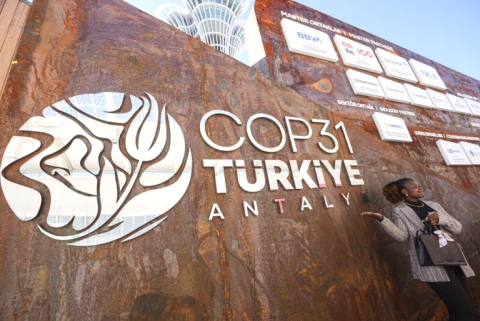
The 31st Conference of the Parties (COP31) to the UN Framework Convention on Climate Change will meet in Antalya on 9-20 November 2026. The conference is not a single meeting. It brings together the sessions of five bodies. Decisions will be taken by the governing bodies, that is, the Conference of the Parties to the Convention (COP), the Conference of the Parties serving as the meeting of the Parties to the Kyoto Protocol (CMP) and the Conference of the Parties serving as the meeting of the Parties to the Paris Agreement (CMA). Two subsidiary bodies will carry out the technical preparation. The conference will be held under the COP31 Presidency of Murat Kurum, Türkiye’s Minister of Environment, Urbanization and Climate Change. Under the partnership modalities agreed between Türkiye and Australia, the COP31 Presidency has assigned Australia’s Minister for Climate Change and Energy, Chris Bowen, as President of Negotiations. Bowen will conduct the negotiations in consultation with Türkiye.
This analysis looks at which items will be discussed in Antalya, which decisions placed them on the agenda and how the two weeks will run. A large part of the substantive agenda consists of matters that earlier conferences referred to this session or could not conclude. The rest are standing items such as annual reports and guidance to the funds. In the words of the informal note by the chairs of the subsidiary bodies, a number of frameworks, work programs and institutions are reaching decision points in Antalya. In its fourth letter, the Presidency described COP31 as a COP of implementation and acceleration and stated that the Action Agenda and the negotiations complement each other and connect international agreements to implementation on the ground. Türkiye’s COP31 vision likewise aims to move climate action from commitments on paper to a period of measurable implementation on the ground.
Where the Agenda Comes From
The UN climate secretariat prepares the provisional agendas in agreement with the President of the previous session and taking Parties’ views into account. Including supplementary requests, the COP agenda contains 22 items and the CMA agenda 24 items. The annotations in the agenda documents state which decision most of the items rest on. These notes show that the substantive items reached Antalya by two main routes. Earlier conferences tied some items directly to this session. The decision on continuing the mitigation work program, to be taken in Antalya, and the draft decision on operationalizing the just transition mechanism, to be considered at this session, are examples. Other items were placed back on the agenda because earlier sessions could not conclude them. The seventh review of the Convention’s Financial Mechanism, for instance, was launched by a decision at COP26, but Parties have failed to agree on its terms over five sessions.
New requests were also added to the agenda in recent weeks. On behalf of the African Group of Negotiators, Ghana requested separate items on tripling adaptation finance and on a dialogue on trade and climate change, as well as an item on determining the resource needs of the Green Climate Fund. All three requests are based on paragraphs of decisions adopted earlier. On behalf of the Mountain Group, Kyrgyzstan asked for the dialogue on mountains and climate change to become a standing item on the agenda of the subsidiary bodies. These requests will come before the Parties on 9 November, when the agendas are adopted.
How the Two Weeks Will Run
The COP30 President will open the conference on 9 November and hand over the presidency to Murat Kurum. The CMP, the CMA and the two subsidiary bodies will then hold their opening sessions, the agendas will be adopted and the items will be allocated to the relevant bodies. After the subsidiary bodies open, the five bodies will meet together to hear the opening statements of the groups of Parties.
The first week centers on technical negotiations in the subsidiary bodies. The subsidiary bodies will meet from 9 to 14 November. For most items, contact groups or informal consultations will be set up under co-chairs or co-facilitators. Under the chairs’ proposal, reports under items that do not require negotiation will simply be noted, and some items will be deferred to the next session with the Parties’ agreement. The chairs will hold a coordination meeting with the facilitators every day. The facilitators are expected to start work on textual proposals early and to finish the work of the negotiating groups by 18:00 on 13 November at the latest. This time is needed so that the conclusions can be prepared in the six official UN languages before the closing plenary on the afternoon of 14 November. The Leaders Summit will take place on 11-12 November. It forms the first part of the high-level segment, and heads of state and government will deliver their national statements there.
In the second week, the matters the subsidiary bodies could not complete and the items that need political guidance will move to the governing bodies. Under the partnership modalities, preparing draft texts is the responsibility of the President of Negotiations. On 19 October the Presidency appointed five ministerial pairs for mitigation, finance, adaptation, just transition and oceans. These pairs are holding informal consultations with Parties and negotiating groups ahead of COP31 and will continue consulting in Antalya after the subsidiary bodies close if needed. The high-level segment for the Parties’ national statements will continue on 17-18 November, and each Party will make a single statement limited to three minutes. The closing plenaries are scheduled to be completed on 20 November.
Adaptation
According to the chairs of the subsidiary bodies, adaptation to the impacts of climate change will remain one of the Parties’ main priorities in Antalya. At COP30 in Belém last year, the Parties to the Paris Agreement adopted the Belém Adaptation Indicators to measure progress toward the global goal on adaptation. The decision also stated that the indicators are voluntary and cannot be used as a condition for access to finance. The same decision launched a two-year process to develop guidance on how the indicators will be used and named it the Belém-Addis vision on adaptation. In Antalya, this process is expected to be advanced and a technical task force set up to develop the methodology of the indicators. The number of national adaptation plans submitted by developing countries has reached 81, and attention has turned from planning to implementation.
The second adaptation issue is finance. The Global Mutirão decision (1/CMA.7) adopted in Belém called for efforts to at least triple adaptation finance by 2035. The African Group’s request for a separate agenda item concerns the implementation of this call. The Presidency also counts the completion of the Adaptation Fund’s transition to exclusively serve the Paris Agreement among the priorities of COP31.
Finance
Most of the finance items are on the agendas of the governing bodies. The new climate finance goal adopted in Baku in 2024 provides for at least USD 300 billion a year for developing countries by 2035, with developed countries taking the lead. The same decision calls on all actors to work together to scale up finance to these countries from public and private sources to at least USD 1.3 trillion a year by 2035. The two-year climate finance work program established in Belém has been added to the CMA agenda as a separate sub-item, and the Presidency has announced that it will seek common ground among the Parties on the program’s direction before COP31. On the Convention side, the progress report on the goal of mobilizing USD 100 billion a year for the needs of developing countries will be considered. Guidance to the Green Climate Fund, the Global Environment Facility and the Fund for responding to Loss and Damage is on the agendas of both bodies. The high-level ministerial dialogue on climate finance will also meet on 13 November.
Just Transition and Mitigation
Just transition is the approach that aims to protect workers, the regions affected and low-income groups in the economic transformation that climate policies bring about. In Belém, the Parties decided to develop a mechanism on this issue and asked for a draft decision on operationalizing it to be submitted to this session. The draft could not be completed in Bonn in June, and the talks moved to Antalya. The chairs of the subsidiary bodies note that views have converged on the mechanism’s functions, while questions remain on its form and governance. The differences among country groups center on whether the mechanism will be an information platform or an implementation tool, and divisions continue on scope and trade. The Presidency aims for agreement on both functions and governance. A decision on the review and continuation of the just transition work program is also expected under the same heading.
On the mitigation of greenhouse gas emissions, earlier decisions have left two tasks for this session. Whether the mitigation work program will continue will be decided at this session, and the Presidency has asked the Parties to work toward an outcome that preserves the program’s facilitative character and makes it more effective. The second global stocktake, which measures collective progress toward the goals of the Paris Agreement, will begin in Antalya with its information collection phase, in line with the decision taken in the United Arab Emirates in 2023. The synthesis report dated 27 October, submitted by the secretariat to the CMA, gives the aggregate picture of the contributions submitted. According to the report, as of 31 August 2026, 127 new nationally determined contributions representing 154 Parties had been submitted, setting out countries’ climate targets. The projected decline in emissions, however, falls well short of the level required by the 1.5 °C goal.
Other Items
Alongside the major issues this analysis focuses on, the agenda contains other matters. In June the subsidiary body proposed the UN Environment Programme (UNEP) as host of the Climate Technology Centre, and the decision must be taken in Antalya. The subsidiary bodies will also report the outcomes of the joint work on agriculture and food security to COP31. In its fourth letter, the Presidency stated that the approval of the first funding requests under the Fund for responding to Loss and Damage later this year will help translate commitments into practical support. The Subsidiary Body for Scientific and Technological Advice has also been asked to conclude the review of the work program on non-market approaches under Article 6.8 of the Paris Agreement at this session at the latest. The chairs of the subsidiary bodies encourage the Parties to submit their second biennial transparency reports by 31 December 2026. The Parties will also consider the host of COP33, to be selected from the Asia-Pacific group, while next year’s conference, COP32, will be held in Ethiopia on 8-19 November 2027.
The Agenda Outside the Negotiations
Part of the work in Antalya consists of initiatives that the Parties do not negotiate. According to the Presidency’s third letter, the Action Agenda led by Türkiye aims to complement the formal negotiations by mobilizing voluntary initiatives, partnerships and coalitions. The letter describes the agenda as an implementation platform. The agenda is built around ten themes. These are clean energy transition and electrification, zero waste and methane reduction, climate-resilient cities, green industrialization, youth and education, food security, oceans and seas, health systems, Rio synergies and the Climate Implementation Bridge (BRIDGE). Quantified targets for 2035 have also been set for some themes. They include raising the share of electricity in final energy consumption to 35 percent, cutting the projected increase in municipal solid waste generation by at least 50 percent and reducing energy intensity in the building sector by at least 25 percent. According to the letter, these targets create no new obligations for countries and are presented as a call for cooperation.
The Thematic Days match each day of the conference with a priority area. The program devotes 9 November to food, agriculture and health, 10 November to energy and transport, 11 November to zero waste, 12 November to resilient cities and the built environment, 13 November to finance and trade, and 14 November to children, youth, education and skills. After 15 November, which is reserved for the social and cultural program under the name Antalya’da Bir Nefes (A Breath in Antalya), the program continues on 16 November with science, industry and technology, on 17 November with oceans, seas, nature and land use together with Rio synergies, and on 18 November with human and social development. In the final two days, 19 November is devoted to strengthening implementation under the heading İmece, a Turkish term for collective work, and 20 November is left to the final negotiations. The COP31 Business Forum, which will bring the private sector together, will be held in Antalya on 12-13 November.
The Outcome of the Conference
Decisions in Antalya will be adopted by consensus of the Parties. Alongside the decisions under the agenda items, a cover decision will also be prepared. Cover decisions are usually summary texts that the Presidency drafts during the conference, and like other decisions they must be adopted by consensus. On 8 October, the last day of the Pre-COP meeting in Fiji, COP31 President Kurum said that they wanted to send an open, balanced and implementation-focused message from Antalya to the world, and that for this purpose they needed to start thinking, together with the Parties, about a political COP31 decision text. According to Minister Kurum, this text should be inclusive, transparent, party-driven and presidency-led. It should address mitigation, adaptation, finance and implementation in a balanced way, and it should provide political coherence among the different elements of COP31 without replacing the negotiating tracks or creating new obligations. President of Negotiations Bowen announced at the Pre-COP that he and Minister Kurum had agreed, in consultation, to prepare a presidency-led decision. He said the aim was a focused and concrete text, rather than a long political declaration, that could give visibility to high-impact solutions such as accelerating electrification and cutting methane. Such a text is the most direct route by which a Presidency initiative can acquire language adopted by the Parties. The edited final texts of the decisions, however, may be published months after the conference. Most of the Belém decisions were adopted on 22 November 2025, and their final texts appeared in the annex to the report dated 30 March 2026.
Assessment
The outcome in Antalya can be read in three stages. The adoption of the agenda on the first day will show the fate of the African Group’s requests. The closing of the subsidiary bodies on 14 November will show whether the draft on the just transition mechanism has been completed. In the final days it will become clear whether the cover decision includes voluntary initiatives such as electrification and methane, which the Action Agenda also puts forward. On all three, the final word rests with the consensus of the Parties. The structure of the agenda is consistent with the Presidency’s emphasis on implementation. Most of the major issues in Antalya await decisions on the continuation, form and direction of established programs and mechanisms rather than the setting of new targets. The same agenda also reflects a backlog, since some items, such as the seventh review of the Financial Mechanism, have gone unresolved for five sessions. BRIDGE, which Türkiye puts forward in its Action Agenda and which runs outside the negotiations, is not a new fund either. It aims to connect countries’ climate priorities and projects with sources of finance, technical expertise and implementation partners. Antalya’s character as an implementation conference will take concrete shape in the content of the decisions adopted at the closing plenaries on 19-20 November.
