
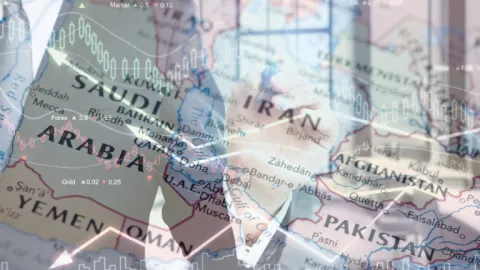
The war between the US/Israel, and Iran, which began on February 28, 2026, is increasing uncertainties in the global economy. The war carries the risk of regional spillover, and Türkiye, thanks to its successful diplomatic relations, appears to be far from direct military impact. On the other hand, the impact of the war on the global economy is inevitable. Economic transmission mechanisms via global trade, energy markets, and financial markets can rapidly spread the effects of regional conflicts to macroeconomic balances.
In this context, the duration and scope of the conflict are critical determinants for a sensible analysis of its economic consequences. Initial statements by US President Trump indicated that the operation was initially planned for a period of four to five weeks, but that this duration could be extended depending on developments on the ground. This situation leads to a widening of the area of uncertainty in terms of macroeconomic indicators such as energy prices, global risk appetite, capital movements, and trade flows. The closure of the Strait of Hormuz will also be a determining factor. Consequently, the potential impact of the war on the Turkish economy can only be assessed within the framework of different scenarios and assumptions.
War from the Perspective of Macroeconomic Balances
In the current state of heightened global geopolitical risks and rising volatility in financial markets, some structural advantages of the Turkish economy are noteworthy. Firstly, as for public finance indicators, the central government budget deficit remaining below 3% of gross domestic product (GDP) is a significant indicator of fiscal discipline. Following the devastating earthquake of February 6th, the budget deficit, which exceeded 5%, subsequently decreased, creating additional fiscal space for Türkiye. Furthermore, the relatively low levels of total public and private sector debt compared to many other economies contribute to limiting macroeconomic vulnerabilities. According to assessments conducted by the Ministry of Treasury and Finance using data from the International Institute of Finance (IIF), Türkiye’s total debt ratio stands at approximately 92% of GDP, whereas in the United States, China, and the Eurozone this ratio exceeds three times national income. This picture offers a certain degree of counter-cyclical policy space in the face of external shocks such as global demand contraction or tightening financial conditions.
On the financial sector side, the banking system, which strengthened after the 2001 crisis, has shown resilience because of its capital adequacy, high liquidity buffers, and a highly cautious regulatory framework. In this context, the positive outcome of the Halkbank case in the US is also an important phase for Türkiye's continued active role in the global financial system. In line with this outlook, the current downward trend in CDS, which reflects Türkiye's country risk, indicates a relative improvement in international investor perception. On the monetary policy front, the tight stance implemented by the Central Bank of the Republic of Türkiye constitutes an important anchor for financial stability. Relatively high policy interest rates are considered a factor supporting the stability of the Turkish lira against external shocks. In addition, the strengthening of the reserve composition, by the help of the global gold prices and the termination of intensive swap transactions, provides a margin of safety against volatility in external financing conditions. In conclusion, the increase in global gold prices is not only an indicator of risk but also a supportive factor for reserves.
The changes observed in Türkiye's production and export structure in recent years have had positive effects. The increase in the share of high and medium-high technology products in total exports indicates a gradual rise in value-added production capacity. Technological progress and export performance, particularly in the defense industry, contributes positive influence on both the current account balance and strategic production capacity. This situation has been supportive in terms of security and has enabled Türkiye to become one of the global leaders in the defense industry, with a volume exceeding $10 billion export. In addition, the decrease in energy intensity in industrial production and the shift towards renewable energy sources stand out as a factor that can partially mitigate the impact of global energy price fluctuations on macroeconomic balances. Türkiye's primary energy intensity, which was 0.192 toe per thousand (tep)/$2015 in 2000, has decreased to 0.125 toe per thousand (tep)/$2015 in 2024. This rate, considered lower than the world average, shows that energy, a scarce resource, is being used more efficiently in Türkiye. Moreover, the share of renewable energy in electricity production, which was around 25 percent in 2002, is approaching 50 percent. In this case, resources that are not dependent on external sources, such as water, solar, and wind, have been effective.
New Equations, New Risks
From an energy and external balance perspective, some vulnerabilities of the Turkish economy are notable. In recent years, the discovery of new domestic oil and natural gas resources has diversified the energy supply, investments in renewable energy have increased, and progress in energy efficiency has been achieved. As a result of these developments, import dependence has gradually decreased, but Türkiye still needs significant external energy resources. In addition, oil and natural gas are not only essential inputs in energy production, but also in production, especially in industry and agriculture. Therefore, a permanent increase in energy prices can quickly create price pass-through to production costs. In particular, the impact of the conflict on the Strait of Hormuz, a critical transit point for energy supply, constitutes a decisive risk factor for global oil and natural gas markets. A quarter of the daily global oil trade passes through this strait. The Strait of Hormuz has similar importance for the natural gas trade. Therefore, if the tension in the region continues or transit through the strait ceases, there is a possibility that energy prices will remain at high levels for an extended period. Although the region is primarily critical for Chinese production, increased costs in China will also negatively impact global growth.
Another vulnerability in terms of macroeconomic balances lies in inflation dynamics. Türkiye is at a critical juncture in its fight against inflation. While inflation expectations continue to improve, due to the tight monetary policy stance and the balancing of demand conditions, a strong increase in energy prices could disturb the disinflation process through the cost channel. The current high real interest rates also restrict the room for maneuver of monetary policy. If oil prices remain at high levels for several months, inflationary pressures could strengthen again. In this case, expectations regarding the downward path of inflation may weaken, and rigidity in pricing behavior may occur again.
A similar situation exists from the perspective of external balance. In a scenario where global energy prices rise, Türkiye's net energy import bill, currently around $47 billion, will increase, putting additional pressure on the trade deficit. In this case, the current account deficit, expected to hover around 1.5-2% of GDP, could exceed 3%. In such a scenario, external financing will become even more critical. The slowdown in capital inflows due to decreased global risk appetite and the potential for increased dollarization could also make financing the current account deficit more difficult. On the other hand, geopolitical developments can create not only risks but also opportunities. In a period where global supply chains are being reshaped and logistics costs are increasing, Türkiye's geographical location and industrial infrastructure have the potential to transform the country into an alternative logistics and production hub. However, the realization of this potential largely depends on the duration of the conflict and how the regional security environment develops. At this point, it should be noted that a war, primarily creating a supply shock, can also suppress global demand and growth. When all these indicators are considered together, it can be said that Türkiye has a relatively resilient economic framework in the face of increasing global uncertainty, because of its geostrategic location, production flexibility, and strengthening financial structure. However, it should be emphasized that more dramatic economic damage may occur in a scenario where the war is prolonged.