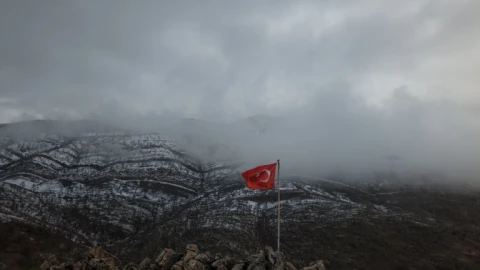
The PKK's evacuation of its shelter areas in the Metina region has brought discussions about the on-the-ground implications and subsequent stages of the Terror-Free Türkiye process back to the forefront. The dismantling of the organization's presence in Iraq and Syria, verification of disarmament, Türkiye's cross-border military presence, and the future of regional security cooperation are among the principal issues in this process. At the same time, translating disarmament into lasting social peace requires not only legal and political arrangements but also the reintegration of former organization members into society and consideration of the sensitivities of victims. In this edition of our Experts Respond series, academics and researchers specializing in the field assess the military, political, legal, and social dimensions of the process, addressing the potential risks, opportunities, and steps necessary for lasting success.
By:
Sibel Düz, SETA
Contributors:
- Mehmet Alaca, Anadolu Agency
- Can Acun, SETA
- Başar Baysal, Social Sciences University of Ankara
- Esra Çuhadar, Bilkent University
- Kutluhan Görücü, SETA
- Hüseyin Arslan, Kırşehir Ahi Evran University
- Elif Kara Özatik, Ankara Hacı Bayram Veli University
 Mehmet Alaca
Anadolu Agency
Following the PKK's evacuation of its shelter areas in Metina, how should claims that its presence in Gara, Hakurk, and Qandil will also be dismantled be assessed in terms of Iraq's security and political balances? How might this transform Türkiye's cross-border military presence and security cooperation among Baghdad, Erbil, and Ankara?
The PKK's announcement that it has withdrawn its forces from certain areas near the Iraqi border is an important development in terms of the on-the-ground manifestation of the ‘Terror-Free Türkiye’ process. Nevertheless, it does not mean that the organization's armed capacity has been completely dismantled. A considerable gap remains between the evacuation of specific shelter areas in Metina and the termination of the organization's presence in Gara, Hakurk, and Qandil.
The terrorist organization's withdrawal from critical areas gives rise to a new political and security outlook along the Ankara-Erbil-Baghdad axis. While the return of organization members in conjunction with the legal process in Türkiye remains one issue, the future of leadership cadre who are not included in the return arrangements remains an open question for all parties. Another determining factor is not so much the positions vacated by the organization as the responsibility Erbil and Baghdad can assume in the emerging security order. Accordingly, the process's success will be measured less by the number of camps evacuated than by the elimination of the capacity of the organization or other structures to regenerate armed power.
Moreover, as the organization's withdrawal continues, the future of Ankara's military presence in Iraq will increasingly become a subject of debate. Rather than an automatic withdrawal, however, the scope, missions, and deployment pattern of that presence may be reassessed. Although the establishment of a presence at the Bashiqa base in 2015 and the recent decision to transfer the facility gradually were shaped by different dynamics, this example may strengthen similar demands concerning other Turkish military positions in Iraq. At this point, the divergence between Ankara's and Baghdad's priorities may become more apparent. Whereas Ankara will seek concrete assurances that the organization cannot reconstitute itself, Baghdad may want the diminished threat to translate into stronger sovereign authority and a reduced foreign military presence. If these expectations do not converge, progress in disarmament could generate new diplomatic tensions. Yet the understanding established thus far among Baghdad, Erbil, and Ankara could pave the way for a model in which the Iraqi government assumes greater responsibility.
If the organization withdraws entirely from its current areas, the three actors will need a new security mechanism. Its central task will be not merely to prevent a security vacuum but also to ensure that control of the vacated areas does not turn into a new contest over authority between Baghdad and Erbil. It should be clearly defined which areas will fall under the responsibility of federal forces and which under the Peshmerga, and how intelligence sharing, border surveillance, and responses to possible violations will be conducted. Otherwise, rather than resolving the security problem, the PKK's withdrawal could reproduce it through competition over territorial control and among armed actors. The real transformation, however, will occur not simply when the PKK leaves particular areas but when a functioning security order is established there that does not depend on the organization's presence and can prevent its return.
 Can Acun
SETA
Considering the different functions that Zap, Metina, Gara, Hakurk, and Qandil have historically served within the PKK's military establishment, does the evacuation of its shelter areas in Metina indicate systematic military dismantlement?
Through its cross-border military operations in the north of Iraq, Türkiye has long established territorial control along the Türkiye–Iraq border. The Turkish Armed Forces (TSK) have established numerous military bases and positions extending southward into these areas, as well as logistical infrastructure and supply routes connecting them. In this context, the withdrawal from caves, tunnels, and similar sites in areas such as Zap and Metina—within what the PKK terrorist organization designates as the ‘Media Defense Areas’—where its elements were largely encircled, does not have an effect that would significantly alter the military situation in the region. Elements in these cave and tunnel networks had continued to use them to conduct various attacks; their evacuation is therefore certainly positive. For meaningful military dismantlement, Qandil, Gara, and Sinjar are important, while in areas controlled by the Patriotic Union of Kurdistan (PUK), the dismantlement of bases on Mount Asos and in the areas extending toward Iran is essential. As an absolute condition for the Framework Law to enter into force, the KCK/PKK must vacate all the areas mentioned and surrender the weapons and ammunition it possesses.
The KCK/PKK senior leadership's statements that it has withdrawn from Türkiye and areas such as Zap and Metina appear intended to create the perception that it has fulfilled its obligations in the process. Ultimately, for the Framework Law to be implemented, the dissolved terrorist organization must abandon all its bases, disarm, and surrender the relevant weapons. Under the Ankara–Baghdad–Erbil agreement concerning Sinjar, some of the Sinjar Resistance Units (YBS) elements there may be disbanded and the remainder integrated into the Iraqi central army in the period ahead. However, it is also clear that the KCK/PKK senior leadership is resisting such measures in other areas.
Qandil's expectations regarding possible ‘opportunities’ arising in connection with Iran may be slowing the process. Alongside PJAK, HPG also maintains positions along the Iraq–Iran border. All these courses of action and efforts should be regarded as matters that Türkiye must monitor closely.
 Başar Baysal
Social Sciences University of Ankara
Drawing on international disarmament, demobilization, and reintegration (DDR) experiences, what institutional and technical verification mechanisms are needed to establish that the terrorist organization's military capacity and command structure have genuinely been dismantled? In light of Colombia and other international cases, how can a sustainable demobilization and reintegration model be developed to prevent former members from joining armed structures again?
International experience indicates that three elements must be present together to verify disarmament. The first is a verification structure external to the parties. In Colombia, the process is monitored and regularly reported on by the United Nations (UN) Verification Mission, while in Nepal, Maoist members were verified by the UN Mission. In Türkiye, Law No. 7595 assigned this function to determinations by security institutions and a confirmation decision by the National Security Council (MGK), and subcommissions on Monitoring and Identification and on Disarmament and Strategic Coordination were established within the Council. The second is independent verification of personnel and weapons records. During the demobilization of the AUC (Autodefensas Unidas de Colombia) in Colombia, lists submitted by commanders were accepted without verification, and the process was criticized for inflated figures. The third is to establish verification as an ongoing process rather than a one-time exercise. In Colombia, dissident groups formed by approximately 800 members who rejected the agreement grew in subsequent years; verification should also encompass monitoring structures that did not participate in the process or subsequently rearmed.
A model that prevents rearmament is built not at the moment of demobilization but over the lengthy period that follows. In Colombia, remaining in the program for more than three years significantly reduced the likelihood of returning to crime, whereas one-off assistance had no effect on its own; in Nepal, cash packages dismantled the armed structure but failed to secure economic integration. The principal risk is criminalization, which has two dimensions. At the individual level, research on Colombia shows that economic conditions alone do not explain a return to crime; wartime ties and the criminal organizations present in the area of resettlement are decisive. Individuals who managed criminal activities within the organization should be subject to particular monitoring. At the structural level, there is a risk that new actors will occupy the illicit markets from which the organization withdraws; post-AUC Colombia illustrates this. Legal livelihood alternatives should therefore be created rapidly while monitoring continues. Support should be embedded in development and community projects for the entire region, rather than directed only to those leaving the organization; field observations also show that direct, visible assistance has generated a backlash, while regional projects have gained acceptance. The institutional structure should combine central coordination with flexible local implementation; Colombia's ARN (Agencia para la Reincorporación y la Normalización) model has achieved this balance, and differences between regions do not lend themselves to a uniform program. Finally, the end of the conflict will bring local disputes over land and pasture use, among other matters, to the surface. These should be identified in advance and addressed through local mediation adapted to each context.
 Esra Çuhadar
Bilkent University
Which mechanisms should be prioritized in the return of terrorist organization members to Türkiye and their social integration? How can victims' expectations of justice, the rebuilding of social trust, and the participation of different segments of society be balanced? In this regard, what lessons can be drawn from Türkiye's previous peace process and international examples?
The return of organization members to Türkiye and their social integration constitute a multilayered process that must be addressed across different dimensions, including security, justice, and economic, psychological, political, and social readjustment. Moreover, returnees are not a homogeneous group. Those coming down from the mountains, those released from prison, those in the diaspora, those who joined the organization as children, and women enter this process with different past experiences and needs. Mechanisms must first identify and assess these different needs and be designed accordingly.
In terms of security, key issues include ensuring the personal safety of returnees, minimizing risks such as retaliation and blood feuds, the nature of their contact with security and judicial authorities during their return, and pressure that may come from within the organization. The fewer crises that occur in this area, the more smoothly the rest of the process will proceed. Conflict-preventive approaches and measures must therefore be prioritized.
The economic dimension concerns how returning individuals will reintegrate economically into society. While steps must be taken to facilitate their economic reintegration, it is also important to prevent perceptions among the wider public that returnees are being ‘rewarded’ and that the arrangements are unfair. International experience suggests that, to maintain this balance, inclusive development models based on regional economic development can be more beneficial than individual financial support. An inclusive development approach is premised on benefiting broad segments of the population that have suffered economic losses because of the conflict and securing the economic rehabilitation of the region as a whole. At the same time, returnees can be offered training to develop their skills and enable them to compete in the labor market.
Social integration also has a crucial sociopsychological dimension. Spending many years in active conflict environments or prison can cause psychological difficulties. There may also be a need to ‘relearn civilian life’ in every respect, together with the challenges this entails. Returnees, particularly women, may encounter difficulties in gaining acceptance from society. Different groups will again have different needs; psychosocial support should be planned and delivered with these differences in mind. Local dialogue and mediation initiatives are further mechanisms used in other contexts to promote social integration. If necessary, such social programs and methods can be used to resolve crises arising at this stage at the neighborhood or local-government-unit level. Problem-solving dialogue and mediation initiatives of this kind have previously been undertaken in countries such as South Africa, Iraq, and Tunisia.
Political participation extends beyond parliament to local politics and civil society. Social stigmatization, political discourse, and the pace of returns directly determine society's capacity to accommodate the process. The transitional period for political participation provided by the Framework Law may be viewed as an opportunity to complete the necessary preparations and establish the required infrastructure.
Victims' expectations of justice constitute the most sensitive aspect of the process. In comparative experience, this tension is generally managed through restorative justice and the principle of differentiated responsibility.
The 2013–2015 peace process offers important lessons. The absence of a clearly defined monitoring mechanism deepened mistrust in the previous process, while the exclusion of the opposition left it vulnerable to electoral competition. In the present process, the monitoring and confirmation stages have been set out more clearly. Moreover, the participation of all political parties in the commission established in parliament and the hearing of different segments of society have made the process more inclusive and turned it into a national achievement supported by the opposition as well. The extent to which subsequent legal arrangements will respond to these multilayered needs and the expectations of different groups remains to be seen.
Although the Terror-Free Türkiye process began before the December 8 revolution, the organization's presence in Syria has constituted one of its fundamental pillars and areas of difficulty. For this reason, the dismantlement of the YPG/SDF project after the December 8 revolution and the integration of the existing structure into the Syrian state have been among the most important factors in opening the way for the process. Thus, while Iraq and Syria must be regarded as deeply interconnected files, certain steps in the process of integration into the Syrian state (Mazloum Abdi's appointment as a presidential adviser) have also brought differences of opinion within the PKK into public view. Although these differences in ideas and methods historically go back much further, Qandil has openly expressed its reservations about the positions of Mazloum Abdi and Ilham Amed since the operation against Sheikh Maqsoud.
In this regard, the complete dismantlement of Qandil, together with the full integration of the structure in Syria into the state, could give rise to differing political orientations in an environment where the two continue to influence each other but the overarching hierarchical structure has disappeared. Ultimately, this would also be a natural process. However, in a situation where Qandil has not yet been fully dismantled, we must not forget that Qandil retains ultimate command and control over the integration process in Syria and the terrorist organization elements that still exist there. Indeed, structures affiliated with Qandil have at times carried out actions against Syrian state institutions. In such an environment, dismantling Qandil could create conditions in which the structure in Syria can distinguish itself from the PKK and acquire a more local identity.
Recent developments indicate that the Law on Strengthening National Solidarity and Social Integration provides a solid initial basis for the transition from disarmament to social integration. The adoption of the law by 467 votes has conferred broad political legitimacy. Stages such as determination by security units, confirmation by the MGK, publication in the Official Gazette, and a six-month application period make the process gradual and subject to oversight. The law's prior adoption does not mean that security conditions have been waived; implementation remains contingent on official confirmation. The fact that applications will be examined individually in terms of both the person and the offense also protects legal certainty by preventing the perception of an ‘automatic amnesty.’ The coordination mechanism chaired by the Vice President and its four subcommittees institutionalize cooperation within the executive. Furthermore, throughout the process, social integration must be complemented not only by legal measures but also by policies that support investment, employment, and development in the region.
The process is producing marked differences among political parties. President Recep Tayyip Erdoğan and Nationalist Movement Party (MHP) Chair Devlet Bahçeli have embraced Terror-Free Türkiye as a state policy and expressed determination to pursue it. The DEM Party, meanwhile, advocates accelerating the process through the Imralı talks and demands for democratization. By contrast, the IYI Party and DSP object to assigning a political role to Öcalan. The BBP also stipulates that each new step be conditional on the surrender of weapons and confirmation by the state. The Saadet Party, for its part, offers conditional support for the process. New legal demands concerning former organization members' return to political life may deepen these divisions. Concrete results verified on the ground could alleviate such concerns. A monitoring board established with the participation of parties represented in the Grand National Assembly of Türkiye (TBMM) could bring differing approaches together within a common oversight framework. Regularly communicating confirmed information to the public would also make it easier for parties to assess the process on the basis of shared data and would reduce speculative debate. In this way, the process could advance through institutional consensus rather than political tension.
The end of terrorism can bring positive developments in many areas, from security to family and community life and from economic activities to expectations for the future. Although raising new generations free from violence is important for social peace, the end of armed activity does not, in itself, eliminate the psychological and social effects of past losses.
The reintegration of former organization members into society is one aspect of this process that requires careful consideration. Various approaches to rehabilitation and reintegration have been developed in the international literature for individuals leaving armed groups. While the 2024 guide by UNDP and partner organizations emphasizes socioeconomic participation and the involvement of local communities, WHO (2026) recommends incorporating mental health and psychosocial support into reintegration processes. These approaches demonstrate that leaving armed activities does not in itself mean that social integration has been achieved and that reintegration is a long-term process encompassing different needs.
It is important not to regard former organization members as a homogeneous group with identical characteristics and needs. Reasons for joining the organization, time spent within it, relationships with violence, family ties, and attitudes toward rejoining society can vary from person to person. Individual assessments are therefore needed to identify psychological and social support needs. Psychological support, education, vocational training, strengthening family relationships, and participation in social life are important components of rehabilitation. It is also important to address beliefs and behaviors that legitimize violence, foster individual responsibility, and develop skills for resolving conflicts through nonviolent means. All these measures must be considered alongside legal responsibilities and security requirements.
Preparing society for the process is as important to ending terrorism as individual rehabilitation. It is natural for segments of society affected by terrorism over many years—especially families of martyrs, veterans, and those who have lost loved ones—to have concerns about security, justice, and social acceptance in relation to the return of former organization members. Rather than expecting unconditional acceptance, the priority should therefore be to inform the public accurately, listen to its concerns, attend to victims' needs, and safeguard social trust.
The losses, grief, and trauma caused by terrorism can affect individuals' sense of security and social relationships for a long time. Although ending violence cannot erase past suffering, it offers an opportunity to prevent new trauma and rebuild a safe life. Access to psychological support, stronger family and community relationships, and the reorganization of daily life can support social healing during this process.
One of the psychological prerequisites for social reconciliation is acknowledging past losses and their effects on individuals. Psychological recovery after severe societal violence underscores the importance of justice, social relationships, and institutional arrangements. In this context, reconciliation should be understood not as forgetting the past or requiring forgiveness, but as meeting expectations of security and justice, recognizing the suffering of victims, and rebuilding social relationships.
This process can be supported by psychosocial programs grounded in shared human values. Given the relationship between meaning-making and psychological adjustment, initiatives based on justice, responsibility, compassion, human dignity, and solidarity can help those affected by terrorism cope with their losses and find renewed meaning in their lives, while enabling former organization members to assume responsibility and build lives free from violence.
Transforming the end of terrorism into lasting social peace depends on integrating security and legal efforts with psychosocial support and social integration programs. The needs of families of martyrs, veterans, and other victims, the rehabilitation of former organization members, and the preparation of society for the process must be addressed together. Evidence-based initiatives undertaken in cooperation among public institutions, local governments, and civil society should aim to reduce the risk of renewed violence and strengthen social trust.