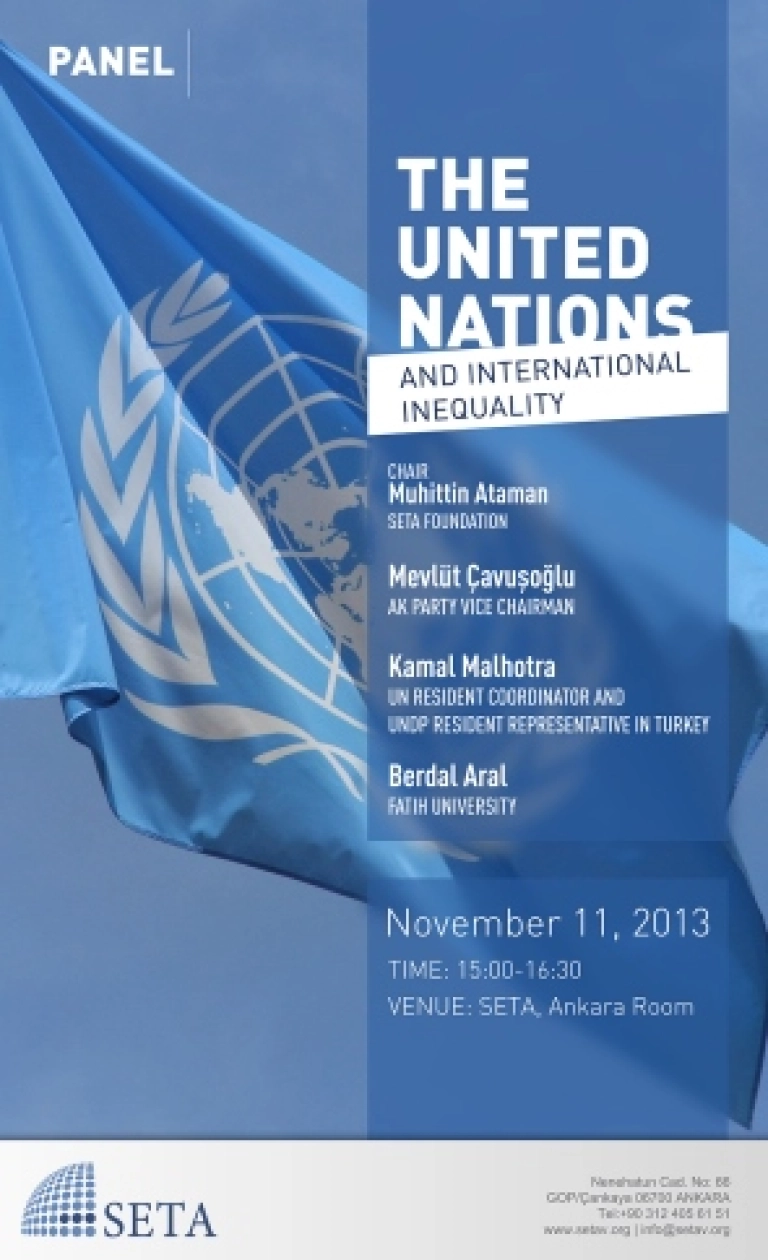

The United Nations and International Inequality
| MODERATOR | Muhittin Ataman, SETA |
| SPEAKERS |
|
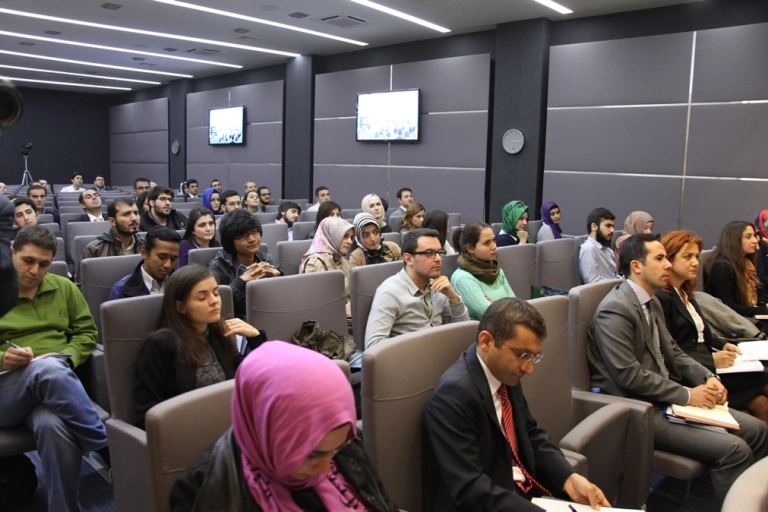
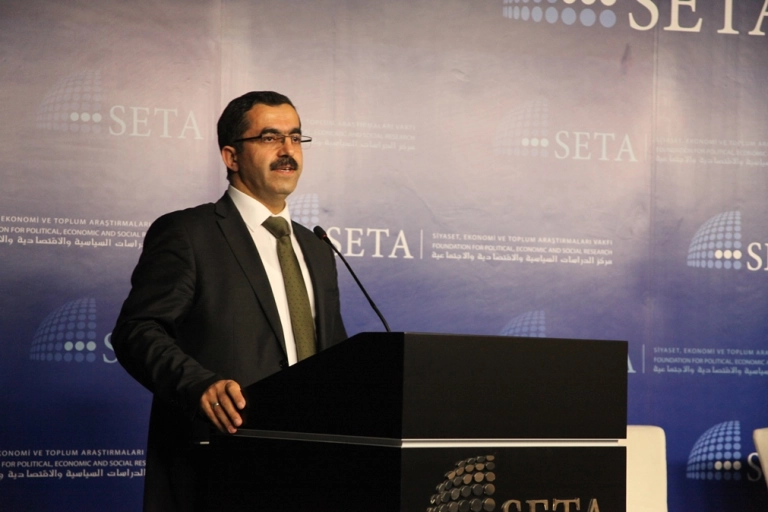
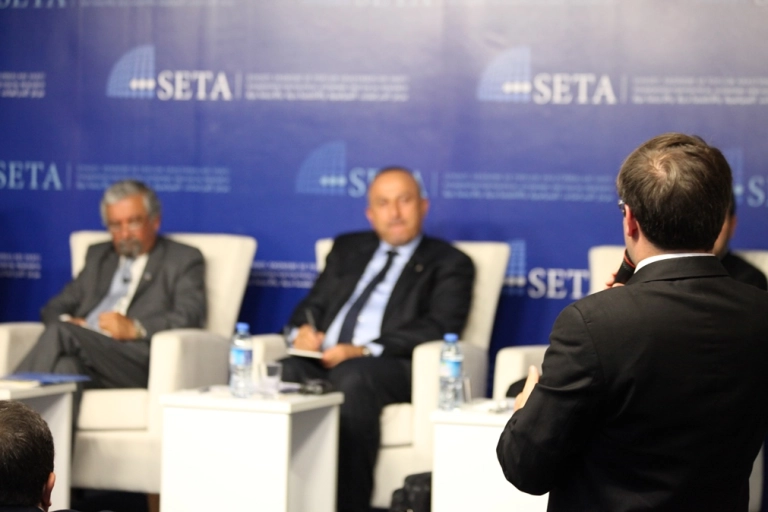
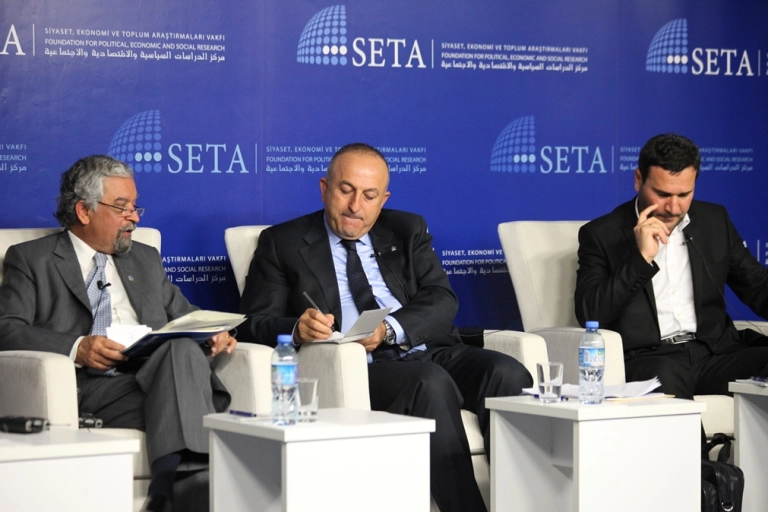
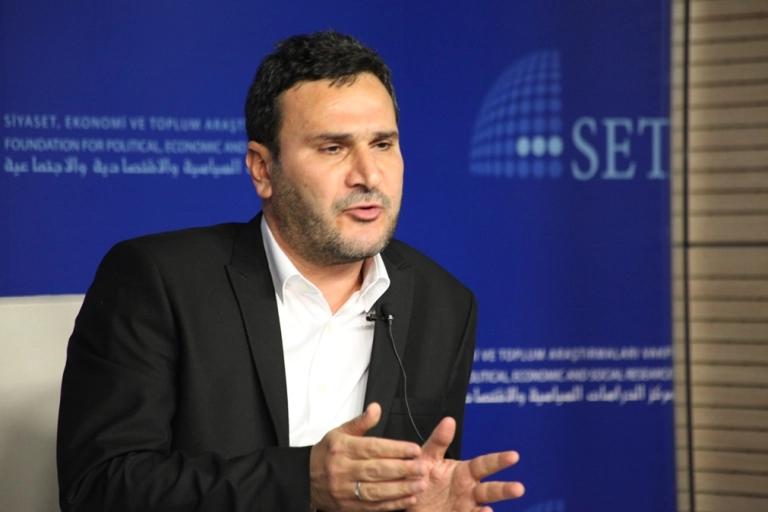
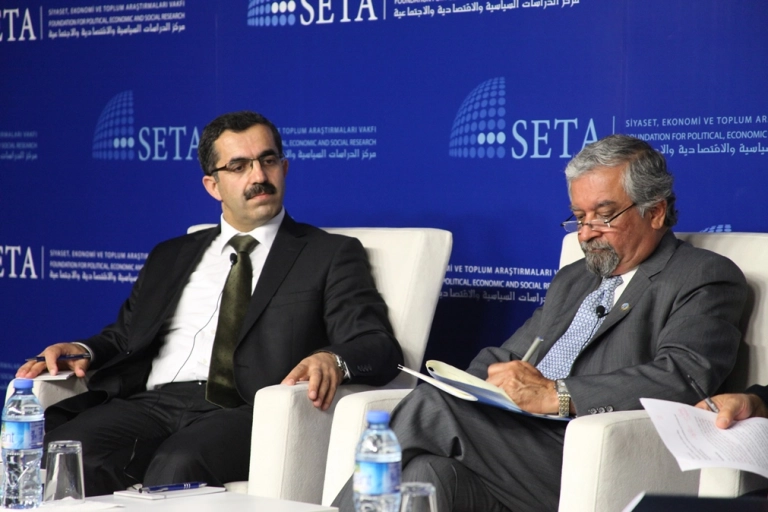
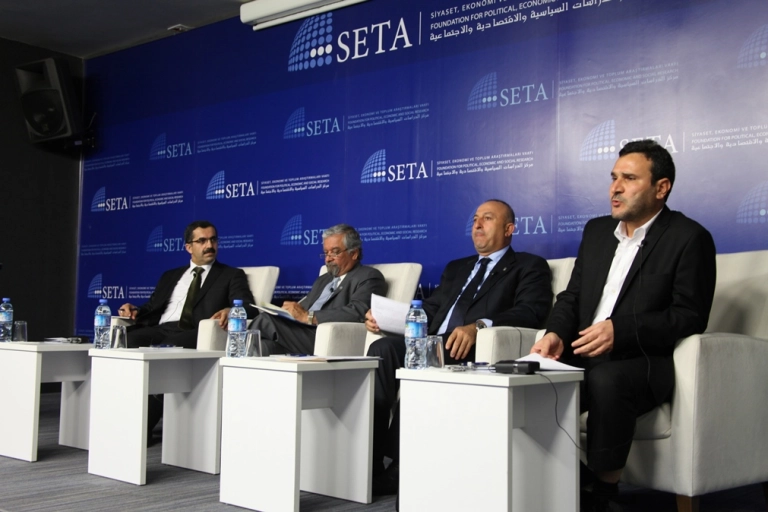
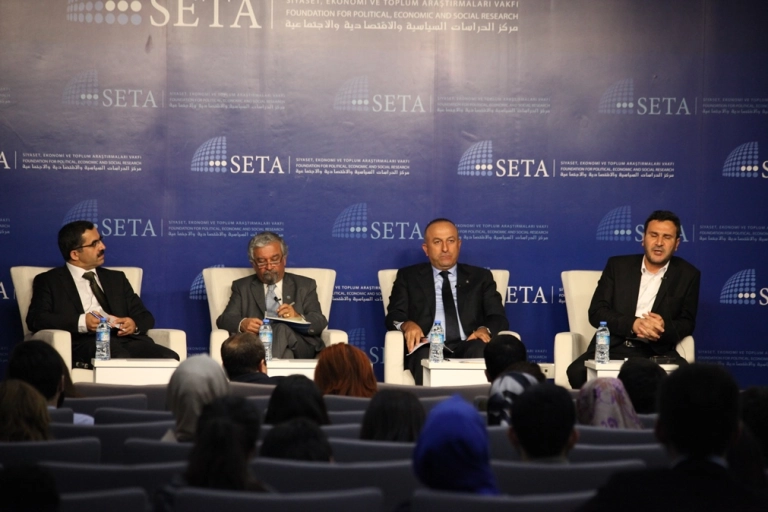
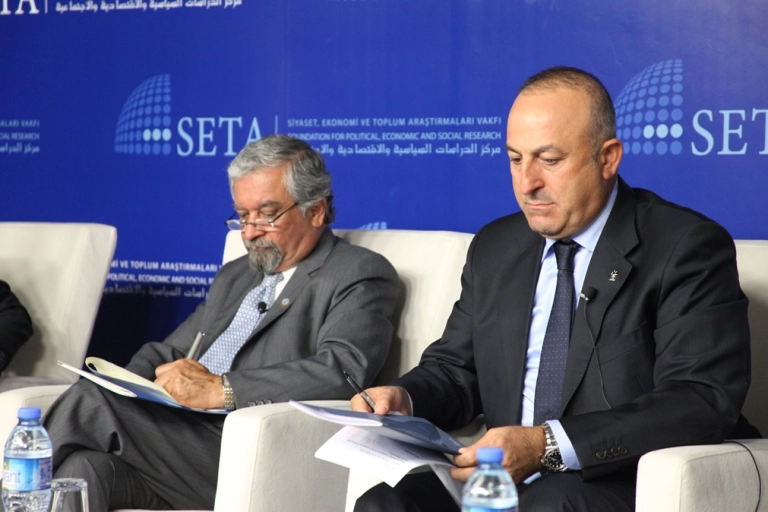
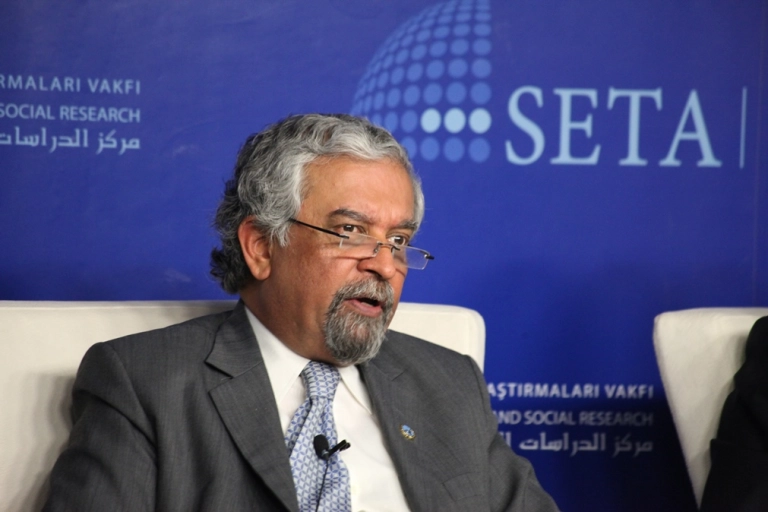
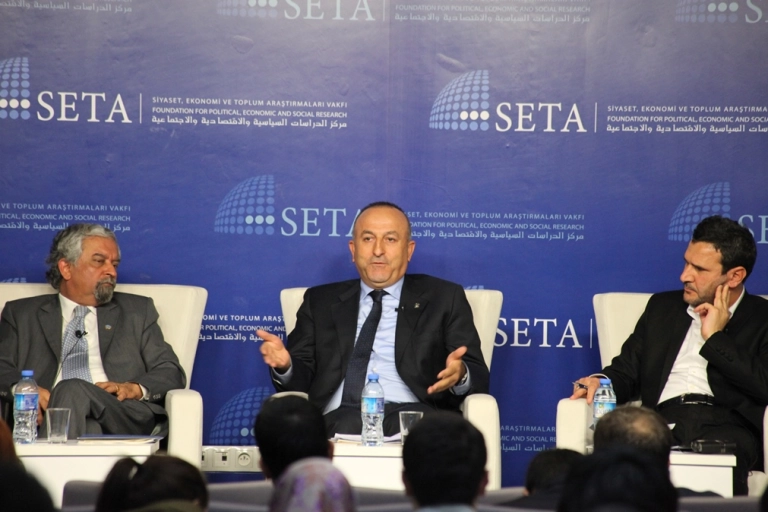
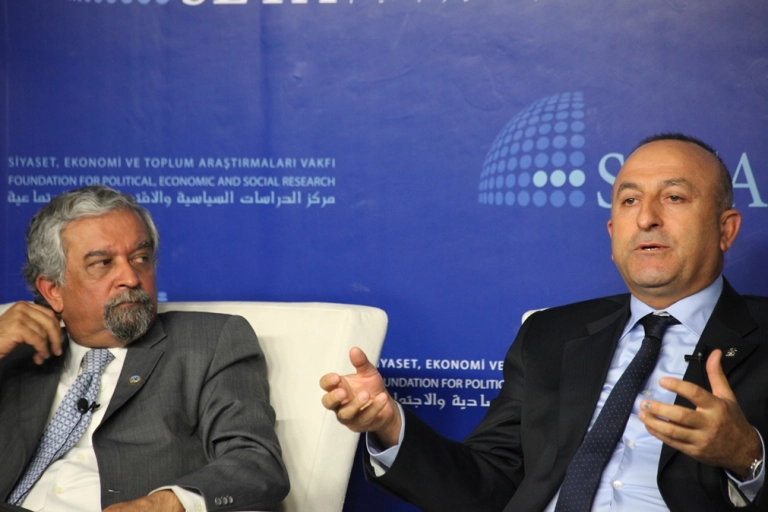
SETA held a seminar to discuss the United Nations, which works to maintain international peace and security with its 193 member states, and the problems regarding the UN. The panel mainly discussed what reforms the UN should undergo for the immediate solution of the global issues such as poverty, excessive armament, environmental destruction, income injustice among others.
The panel moderated by Muhittin Ataman of SETA Foundation, was composed of Kamal Malhotra, the UN Resident Coordinator and UNDP Resident Representative in Turkey; Mevlüt Çavuşoğlu, AK Party Vice Chairman and Berdal Aral, Professor of Political Science at Fatih University in Istanbul and the author of the SETA Analysis titled the UN and International Inequality.
ARAL: THE UN SECURITY COUNCIL SAFEGUARDS THE INTERESTS OF PERMANENT MEMBERS
Prof. Berdal Aral stated that the UN is a crucial organization which works to maintain international peace and security; however, it prioritizes permanent members of the UN Security Council and safeguards the interests of these states. Underlining that the UN Security Council proved to be inefficient to the aggressive attitudes of the US and Russia in the pre-Cold War period, Aral gave the US occupation of the Dominique Republic and Panama and Russian occupation of Afghanistan as examples. Aral also stated that although this situation changed to some extent in the post-Cold War period, the UN Security Council strengthened the hands of occupying forces rather than finding solutions to international violations of law. Emphasizing that the UN and UN Security Council should undergo structural reforms, Aral argued that the Security Council need to eliminate permanent membership or add other countries as members. He finally stated that the resolutions of the Security Council should be justiciable and dismissible.
MALHOTRA: THE REAL PROBLEM WITH THE UN IS THE DISACCORD AMONG THE PERMANENT MEMBERS OF THE UN SECURITY COUNCIL
The UN Resident Coordinator Kamal Malhotra stated that the UN as a realpolitik organization represents ideals and principles in the international system; therefore, it would be wrong to argue that it only represents the interests of Western countries. Arguing that including more actors in the Security Council is not necessarily the only solution to structural problems of the UN and to international problems, Malhotra underlined that the real problem with the UN is the disaccord among the five permanent members of the Security Council. Stating that it would be wrong to consider the UN as an unsuccessful organization according to the actions of member states, Malhotra argued that it is a success of the UN that the Third World War did not break out. Consequently, Malhotra stated that Istanbul will be the hub of the UN given the recent relations and agreements with Turkey.
ÇAVUŞOĞLU: A UN WITHOUT REFORMS WILL LOSE ITS CREDIBILITY
Final speaker of the panel, AK Party Vice Chairman Mevlüt Çavuşoğlu stated that each and every organization established in the wake of a war or crisis should undergo gradual reforms or else these organizations will fail to catch up with the changing world order. Arguing that the UN, which has failed to resolve numerous international crises, should undergo reforms, Çavuşoğlu underlined that the veto power of the permanent members of the UN Security Council is unacceptable for the world peace. Emphasizing that the UN will lose its credibility if it does not undergo serious structural reforms, Çavuşoğlu argued that Turkey uses every position in the UN to accelerate reform mechanisms.
//
- 18
June 2026
10:00SETA AnkaraSpeakers: Murat Yeşiltaş, Nebi Miş, Javlon Vakhabov, Ilkhom Khaydarov, Ufuk Ulutaş, Harun Türker Kara, Eldor Sobirjonovich Tulyakov, Kakadzhan Berdiev, Erman Akıllı, Khalilillo Saydakhmedovich Khamidov, Aben Dauren Abenuly, Hazel Çağan Elbir, Shukhrat Askarovich Tukhtabayev, Zukhra Khalimova, Kadir Temiz, Muhittin Ataman, Abylaev Timur Zamirbekovich, Murat Aslan, Yaşar SarıThe Forum will translate expert insights and forecasts into actionable ideas and initiatives, thereby improving decision-making and enriching the practical substance of both bilateral and interregional agendas. The Forum's primary purpose is to discuss the current state, future prospects, and key priority areas of cooperation between the Central Asian states and Türkiye.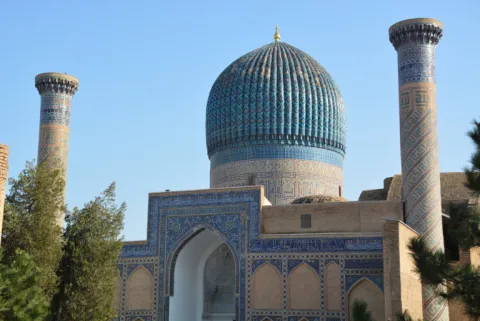
- 21
May 2026
11:00OnlineSpeakers: Erdal Yalçın
- 18
May 2026
11:00OnlineSpeakers: Prof. Dr. Ulrich Schlie
- 14
May 2026
09:00SETA AnkaraSpeakers: Yücel Acer, Ayman Khalil, Andreas Gaarder, Burak Özügergin, Khaled Batarfi, Sasan Karimi, Giray Sadık, Knut Skodvin, Gawdat Bahgat, Seraina Eldada, Tunç Demirtaş, Fabio Caffo, Mahdi Rahimi, Serhat Çubukçuoğlu