
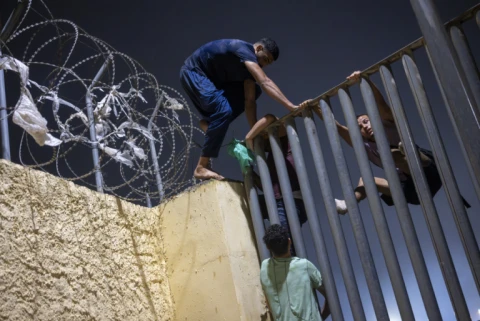
The mass irregular crossings into Ceuta, Spain’s autonomous city in North Africa, on 30 July 2026 brought Europe’s migration management and border security challenges back into sharp focus. Within approximately 24 hours, tens of thousands of people attempted to cross the border, and at least 57 lost their lives. The scale of the incident made it significant not only as a humanitarian crisis but also as a major test of Europe’s external border management system. The controversy that followed added a geopolitical dimension. Israel’s Permanent Representative to the United Nations, Danny Danon, described Ceuta and Melilla as “colonial settlements in Africa.” Although the Israeli Ministry of Foreign Affairs subsequently clarified that his remarks did not represent official state policy, the episode illustrated how competition in the Western Mediterranean is increasingly unfolding not only through security and diplomacy but also through strategic narratives.
What happened in Ceuta should therefore not be viewed simply as another episode of irregular migration. The crisis simultaneously exposed the vulnerabilities of the European Union’s long-standing model of externalized border management, shifting geopolitical dynamics in the Western Mediterranean, and an increasingly complex competition for influence across Africa. Rather than attributing responsibility to a particular actor without sufficient evidence, the crisis should be understood through the structural dynamics reshaping Europe’s broader security environment. Against this backdrop, this analysis examines the Ceuta crisis through three interconnected dimensions: the dynamics behind the mass movement toward the border, the strengths and vulnerabilities of Europe’s externalized border management model, and the broader geopolitical context created by Israel’s expanding diplomatic, technological, and security presence in Africa.
The Ceuta Crisis: More Than a Migration Episode
At first glance, the events in Ceuta might appear to represent another surge in irregular migration toward Europe. Yet their timing, scale, and political repercussions make such an explanation insufficient. An estimated 50,000 to 60,000 people moved toward the Ceuta border within approximately 24 hours, at least 57 people lost their lives, and the border infrastructure was rapidly overwhelmed. By both scale and speed, the episode became one of the most striking developments on Europe’s southern borders in recent years.
The profile of those involved was equally noteworthy. A significant proportion were young people from northern Morocco rather than the predominantly sub-Saharan transit migrants typically associated with irregular migration routes toward Europe. Moreover, tens of thousands returned to Morocco shortly after the initial crossings. These features distinguish the episode, at least to some degree, from conventional patterns of irregular migration. They also suggest that economic motivations alone cannot adequately explain what occurred. The social, economic, and administrative conditions that enabled such a large movement to materialize within such a short period must therefore be considered together.
At the same time, available open-source evidence does not substantiate claims that the movement was planned by an external actor or organized by a particular state. This distinction is essential. Attempts to reduce the crisis to the actions of a single alleged perpetrator risk going beyond the available evidence. Yet treating the episode as an entirely spontaneous migration movement would also overlook the broader structural conditions that made such a large-scale event possible.
A more useful analytical approach is therefore to locate the Ceuta crisis at the intersection of European migration policies, regional socioeconomic dynamics, border governance, and a changing security environment in the Western Mediterranean. Seen from this perspective, the crisis highlights a wider transformation: Europe’s challenge is no longer simply how to manage irregular migration, but how to respond to an environment in which migration, border security, regional stability, and geopolitical competition are increasingly interconnected.
Europe’s Externalized Border Security Model
The Ceuta crisis has once again raised questions about the European Union’s externalized approach to border management. The underlying logic of this model is straightforward: irregular migration should, as far as possible, be managed before it reaches the EU’s territorial borders. To achieve this, the Union has developed extensive cooperation with countries of origin and transit in areas ranging from border control and readmission to counter-smuggling operations and institutional capacity building. Since the 2015 migration crisis, this approach has become a central pillar of European migration policy.
Morocco occupies a particularly important position within this architecture. Rabat has for years maintained extensive cooperation with both Spain and the European Union on border security, combating migrant smuggling, and reducing irregular crossings. Similar arrangements with Mauritania and Senegal have also become increasingly important, particularly along the Atlantic route. According to Frontex data, irregular border crossings into the European Union fell by 37 percent during the first half of 2026 compared with the same period in the previous year, while crossings along the West African route declined by more than 70 percent.⁶ These figures demonstrate that cooperation with third countries can produce tangible results.
Yet the effectiveness of this model also creates a structural dependency. When the security of Europe’s external borders depends substantially on sustained cooperation with neighboring and transit countries, migration management ceases to be merely a technical border-control issue. It becomes inseparable from foreign policy. A disruption in coordination, a deterioration in diplomatic relations, or a temporary weakening of enforcement capacity can therefore have consequences that rapidly spill over into European domestic politics and security debates.
Ceuta exposed this vulnerability with unusual clarity. Physical barriers and domestic enforcement capabilities remain important, but the stability of Europe’s southern borders also depends on sustained, predictable, and mutually beneficial cooperation with neighboring states. The lesson is therefore not necessarily that the externalization model should be abandoned. Rather, it needs to become more institutionalized, more resilient to political shocks, and better equipped with crisis-management and coordination mechanisms.
The underlying challenge is one of interdependence. Europe needs its southern partners to manage migration flows effectively, while those partners benefit from European economic cooperation, institutional assistance, and political engagement. Managing this interdependence requires more than funding border controls. It requires sustained diplomacy and mechanisms capable of preventing temporary political disagreements from turning into border-security crises.
Israel’s Expanding Presence in Africa and the Competition over Strategic Narratives
The diplomatic controversy that followed the Ceuta crisis introduced another dimension to the debate. Israel’s Permanent Representative to the United Nations, Danny Danon, characterized Ceuta and Melilla as “colonial settlements in Africa.” The Israeli Ministry of Foreign Affairs subsequently distanced itself from the statement, stressing that it did not represent official Israeli policy. Nevertheless, the intervention internationalized a politically sensitive territorial issue at precisely the moment when Ceuta was facing an acute border crisis.
The significance of this episode becomes clearer when placed within the broader evolution of Israel’s engagement with Africa. Israel lost its observer status at the African Union in 2023, but this did not bring its relations with the continent to a halt. Instead, Israeli engagement has increasingly developed through bilateral channels encompassing technology, defense, agriculture, healthcare, cybersecurity, and development cooperation. Through MASHAV in particular, agricultural training, capacity-building programs, and healthcare initiatives have provided Israel with channels of engagement extending well beyond conventional diplomacy.
At the same time, developments over the past several years have generated growing scrutiny of the role of Israeli-linked technology and private security actors in political processes across Africa and beyond. Investigations surrounding Pegasus spyware revealed that the phones of senior officials, including Spanish Prime Minister Pedro Sánchez, had been targeted, although no definitive legal determination has established responsibility for the operation. Similarly, private actors reported to have Israeli links, including Team Jorge and BlackCore, have faced allegations concerning digital influence operations and interference in electoral processes in Africa.
These cases should not be conflated with official Israeli state policy. They do, however, highlight an increasingly important feature of contemporary geopolitical competition: the boundary between state power, private technological capabilities, information operations, and commercial security actors has become more difficult to define. Influence is no longer exercised solely through embassies, military deployments, or formal alliances. Digital platforms, surveillance technologies, private intelligence networks, and strategic communication have become additional instruments through which political environments can potentially be shaped.
Morocco-Israel relations add another layer to this evolving landscape. Following the normalization of relations in 2020 under the Abraham Accords, cooperation between the two countries expanded considerably, particularly in defense, intelligence, and military modernization. Joint military mechanisms have been established, defense procurement has increased, and security cooperation has become an important component of the bilateral relationship. Israel’s strategic visibility in North Africa has consequently grown alongside its wider engagement across the continent.
None of this, however, constitutes evidence that Israel played a role in triggering or directing the mass movement toward Ceuta. No open-source evidence currently establishes a direct connection between the Ceuta crisis and Israel’s diplomatic, technological, or security activities in Africa. Describing the episode as an Israeli-planned or Israeli-directed operation would therefore go beyond what the available evidence supports.
The analytical relevance lies elsewhere. Danon’s remarks, Israel’s growing strategic presence in Africa, and wider debates over digital influence illustrate how crises in the Western Mediterranean increasingly unfold within a broader environment of geopolitical and narrative competition. The important question is therefore not whether an unproven chain of responsibility can be constructed, but how regional crises become incorporated into wider diplomatic narratives and how an expanding range of instruments - diplomatic, technological, informational, and security-related - is shaping contemporary competition.
Conclusion
The Ceuta crisis was more than a major border incident. It offered a glimpse into the changing geopolitical environment of the Western Mediterranean. The episode demonstrated that irregular migration can no longer be treated exclusively as either a humanitarian challenge or a border-security problem. Migration increasingly intersects with regional diplomacy, economic relations, strategic communication, and geopolitical competition. In this sense, Ceuta exposed both the effectiveness and the structural vulnerabilities of the European Union’s externalized border management model.
Europe’s partnerships with Morocco, Mauritania, Senegal, and other neighboring states remain essential. Cooperation with these countries has contributed to measurable reductions in irregular migration along several routes. Yet the same architecture also creates interdependence, making border security increasingly sensitive to developments in diplomatic relations. The policy challenge for Europe is therefore not simply to preserve existing arrangements but to make them more institutionalized, predictable, and resilient in periods of political tension or sudden crisis.
The controversy surrounding Danny Danon’s remarks points to another feature of the emerging regional environment: geopolitical competition increasingly takes place at the level of narratives as well as material capabilities. Israel’s expanding diplomatic, technological, and security networks in Africa provide an important context for understanding this transformation. At the same time, analytical credibility requires a clear distinction between contextual relevance and evidence of direct involvement. Available open-source information does not establish a connection between Israel and the mass movement toward Ceuta, and any assessment of the crisis should preserve that distinction.
For Türkiye, these developments reinforce the importance of avoiding zero-sum approaches in the Western Mediterranean. Spain remains both a NATO ally and an important strategic partner in Europe. Morocco, meanwhile, is an increasingly important partner for Türkiye’s engagement with Africa, Mediterranean security, trade, and broader regional diplomacy. Algeria’s importance to European and Mediterranean energy security, together with Türkiye’s expanding relations across West Africa, further underlines the value of maintaining a balanced and multidimensional regional strategy.
Türkiye is therefore well positioned to approach the Western Mediterranean not as a geopolitical arena in which relations with one actor must necessarily come at the expense of another, but as a region where diplomatic flexibility and diversified partnerships constitute strategic advantages. Maintaining constructive relations with Spain and Morocco while simultaneously deepening engagement with Algeria and West African states can provide Ankara with greater room for maneuver as competition in the region intensifies.
Ultimately, the significance of the Ceuta crisis lies less in attempts to identify an unproven external perpetrator than in what the episode reveals about the transformation of the Western Mediterranean’s security architecture. Europe’s dependence on externalized border management, the growing strategic importance of regional partners, intensifying competition for influence in Africa, and the increasing role of narrative and technological instruments are all part of the same evolving landscape. Viewed together, these dynamics suggest that Ceuta is not simply a story about migration. It is a case study in an emerging international environment in which borders, diplomacy, security, technology, and geopolitical competition are becoming increasingly difficult to separate.