
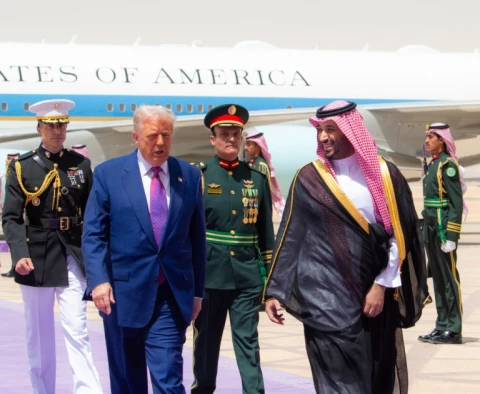
The recent landmark nuclear agreement between the United States and Saudi Arabia has dominated international headlines. However, the narrative pushed by major media outlets is often alarmingly misguided and sensationalized. Until we actively push back against manipulative journalism, the public acceptance of the nuclear sector will continue to suffer. Let us look at the facts logically: What could be more natural, and beneficial for the planet, than a global oil heavyweight investing heavily in a reliable, clean energy future?
Instead of publishing fearmongering articles about the Saudi nuclear deal, journalists should direct their scrutiny toward the catastrophic environmental pollution caused by modern warfare. The drones, missiles, and munitions currently devastating landscapes in the Ukraine-Russia and US/Israel-Iran conflicts generate immense, unmeasured carbon emissions and toxic contamination. Yet, a peaceful, strategic effort to transition an oil-dependent nation toward sustainable, zero-carbon power is paradoxically framed by the media as a global threat.
Understanding Saudi Arabia’s current energy profile reveals exactly why this nuclear deal is essential. Globally, energy is responsible for the majority of climate change-causing greenhouse gas emissions, predominantly from the burning of fossil fuels. In Saudi Arabia, the vast majority of CO2 emissions in the energy sector originate from burning fossil fuels for power generation and transportation. Per-capita energy-related CO2 emissions tend to be high in countries that depend heavily on fossil fuels for power generation, which is exactly the challenge Saudi Arabia faces. To meaningfully reduce these carbon emissions, the Kingdom urgently needs an energy source that is both continuous and entirely carbon-free.
If we are serious about addressing global warming, we must acknowledge that nuclear power is the most effective climate solution available. The United States provides a perfect blueprint for this transition. In 2023, nuclear energy provided 19 percent of all U.S. electricity, yet it constituted a staggering 47 percent of the nation's zero-emissions power. Across the US, 94 operational reactors power tens of millions of homes and anchor local communities. These U.S. reactors help avoid the emission of 437 million metric tons of carbon dioxide each year, which is the equivalent of taking 95 million typical passenger vehicles off the road. Furthermore, nuclear is the most energy-dense source of electricity we possess. It operates from a very small footprint, which means land disturbances can be minimized, preserving trees, farmland, green spaces, and habitats. For a rapidly developing nation like Saudi Arabia, adopting nuclear energy is the most viable path to decarbonizing a massive, energy-hungry grid.
A persistent media tactic is to frame uranium enrichment as an inherent geopolitical danger. However, we must clarify a fundamental scientific reality: to generate nuclear energy using conventional fuel cycles, one must enrich uranium. Saudi Arabia sits on significant, largely untapped uranium wealth. Utilizing their own domestic atomic resources to drastically cut their domestic carbon footprint is not a scandal; it is a smart, necessary climate strategy. We do not even need to look far for a regional success story. Right next door, the United Arab Emirates is safely and successfully operating a phenomenal nuclear power plant in partnership with South Korea. Nuclear fuel is already present, actively generating clean electricity, and securely managed in the Middle East.
Ultimately, the real takeaway from the US-Saudi agreement is the unprecedented economic shift. Saudi Arabia possesses the immense financial capital required to fund and accelerate massive nuclear and technological investments. Furthermore, a nuclear export agreement of this magnitude creates a profound institutional relationship that can last for a century. It goes far beyond a single power plant; it embeds American regulatory standards, training protocols, and emergency preparedness deep within the Middle East. This creates a massive ecosystem involving U.S. engineering firms, component manufacturers, export-credit agencies, and infrastructure investors. This deal provides a groundbreaking opportunity for U.S. technology companies to expand their clean energy infrastructure and lead the next generation of global power deployment.
It is time to stop the fearmongering and start embracing the facts. The road to a clean, sustainable future absolutely requires nuclear energy. By rejecting media bias and actively supporting fossil-fuel giants in their pivot to atomic power, we can build the zero-carbon future our planet desperately needs.
As we look toward the upcoming COP31 summit, the global community must prepare to have honest, fact-based conversations about how we achieve these transitions. We will gather at COP31 to discuss exactly these topics: how to leverage atomic power to decarbonize heavy industry, how to secure international clean tech investments, and how to look past sensationalist narratives?
The unified message we must carry to the negotiation tables is clear: Nuclear for Climate!
