
What has made philosophy important and indispensable for centuries is its ability to identify the problems of the current era, to make them visible, to discuss them, and to seek solutions. These pursuits—whether they lead to solutions or not—have led to historical ruptures in certain periods. These ruptures have had the power to end one era and usher in a new one. The Reformation, Renaissance, and Enlightenment periods are the most significant examples of this. Therefore, for philosophy to maintain its importance and function, it is essential that it respond to the needs, problems, and crises of its current era.
In this context, the greatest responsibility falls on thinkers and philosophers.
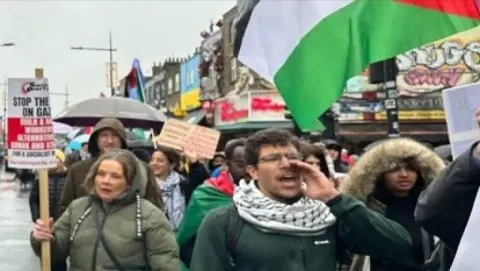
The greatest humanitarian and moral crisis humanity is facing today is Israel's massacre of Palestine. Israel's ongoing crimes against Palestine, both humanitarian and war crimes, have continued unabated since October 7th. However, it appears that the West's so-called superiority, based on values and morals, on which it has based its material superiority for centuries and, in parallel, imposed on the entire world, is revealing its true colors in the reaction to the events in Gaza. Western thinkers and intellectuals have little to say about the massacre unfolding before the eyes of the world.
In this sense, a general silence prevails in the Western intellectual world on the subject, and this silence has been broken by Slavoj Žižek, Judith Butler, Jürgen Habermas, and several other intellectuals. However, some of these statements are reserved and passive, while others are entirely pro-Israel. This perspective study also evaluates the reactions of prominent Western thinkers and intellectuals to Israel's actions in Gaza following the October 7th coup.
ŽIŽEK SUPPORTS ISRAEL, SYMPATHY FOR PALESTINE
Slavoj Žižek wrote an article published in Project Syndicate on October 13th. He began by stating that the ""Hamas attack must be condemned unconditionally."" He described Hamas's attack on Israel on October 7th as a ""pogrom"" and argued that Hamas aimed to destroy the State of Israel and Israelis with this attack. He also stated that the historical context of the war needed to be highlighted. However, Žižek addressed this historical context only through the Palestinian suicide bombings of the previous decade and Israel's transformation into a theocratic state under Netanyahu's government. On the other hand, he interpreted the Israeli-Palestinian war—reminiscent of his previous approach to this issue—through the lens of ""ultranationalist"" attitudes and groups. In this context, he stated, ""Hamas and Israeli hardliners are two sides of the same coin."" In the final section of his article, Žižek stated:
This may sound like a utopia, but the two struggles are actually part of the same whole. We can and must unconditionally support Israel's right to defend itself against terrorist attacks. But at the same time, we must show unconditional sympathy for the truly desperate and desperate conditions of Palestinians living in Gaza and the occupied territories.
The first striking point in the article is Žižek's characterization of Hamas's attack as a ""pogrom."" Pogrom, a word of Russian origin, essentially means genocide. This word, which has a general meaning in Russian and refers to mass violence, was first used in Russia to describe acts of violence against Jews. In later periods, it also came to refer to genocidal attempts against Jews and/or other nations.
While Žižek characterized Hamas's October 7th attack as a pogrom, he described Israel's attacks on Palestine, much more mildly, as a "right to self-defense," almost justifying them. Furthermore, he emphasized the need for "unconditional support." However, when it came to the Palestinians, he updated the phrase "unconditional support" to "unconditional sympathy."
Furthermore, it is noteworthy that Žižek, after stating that the Israeli-Palestinian war must be evaluated within its historical context, addresses this context in a rather superficial and lacking depth. Indeed, he stated that the historical context, which he considered important, was triggered by the Palestinian suicide attack ten years ago, and that bilateral relations had deteriorated under Netanyahu's government. He also argued that there were ultranationalist groups on both the Israeli and Palestinian sides, and that both sides favored a struggle to the death. Therefore, he stated that the possibility of peace and negotiation was slim. It is surprising that Žižek portrays this “two-sided struggle” as a struggle between equals rather than a clash of asymmetrical forces. However, reducing the Israeli-Palestinian war to a struggle between ultranationalist groups simplifies the inhumane situation that has been going on for years and undermines its gravity and seriousness.
On October 18, Žižek made headlines with his speech at the Frankfurt Book Fair. The fair administration openly supported Israel, and the award that Palestinian author Adania Shibli was to receive was revoked for this reason. Žižek described the revocation of the award as scandalous.3 He also began his speech by stating his unconditional condemnation of Hamas's attack and his recognition of Israel's right to self-defense. Although she felt compelled to repeat these sentences frequently due to the reactions she received during her speech, her use of phrases such as "People are being massacred in Gaza too," "There can be no peace in the Middle East without resolving the Palestinian issue,"" and ""We must listen to the Palestinians as well" at least humanized the reserved tone she used in her last article somewhat. It's plausible that Israel's attack on Al-Ahli Baptist Hospital on October 17, resulting in the deaths of many civilians, played a role in this. This situation is noteworthy because it demonstrates that civilian deaths can be tolerated by intellectual circles as long as they don't reach a statistically significant level that would draw criticism.
JUDITH BUTLER'S WEAK VOICE AND THE "MOURNING COMPASS"
During this period, Judith Butler came to the fore with statements that, while not particularly harsh, could be considered more courageous than Žižek's. In his article titled ""The Compass of Mourning,"" published in the London Review of Books on October 19, the Jewish thinker stated that he condemned the action taken by Hamas ""without reservations or buts."" He also emphasized that Israel's acts of violence against Palestine are overwhelming, emphasizing that Palestinians have been killed, dispossessed, tortured, and faced countless other forms of violence to date: From systematic land seizures to routine airstrikes, arbitrary detentions to military checkpoints, and forced family separations to targeted killings, Palestinians have been forced to live in a state of both slow and sudden death.5
However, Butler also emphasized that Israeli violence does not exonerate Hamas. In short, while condemning Hamas's attack, he stated that it has a historical context, and within this context, the inhumane conditions Palestinians have been subjected to for a long time. However, Butler was forced to reiterate repeatedly that this "contextualization" should not be interpreted as a whitewashing of guilt. Butler also criticized the media, stating in her article that the media had failed to detail the "horror" the Palestinian people have long endured. She emphasized that it was not only humane to demand that the violence, grief, and anger experienced by Israelis be acknowledged; she also emphasized that Palestinians should not be ignored. Otherwise, she emphasized, "racism" would set in. Stating that she embraced a policy of nonviolence, Butler stated, "Without equality and justice, without an end to the state violence perpetrated by Israel, itself a state founded on violence, no future can be imagined. "She declared that she wanted" a world that supports Palestinians' right to self-determination and freedom."
Subsequently, 87 academics and thinkers, including Butler and feminist writer Nancy Fraser, issued a statement condemning the massacre in Gaza and calling on their colleagues to do the same.
The statement emphasized that it was wrong to begin the history of the violence with Hamas's October 7th attack, that the occupation of the West Bank and Gaza had been ongoing for 56 years, and that peace must now be achieved.6
However, this statement, which called on academics and thinkers to speak out against the massacre, was harshly criticized by many. Indeed, Yale University professor Sheyla Benhabib described the statement as ""glorifying Hamas and its October 7th atrocities as a legitimate act of resistance against the occupying power."" Regarding Israel, Benhabib stated, “Israel should be condemned for not doing everything in its power to avoid bombing the civilian population of Gaza, which now apparently exceeds 9,000.” He also argued that Hamas deliberately placed its weapons under hospitals and mosques, arguing that this could not be ignored.
JÜRGEN HABERMAS AND THE “Statement on the Solidarity Principles”
Finally, Jürgen Habermas, Nicole Deitelhoff, Rainer Forst, and Klaus Günther issued a statement titled “Statement on the Solidarity Principles.” The statement argued that Hamas’s attack, carried out “with the intention of destroying Jewish life,” had prompted the State of Israel to retaliate.
In this context, it was stated that Israel was fundamentally justified and that attributing “genocidal” intent to its actions was a mistake. The text addressed Germany's past with the following words: Israel's actions in no way justify anti-Semitic reactions, especially in Germany. It is unacceptable that Jews in Germany are once again subjected to threats to their lives and bodies and forced to fear physical violence in the streets. The democratic ethos of the Federal Republic of Germany, based on the obligation to respect human dignity, is closely linked to a political culture in which Jewish life and Israel's right to exist are fundamental elements worthy of special protection in light of the mass crimes of the Nazi era. This commitment forms the basis of our political life. The fundamental rights to freedom and physical integrity, as well as the right to protection against racist slander, are indivisible and apply equally to everyone. Everyone in our country who, under all sorts of pretexts, has fostered anti-Semitic sentiments and opinions and now finds the opportunity to express them without restriction must also abide by this principle.
The declaration's emphasis that "Jewish life and Israel's right to exist are fundamental elements worthy of special protection, in light of the mass crimes of the Nazi era," in particular, clearly demonstrated that some German intellectuals, in an attempt to absolve themselves and their past, did not hesitate for a moment to impose the price of their historical crimes on the Palestinian people.
It is possible to say that Habermas has adopted differing stances on past wars. For example, he defended and supported the First Gulf War10 and NATO's bombing of Yugoslavia.11 In 2003, during the Iraq War, he published a statement with Derrida emphasizing the violation of international law and calling on Europe to "return to Enlightenment values." 12 However, Habermas, who introduced concepts such as "deliberative democracy" and "communicative rationality" to literature, completely abandoned his own established thought system and values when Israel violated international law and unconditionally supported Israel.
Furthermore, it should be noted that Habermas has never held an anti-Israeli stance in the past. Indeed, his statements regarding the Israeli-Palestinian issue, from past to present, have had a rather reserved tone.13 For example, in a 2012 interview, when asked about his thoughts on Israeli politics, Habermas responded, “While the current situation and policies of the Israeli government require a political assessment, this is not the job of an ordinary German citizen of my generation.”14 The emphasis on “an ordinary German citizen of my generation” appears to embody a remembrance of, and historical shame about, Germany’s violent past against Jews. However, creating new others to compensate for past “otherization” of Jews is unacceptable.
CONCLUSION
The Western intellectual world and intelligentsia appear to have generally fallen silent on the Palestinian issue. The voices of those supporting Palestine have been weakened and/or silenced by their contemporaries. On the other hand, it is possible to argue that even the slightest support for Palestine and the Palestinian people has been "terrorized" through "Hamas" and labeled "anti-Semitism." This appears to be the primary reason why both Žižek and Butler repeatedly reiterate that "Hamas must be condemned unconditionally."
On the other hand, a group of intellectuals, particularly Habermas and his colleagues, have not even had the courage to remain neutral and have positioned themselves entirely on the side of Israel, perhaps with the aim of erasing German history or their families' Nazi past from memory. This group's statements are almost based on the assumption that the Israeli-Palestinian war began with the Hamas attack on October 7th.
The historical context and continuity voiced as objections to this are being criminalized by these circles as an "attempt to whitewash Hamas." Thus, the already feeble voice of Western intellectuals is being further silenced. While demonstrations of various sizes are being held in the West against the Israeli massacre, Western thinkers, intellectuals, and philosophers once again appear to have fallen far behind the public. Intellectual groups that previously initiated social movements and, in this sense, pioneered change and the establishment of order, are now far behind society, falling silent. Although objections have been voiced in this context, they have either failed to have a strong impact, remained neutral, or failed to go beyond "conditional condemnation." This demonstrates that Western thought and value judgments have become practically dysfunctional.