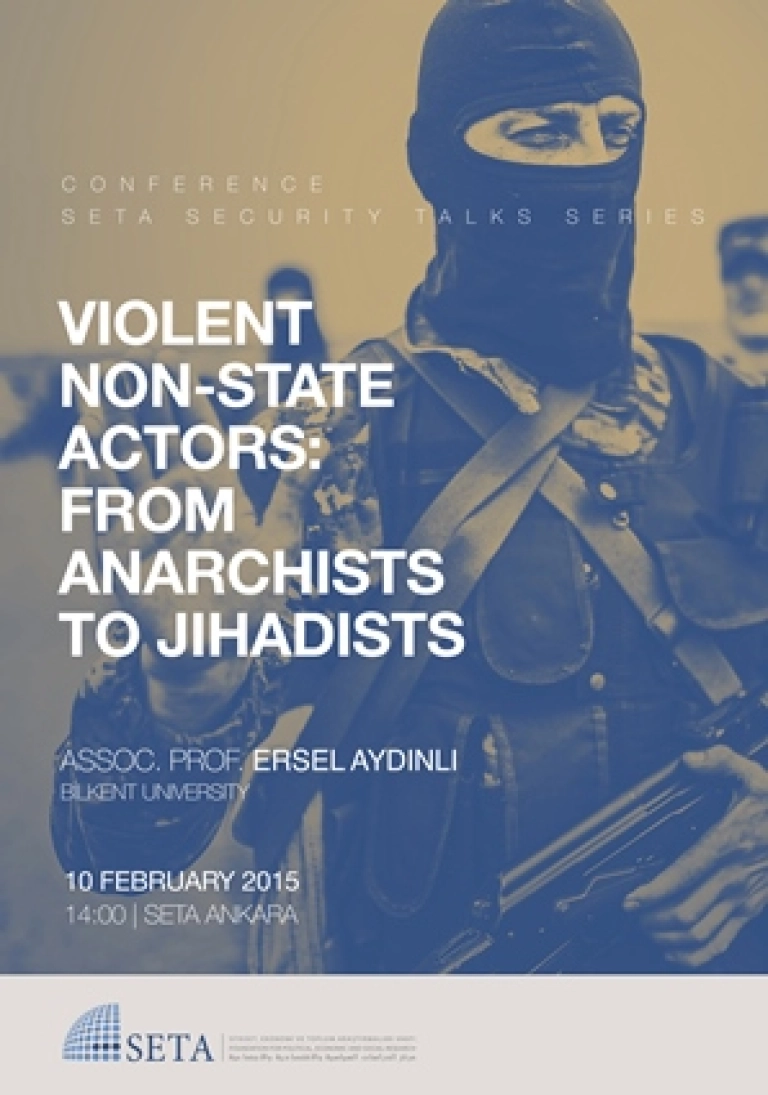
Violent Non-State Actors: From Anarchists to Jihadists
| Speaker |
|
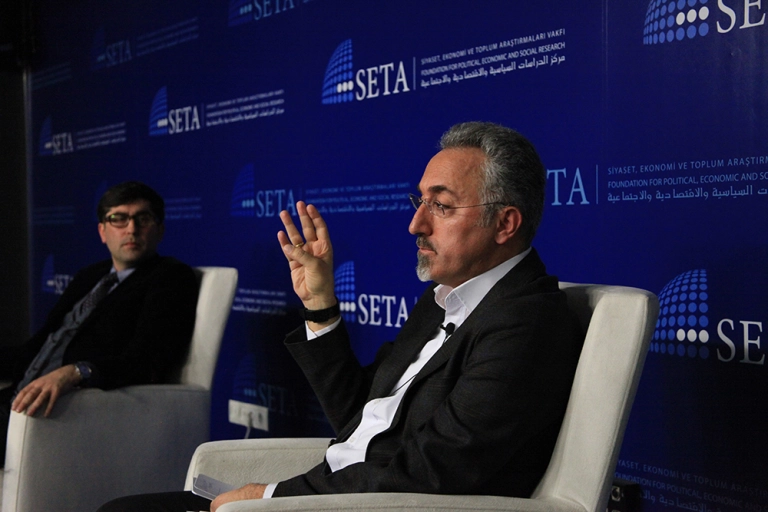
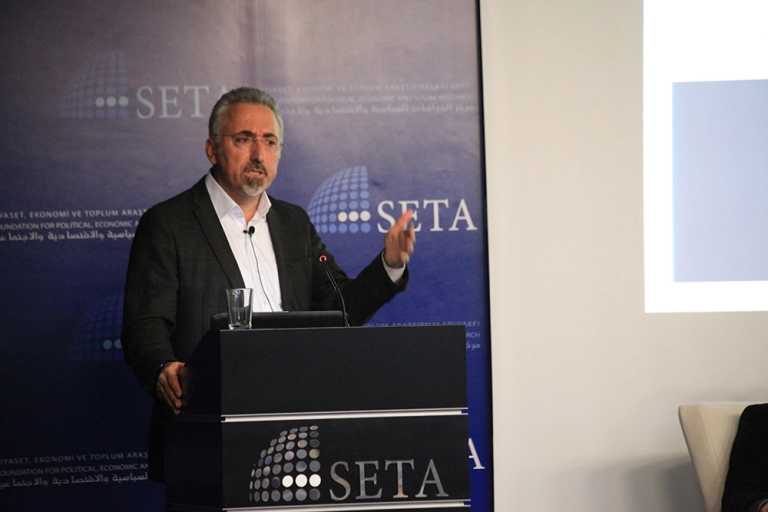
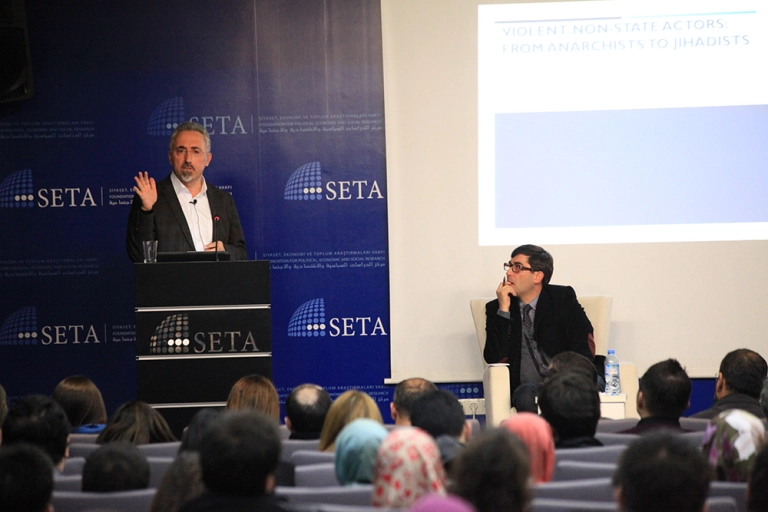
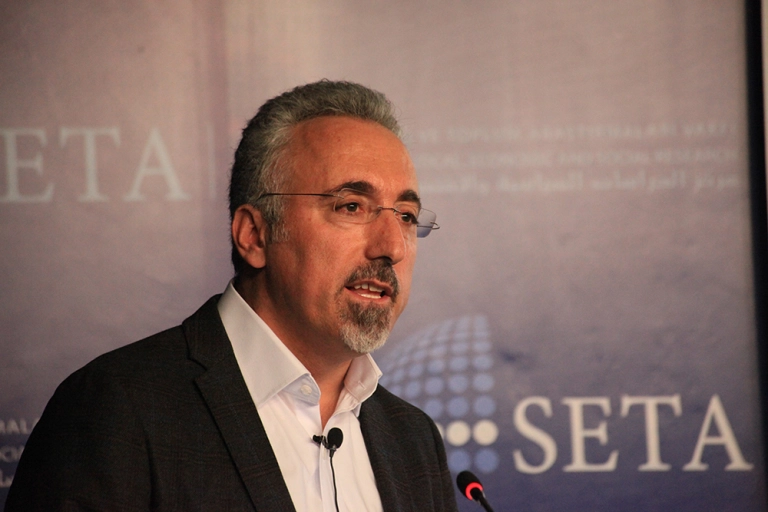
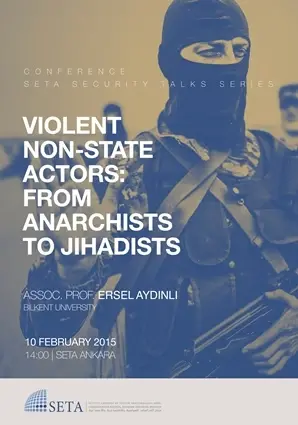
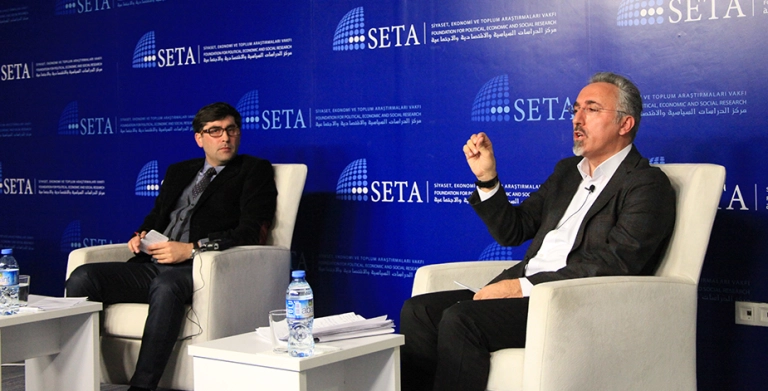
We were joined today at the SETA Foundation in Ankara by Assoc. Professor Ersel Aydınlı from Bilkent University to discuss his upcoming book, “Violent Non-State Actors: From Anarchists to Jihadists” within the context of the rise of radicalism / extremism in the Middle East. Aydınlı’s work on violent non-state actors (VNSA) is invaluable to the field of security studies as it provides researchers not only to ability to categorically analyze these actors, but to understand their underlying purpose.
What Aydınlı stressed most to all attendees was his definition of terrorism. He clearly addressed this controversial term that takes on a different meaning in the hands of different politicians and media outlets. Aydınlı made it clear that in his eyes, terrorism is simply a method by which the weak fight the strong. It has different motivations depending upon who employs it, but in no uncertain terms, Aydınlı believes that any actor who purposefully kills innocent civilians should be classified as a terrorist.
During his research for his book, Aydınlı utilized three levels of analysis to understand openly VNSA, which he shared with us at the panel. The first level of analysis concerns the autonomy of these actors. In his research, Aydınlı created the definition of a “perfect non-state actor”, which is one that has no connection or reliance upon any state and is able to survive state-persecution. Additionally, the actor can distance itself from the international state system and its regulations. These actors have the economic and political authority to conduct their activities without any limitations. While not every violent non-state actor is perfect, this provides a standard to which we can compare all VNSA.
The second level of analysis that he employed looks at the representation of these VNSA: How do these groups legitimize and manage themselves? In order to legitimize themselves, Aydınlı said these groups often position themselves against another entity, oftentimes a dictator or an “apostate” regime in order to legitimize their actions. In order to remain powerful, these groups also need to maintain the membership of their groups which requires the generation of loyalties. They must generate an identity strong enough to make their members forget or willingly relinquish their other identities. When there is a large influx of fighters, there then arises the necessity of managing group overstretch, where large numbers bring ideological and organizational differences to the surface.
Aydınlı’s third level of analysis addresses the influence of these groups and the relation of their influence to the sustainability of their projects. The group’s ability to resist deterrents, their flexibility and ability to adapt directly affects their ability to continue their projects. Additionally, the impact of their actions is important for their mission. Aydınlı stressed the importance of the reaction to the acts of violence perpetrated by these groups. He believes that the worst thing that can happen to a terrorist group is for them to carry out an attack and not receive a reaction.
It is within this context that Aydınlı maintained the need for responsible journalism and reporting when addressing the issue of terrorism, as an irresponsible approach can cause problems in combatting VNSA and terrorism. In a globalized world where technology allows information to be transmitted immediately, media coverage of VNSA can often be sensationalized and spreads quickly, which can lead to rash, poorly thought out reactions to attacks, specifically in democracies who rely more upon public opinion.
It was with this that Aydınlı summarized his research by sharing his Terrorism Cycle (Trap). The Professor stressed the importance of avoiding immediate and emotion-based reactions in favor of formulating an appropriate and strategically secure response. Aydınlı stressed that the response to a terrorist attack determines the future fate of counter efforts, making the response the most important part of the Terrorism Cycle (Trap). Terrorist attacks are designed to prepare the “perfect trap” for countries to fall into and there are many who have done so. In order to prevent a continued rise of terrorism, Aydınlı conveyed the importance of avoiding this trap and developing appropriate decisions that do not provide non-state actors with the social, political, and economic conditions that allow them to grow.