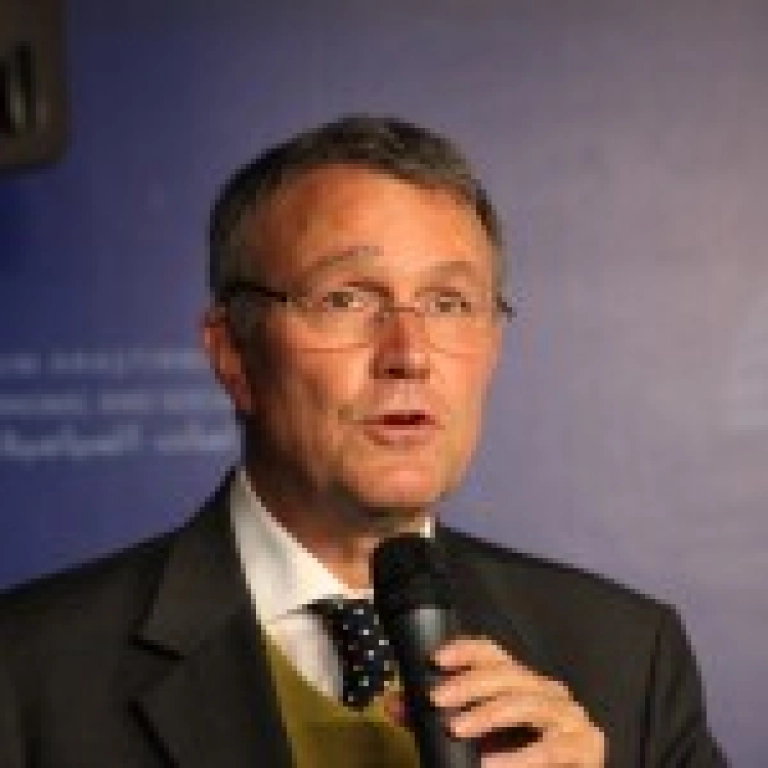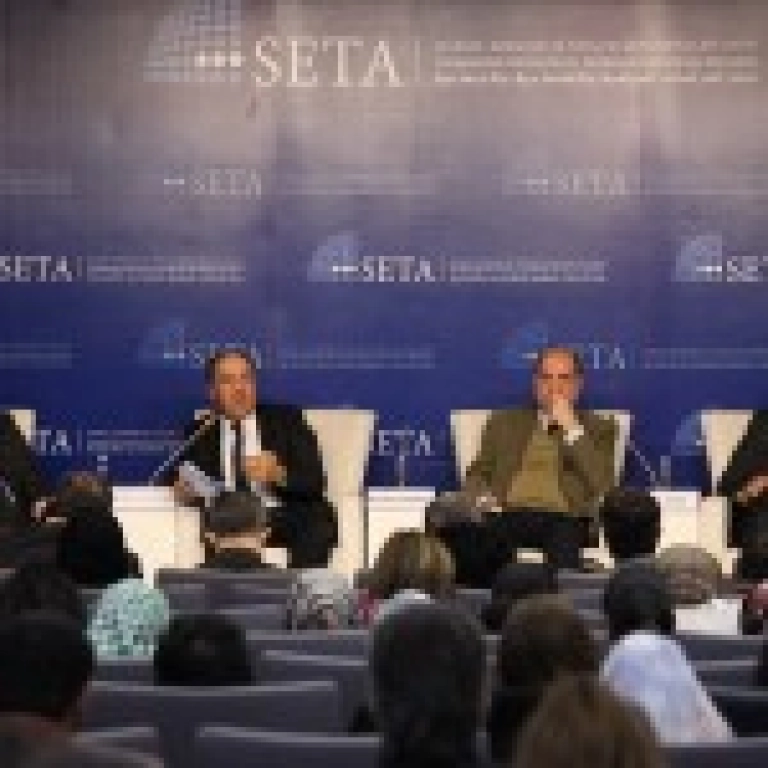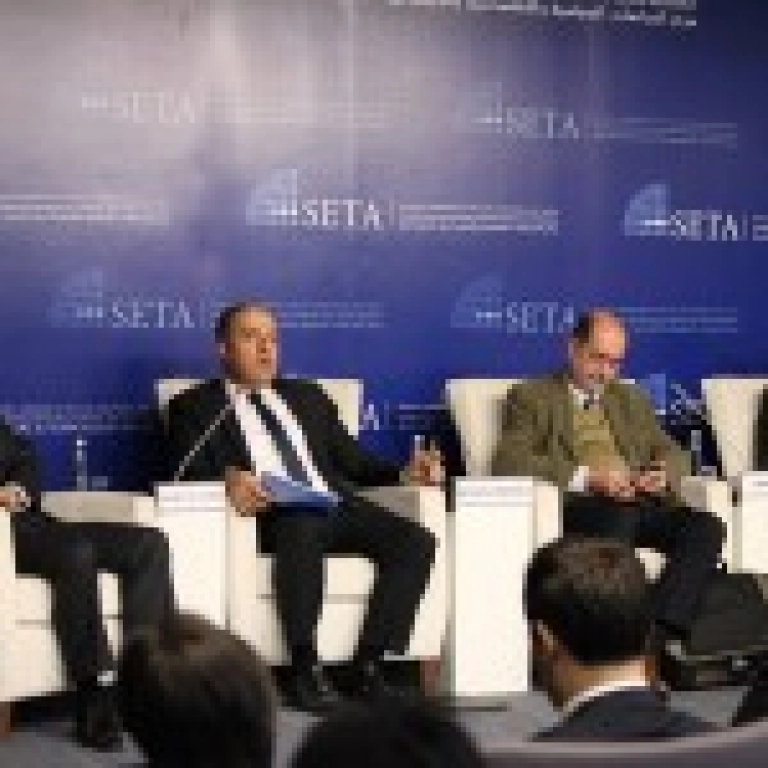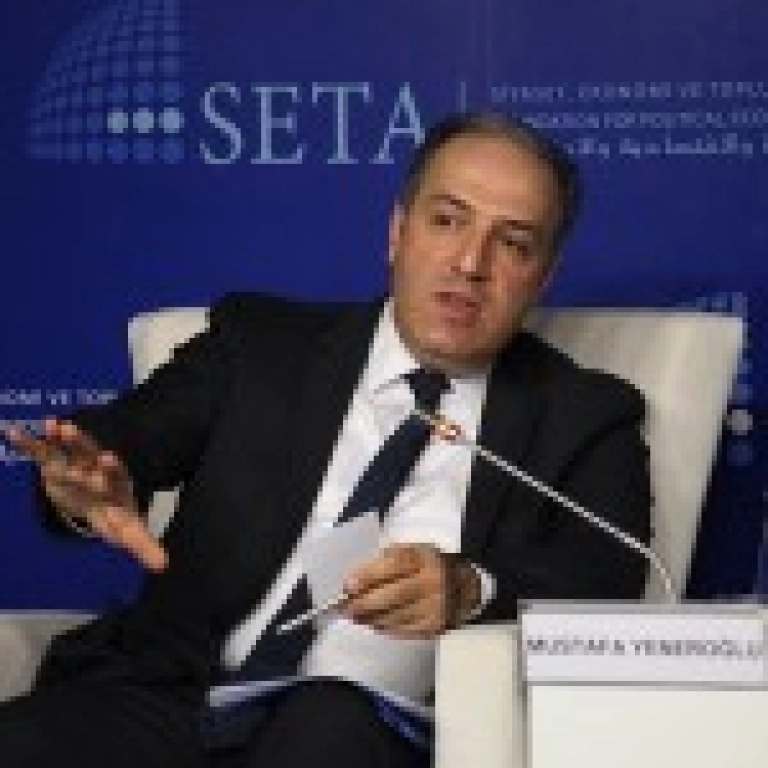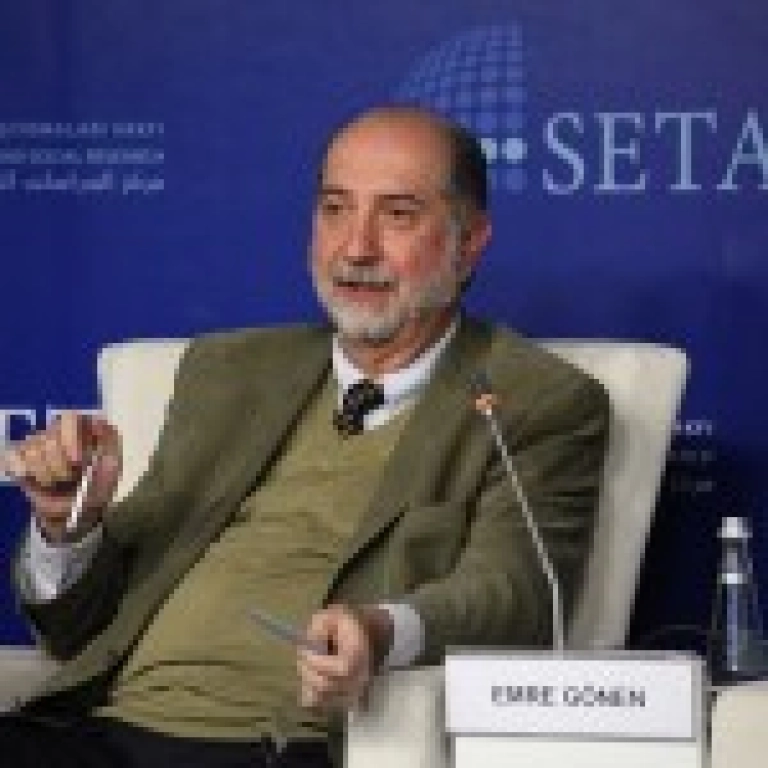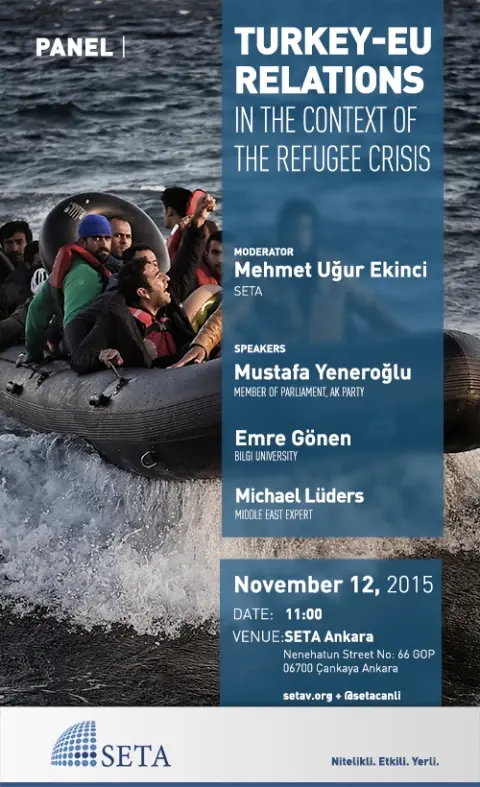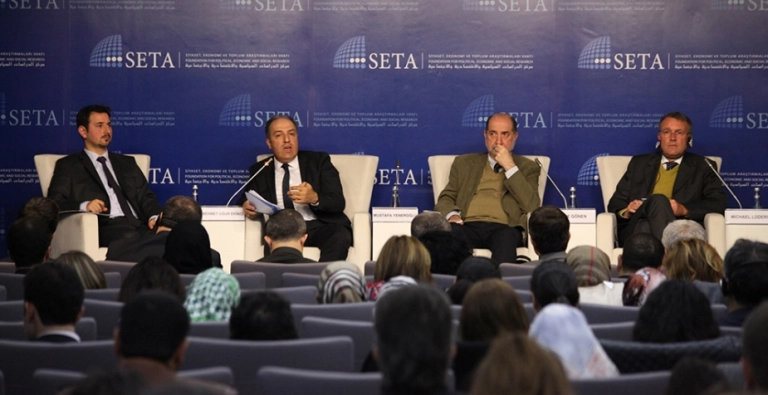
A panel took place under the directorate of SETA Foreign Policy on 12th November 2015, 11:00 a.m. with the attendance of AK Party İstanbul Member of Parliament Mustafa Yeneroğlu, Lecturer from İstanbul Bilgi University Emre Gönen and German Middle East Expert Micheal Lüders as guest speakers. Opening the panel, Mehmet Uğur Ekinci provided the audience with bold figures stating that there are currently 2.2 million Syrian, 300 thousand Iraqi and 50 thousand Afghan refugees in Turkey at present. He then left the speakers with some questions as to how the relationship of Turkey and Europe plays a role in addressing the refugee crisis.
The first panelist AK Parti İstanbul Member of Parliament, Mustafa Yeneroğlu started off by stating that the challenges faced by Turkey today is real because as a country Turkey has always been sending migrants to other parts of the world rather than receiving migrants in this respect. Providing a legal perspective, he continued by stating that this becomes much more apparent as we look deep into the constitution where we can see that it is not designed in a manner to support or resolve refugee related issues, mentioning that these issues have been addressed in the 2015 Turkey report produced by the EU. The legal status provided by Turkey is that refugees from the Middle East can only be granted as with an asylum status meaning that policies for integration and acceptance should be constructed in line with the rearrangement of the constitution on this matter. Mr Yeneroğlu also stated that the EU aimed at creating a buffer zone by securitizing Turkey’s borders and making a ‘safe status’ country in the light of the Dublin Agreement, meaning that the ‘readmission agreement’ can be implemented in Turkey without a doubt. In this manner, the EU is encouraging immigrants to stay in Turkey, as in return they offer to ease restrictions on Turkey and normalize certain criticisms made in the 2015 Turkey report. He finished off by responding to questions on the ‘emergency action plan’ stating that the philosophy deep within the emergency action plan is unjust and that the EU is distancing Turkey from Europe in the light of its new security policies.
The second speaker, Emre Gönen, began by claiming that the history of Turkey indicates that it is a country with experience in immigration. He said that, what makes today’s crisis different from that of the past is that, today the migration is taking place from Mıddle Eastern countries, whereas previously this took place from the Balkans and the Caucasians region. He also touched upon topics in relation to visa applications and potential issues that may arise for the European Union Customs Union. Gönen further implemented that rather than EU-Turkey relations what makes the current situation more complex is the behavior of Southern Cyprus not being in line with European Union’s founding principles. In addition to this, he stated that the poor handling of Europe on the refugee crisis leads him to make the following statement that Turkey saved the honor and lives of approximately 2.5 million people through their open door policy.
The third speaker, Michael Lüders went into depth on the European perspective, particularly German reactions to the refugee crisis. He began by claiming that the European Union within itself has yet to reach a common ground on the refugee crisis, further explaining that the ground route through the Balkans pose a higher threat to the livelihood of refugees that those that reach Europe by sea through Libya. He touched upon the fact that Hungary and Poland have now fenced borders, and that the UK and France have refrained from inclining themselves into the crisis, as it has been demonstrated through the amount of refugees they have accepted to ‘take in’ until the end of the year. Lüders also heavily criticized the West, and said that it was western policies that led to the huge influx of refugees from Syria as well as the continuing waves from İraq and Afghanistan. Returning back to Europe and how the continent should act upon the crisis which is yet to reach its peak, Lüders emphasized on the issue of islamophobia, particularly in Germany as well as the rise of the extreme right parties, giving the reason that Europe was too ignorant to the issue of mass migration from foreign lands outside of the European sphere. Giving the case of Germany, he further explained that Europe uses the term ‘migrant’ meaning that their immigration has yet to come to an end, further implying that European politics is not ready for the next wave of immigrants- pointing out that this could potentially be coming from Egypt as the country is on the verge of economic collapse.
[efsflexvideo type="youtube" url="https://www.youtube.com/watch?v=PJB1JH-jAvA" allowfullscreen="yes" widescreen="yes" width="420" height="315"/]