The Role of Turkey in Dealing With Global and Systemic Challenges
LECTURE | NOVEMBER 12, 2014| Moderator |
|
| Speaker |
|
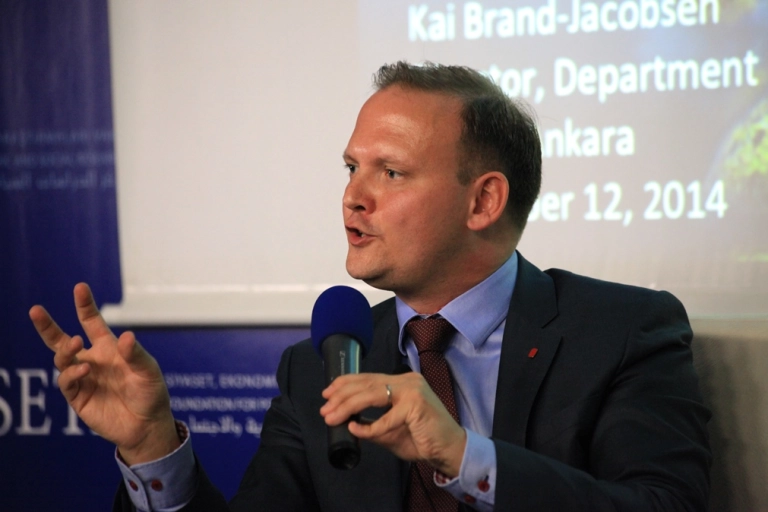
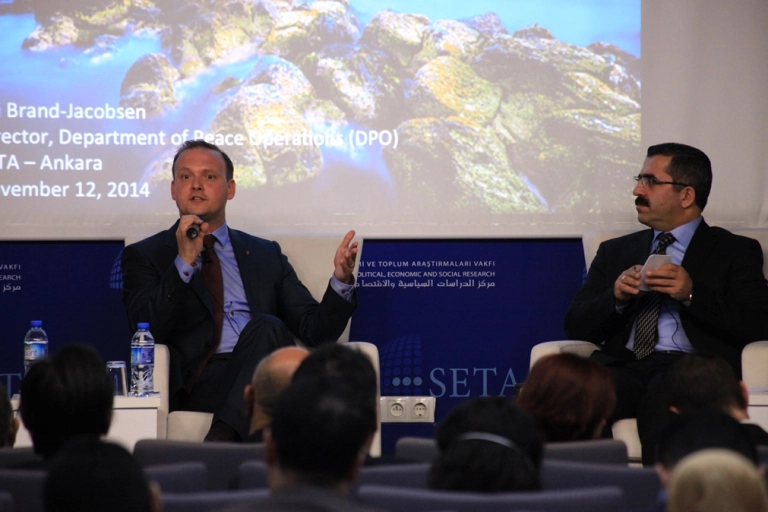
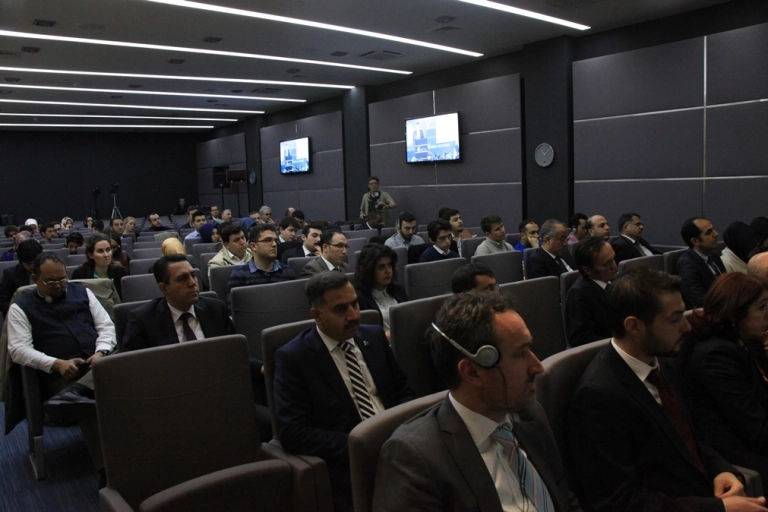
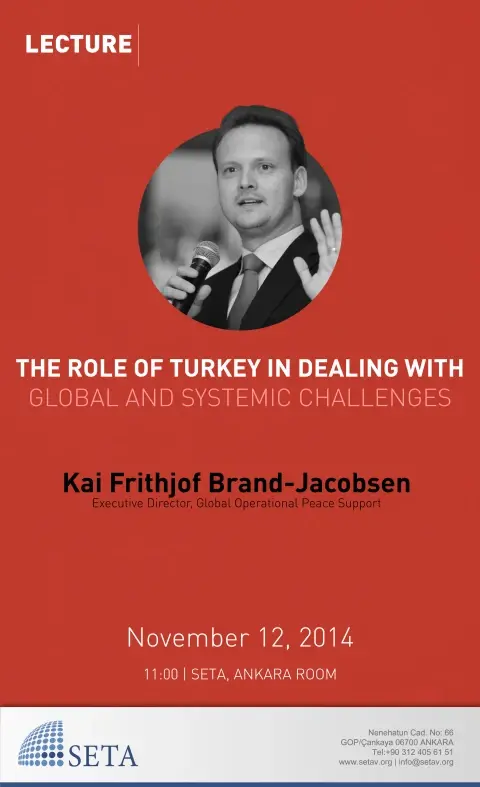
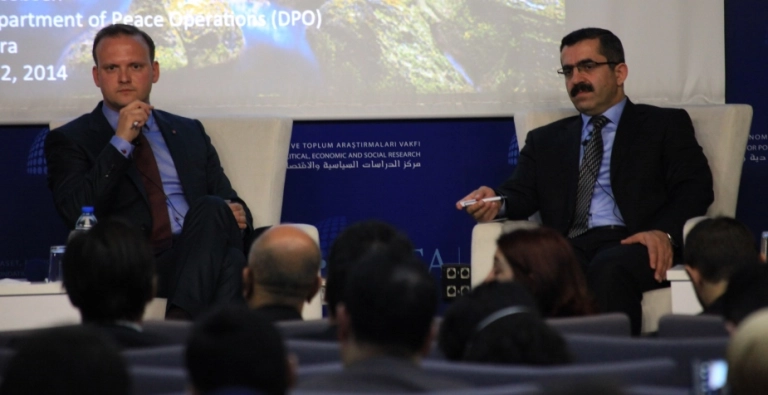
Together with the Haceteppe University, the Ankara-based think tank Foundation for Political, Economic and Social Research (SETA) has organised a public lecture by Kai Frithjof Brand-Jacobsen, an international expert in mediation and peace processes, on Wednesday. “The role of Turkey in dealing with global and systemic challenges” as the lecture was called, aimed to gain a deeper understanding of complex crisis and systemic challenges, the cost of failing to address them effectively and an appreciation for the difficulty but also practical and responsibilities necessity of evolving better, more effective ways of dealing with crisis, challenges, and opportunities.
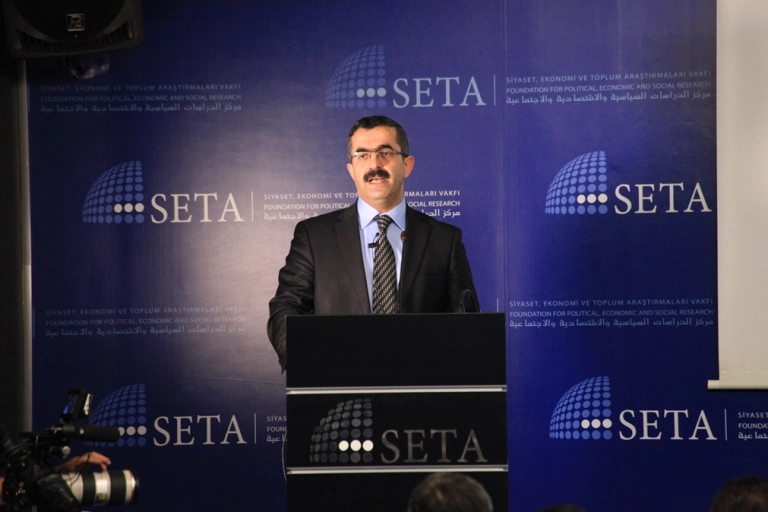
The welcoming speech was given by Muhittin Ataman, Deputy General Coordinator of SETA, and spoke about Turkey’s position between the East and the West and how it acts as a social and cultural bridge between the two. Although Turkey has had a passive foreign policy for decades, it has recently shown that it can be an important political actor in the Middle East by involving itself in mediation processes, for example, between political groups in Iraq, between Lebanon and Syria and Saudi Arabia and Syria. Faced with difficult challenges a crises, the Middle East is in need of a constructive state that promotes peace and stability in the region and some look at Turkey, who might be able to fulfil an important role in the current critical circumstances.
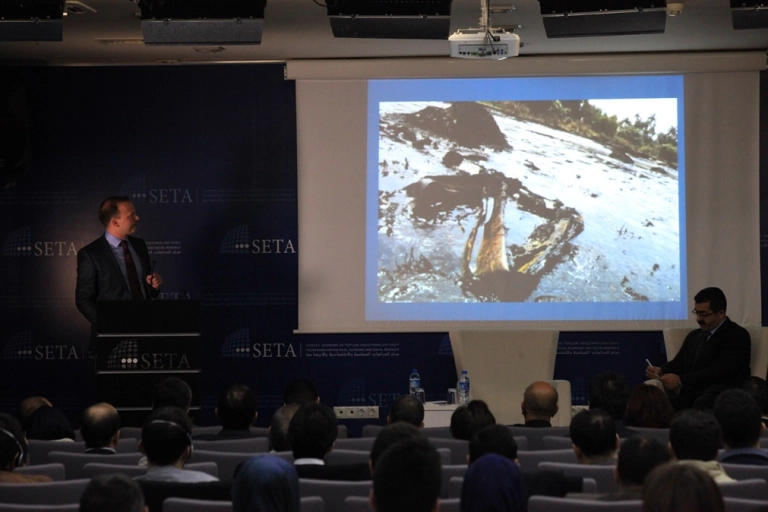
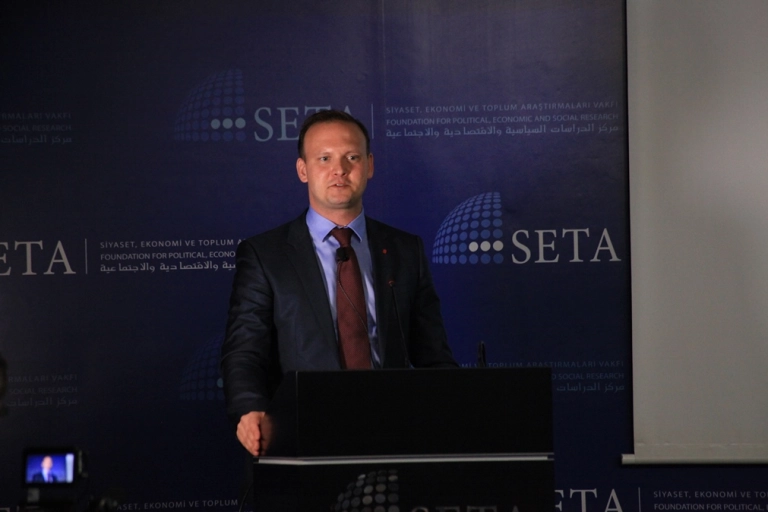
During his lecture, Brand-Jacobsen discussed the complex crisis and systemic challenges that the world faces today. One can think about pollution, climate change, famine, illiteracy, widespread diseases and epidemics, violation of human rights, the impact of war, humanitarian disasters, financial crisis, homelessness, poverty and inequality. Many of today’s crises are complex, they are “volatile, uncertain, complex and ambiguous” (VUCA) and they do not have one single cause nor will they be solved with only one answer. This is because many of these crises are systemic which means that they are built into the way we are dealing with economics, politics, social and environmental issues. According to Brand-Jacobsen, the way we are dealing with these challenges today, are not contributing to a well-grounded solution.
Referencing to Rebecca D. Costa’s book “The Watchmen’s Rattle”, Brand-Jacobsen addressed the question of what has blocked our solution to systemic challenges. One can explain the collapse of history’s greatest civilizations on the basis of failure of governance, continual warfare, the overexploitation of warfare, but these explanations do not address the fact that none of these problems appeared overnight. Problems develop over years and decades. The maintained the use of scape goats, siloed thinking, the failure to constructively engage with diversity, faulty premises, reinforcing myths and the lack of systems of accountability has stood in the way in dealing with systemic challenges thoroughly. Brand-Jacobsen stated that although our capacity to deal with conflicts and challenges has increased throughout the years, because it has become more extraordinary, productive, scientific and innovative, we are still not able to fully draw upon our capability to deal with them.
With the recent conflicts and wars in the Middle East, Brand-Jacobsen said that Turkey, due to experiences with diversity in the past and its experiences as a mediator and facilitator in the region, can play an important and significant role. Brand-Jacobsen also stated that there is an opportunity for Turkey to become a global model and inspire and contribute to peace processes elsewhere in the world, when it will overcome its own challenges such as the Kurdish question, the Cyprus issue and the conflicting issues with Armenia.
Brand-Jacobsen ended his lecture with the following quote: “I am neither an optimist nor a pessimist but I have hope born of the choices I make and the actions I take.” The actions that we take in regard to our facing challenges will influence how the challenges develop in the future.