Syriza's Victory and After: The Future of Greece and Europe
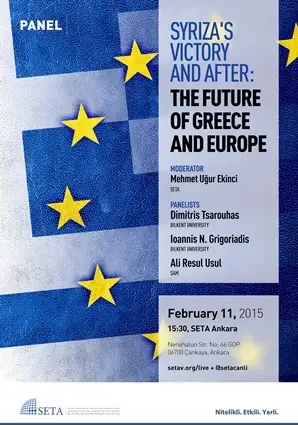
| Moderator | Mehmet Uğur Ekinci, SETA |
| Speakers |
|
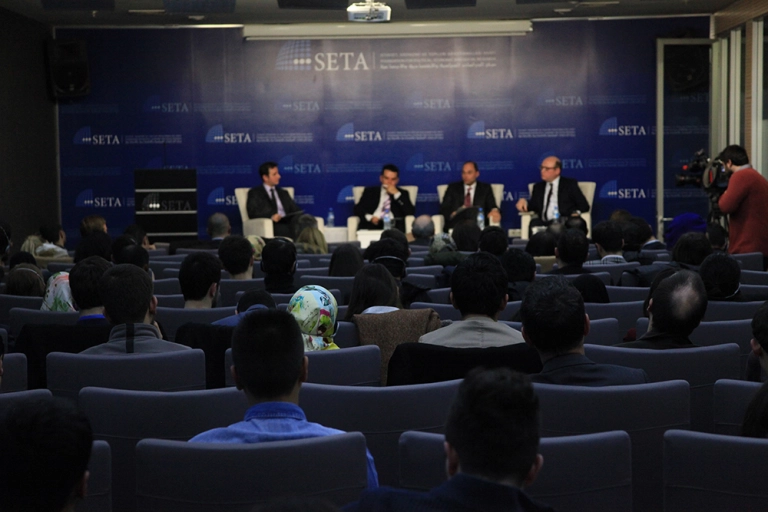
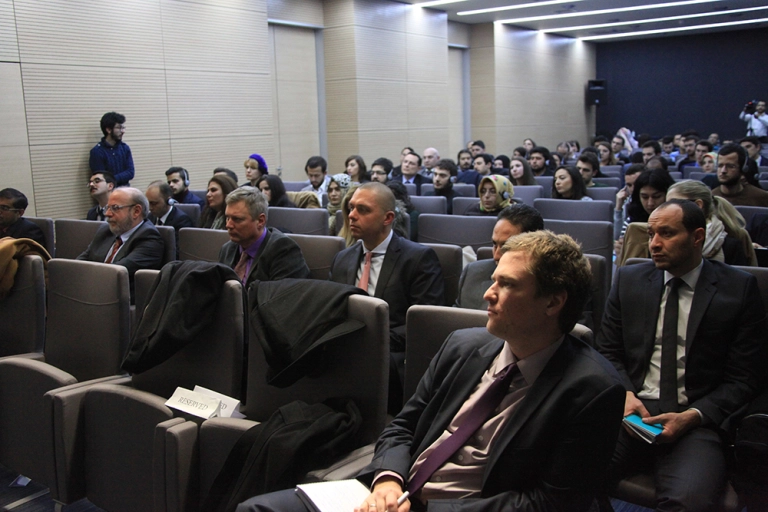
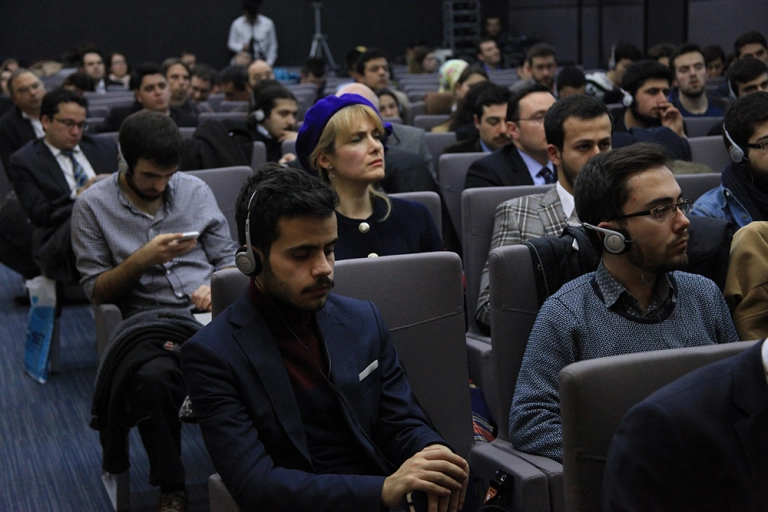
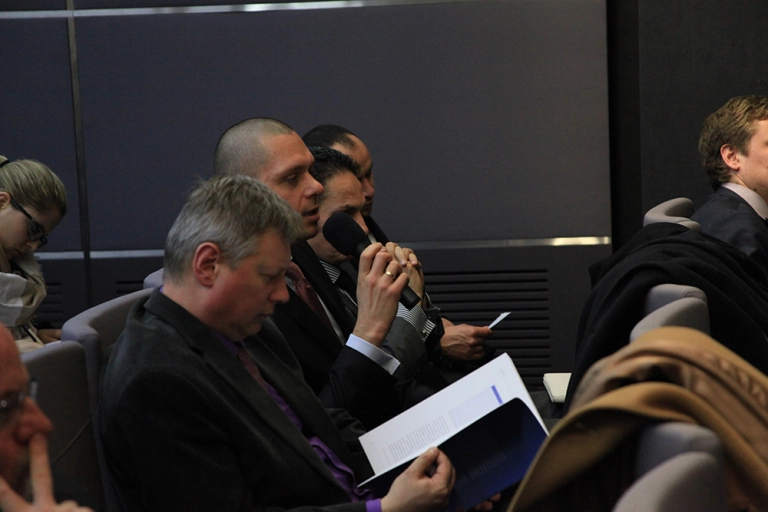
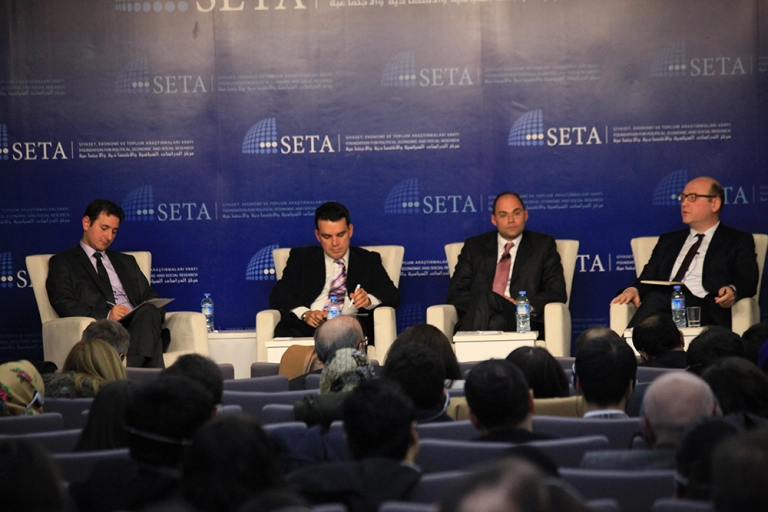
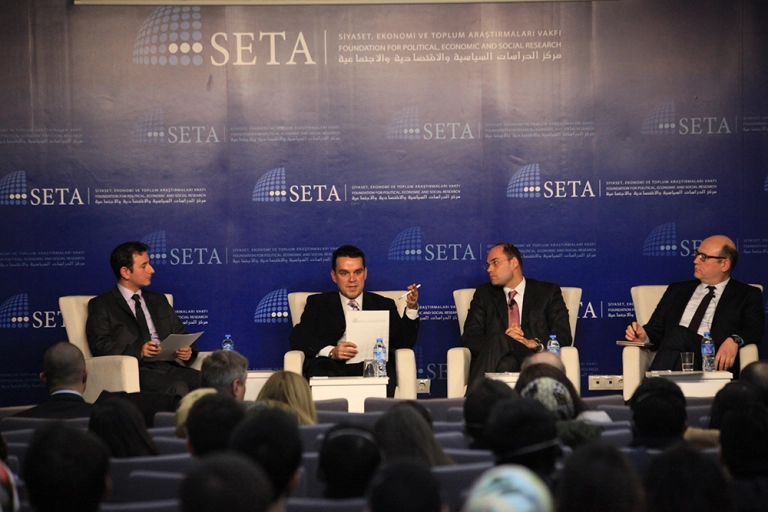
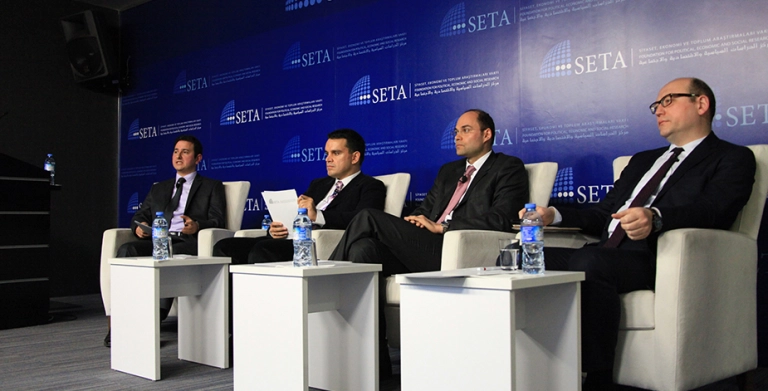
SETA Foundation hosted on February 11, 2015 a panel to discuss SYRIZA’s rise to power, the panel focused on key elements such as the rise of radicalism in Greece, the origin of SYRIZA, the Turkish-Greek relation, the future of the relation between Greece and the EU, besides other political and economic visions. SETA was joined by Dr. Ioannis Grigoriadis and Dr. Dimitris Tsarouhas from Bilkent University, and Professor Ali Resul Usul from Center for Strategic Research.
Dr. Ioannis Grigoriadis started the discussion by mainly focusing on the domestic issues of Greece. The big failure of the coalition government that preceded SYRIZA was somehow responsible for the economic crises. Thus SYRIZA’s strategy was to focus and highlight on hope, people thought that things were so bad with the government that they needed to change, a matter which contributed in SYRIZA’s success in the elections. Dr. Grigoriadis highlighted that although SYRIZA is a party that came from the periphery of Greek political spectrum, it has in fact many ideas that are not peripheral but rather mainstream. SYRIZA’s main argument is that the austerity policy should come to an end. In Grigoriadis’ opinion, SYRIZA’s growth was possible due to the inclusion of party members from PASOK, thus it is not considered to be a complete new actor in the field. Dr. Grigoriadis also talked about Golden Dawn party, a neo-Nazi party that was able to consolidate its position in Greek politics. Grigoriadis finds it highly possible that if SYRIZA fails, many people would vote for the Nazi party out of anger or maybe to punish the political system. In the end of his discussion, Dr. Grigoriadis pointed out to the questions regarding the issue of deficit, and the Greek economic model and how it should be designed so that it becomes competitive.
Dr. Dimitris Tsarouhas discussed the historical origin of the party, the political economy of SYRIZA and Europe, and the Turkish-Greek Relations. What started off as the coalition of the left, became later on the coalition of the radical left. In Tsarouhas’s definition, the historical nucleus of this party lies in the Greek version of euro communism, an alternative left movement which broke off from the traditional left wing communism by embracing Europeanism. Tsarouhas said that the election of SYRIZA is a wakeup call to the European institutions that have sought to follow economic orthodoxy which does not pay out. Tsarouhas highlighted on the positive improvements SYRIZA’s government has made in European politics, SYRIZA brought politics in Europe back into the picture. Regarding the Turkish-Greek relations, Tsarouhas mentioned that the foreign policy area might witness the least change; SYRIZA will continue on the path of the previous relation with Turkish government, there will be no major fundamental shift in the relation.
Professor Ali Resul Usul focused mainly on the Turkish-EU relation in light of the Greek elections. SYRIZA is a more complicated structure, the Turkish-Greek relation has been relatively good recently, but the Cyprus question has been hijacking the process of negotiations. SYRIZA is likely to change European political dynamics, it is considered as a source of inspiration. Usul said that Europe is more likely to witness more security concerns, as well as an increase in extremism. Usul focused on the mixed signals that are occurring; according to commentators, SYRIZA may form close relation with Russia even though the EU is united about the sanctions against Russia.