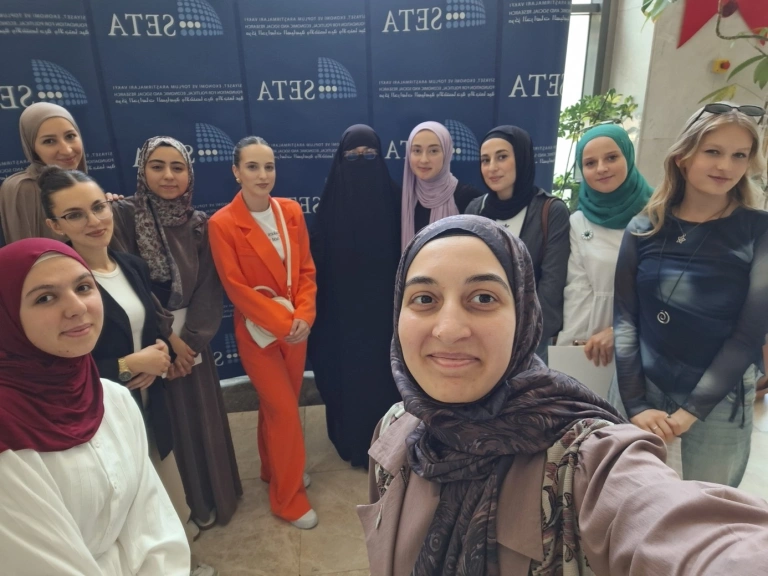
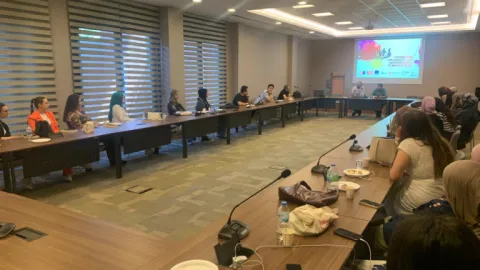
The Foundation for Political, Economic and Social Research (SETA) implemented the program as part of an ERASMUS+ project aimed at increasing young people’s knowledge on migration, migrants, and refugee issues, and encouraging their engagement in policymaking processes. Organized by the SETA Academy Directorate, the program was held in Istanbul with the participation of around 80 students from various cities across Türkiye as well as from several other countries.
In today’s world, the ease of crossing borders, globalization, increased mobility, technological advancements, and ongoing civil conflicts have accelerated international migration movements, leading individuals to relocate more frequently for various reasons. With migration, individuals’ identities, cultural codes, and everyday practices may undergo transformation as they encounter new sociocultural environments in the destination country. This process plays a decisive role in acculturation, adaptation, and participation in social life. SETA conducts research on disadvantaged groups within the scope of its social policy studies and develops policy proposals on vulnerable populations such as children, youth, women, migrants, and the unemployed. This project was likewise implemented to raise young people’s awareness of migration and to encourage the development of innovative solutions.
The program aimed to provide participants with a comprehensive understanding of the phenomenon of migration through both theoretical and practical content. On the first day, students were introduced to key concepts through sessions addressing questions such as “What is migration?” and “Who is considered a migrant?”, establishing the analytical foundation of the program. In the following days, they engaged with topics including “Global Trends in Migration and Mobility,” “Migration Through Real-Life Stories,” “Legal Status of Migrants,” “Migration and Migrants in Cinema,” and “Integration, Assimilation, and Xenophobia,” allowing them to explore migration from both global and local perspectives. Contributions from students representing different countries enriched the sessions and enhanced the program’s multicultural and interactive character.
In addition to theoretical lectures, applied workshops played a central role. During the group work on the OECD Migration Database, participants analyzed international migration statistics and gained key skills for data-driven policy assessment. In the “Policy Proposal Writing” workshop, students developed suggestions aimed at strengthening migrants’ adaptation to social life. Film analyses, debates, and discussion groups helped participants explore the social and cultural reflections of migration in the context of everyday life. In the later stages of the training, students examined the roles of civil society organizations in migration governance, discussed contemporary debates on the link between climate change and migration, and considered future-oriented scenarios of global mobility. Participants also analyzed the responsibilities of non-state actors, international organizations, and government institutions in migration management from diverse perspectives.
On the final day, a general evaluation session was held, during which participants shared feedback on how they could translate their learning into practice. Ideas were exchanged to encourage young people to take a more active role in discussions and policies related to migration and migrant integration. Concluding with a certificate ceremony, the project provided participants not only with academic knowledge but also with multicultural engagement, critical thinking, and policy development skills.
This program, carried out in cooperation with SETA and its ERASMUS+ project partners, provided an important platform for raising young people’s awareness of migration, fostering innovative policy ideas, and facilitating their future involvement in relevant policymaking processes. It offered a multidimensional learning experience on migration, migration policies, and cultural interaction.