
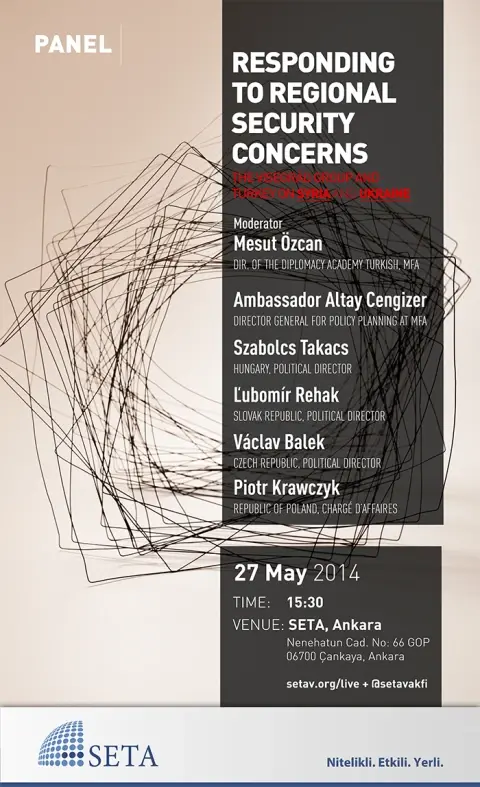
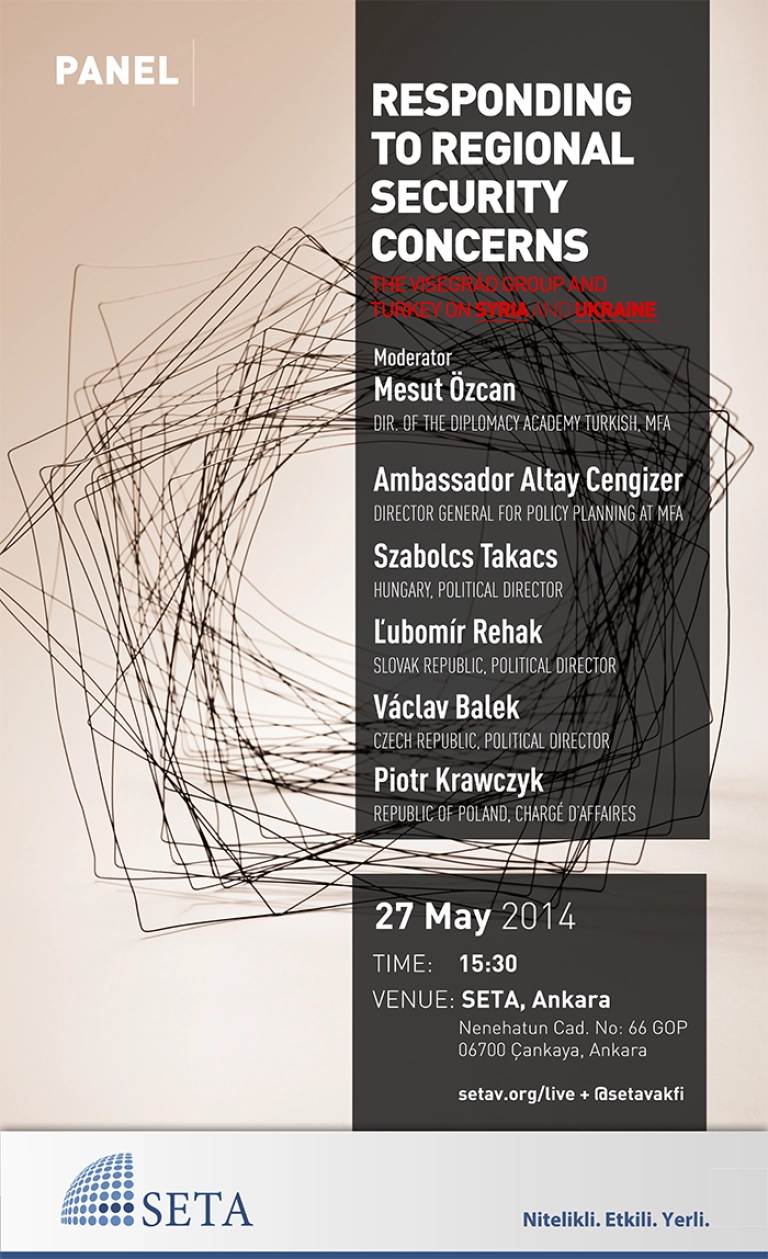
Responding to Regional Security Concerns: The Visegrád Group and Turkey on Syria and Ukraine
| Moderator | Dr.Mesut Özcan, Director of the Diplomacy Academy Turkish, MFA |
| Speakers |
|
Since the Syrian Civil War broke out in 2011, the international response has been mixed. Even within NATO, disagreement between member states has kept a decisive intervention by the organization from materializing. The crisis that has been unfolding in Ukraine over the past several months is now facing an international response with a comparable lack of uniformity. From Turkey’s perspective, a resolution in Syria is critical due to security concerns triggered by violence spilling across the border and a massive influx of refugees. For the Central European countries in the Visegrád Group (Czech Republic, Hungary, Poland, and Slovakia), the proximity of the Ukrainian crisis is particularly concerning, given their historical relationships with Ukraine and Russia. Nevertheless, the Visegrád countries and Turkey are all interested in a peaceful end to both of these issues before they further deteriorate regional stability.
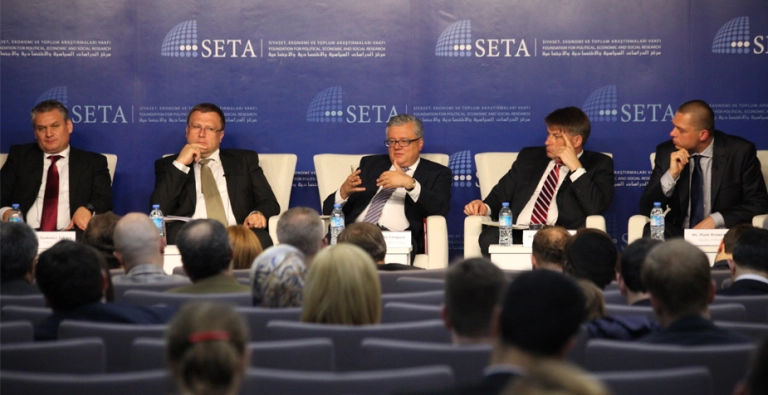
This panel will discuss the international reactions to the crises in Syria and Ukraine, including those of Russia and NATO, from the Czech, Hungarian, Polish, Slovak, and Turkish perspectives. Among the questions that will be asked:
What similarities are there between the two crises from the perspective of Central European and Turkish foreign policy? Are there any lessons we have learned from the Syrian case that we can apply now to the Ukrainian case? How do popular perceptions of the crises within the Czech Republic, Hungary, Poland, Slovakia, and Turkey influence their governments’ opinions on how they should act and their ability do so?
We very much hope you will be able to attend this event.