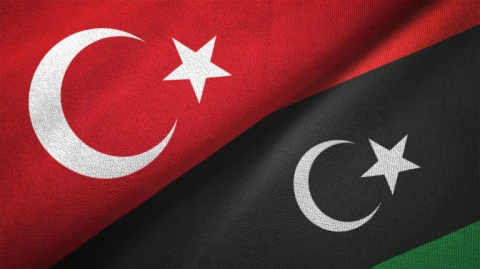
The Libyan House of Representatives' approval of the Memorandum of Understanding (MOU) on the Delimitation of Maritime Jurisdiction Areas, signed with Türkiye in 2019, constitutes a significant development for the legal, political, and geostrategic dynamics of the Eastern Mediterranean. The decision by political actors in eastern Libya to reverse their previous position and support the agreement demonstrates the results of Türkiye's diplomatic outreach in Libya, while strengthening the memorandum's political and institutional foundations within the country. Nevertheless, the decision also raises new questions concerning objections by Greece and the European Union, disputes over maritime jurisdiction, energy exploration activities, and regional security risks. In this edition of Experts Respond, our contributors assess the approval's implications under international law, its effects on Türkiye's strategic position in the Eastern Mediterranean, the possible responses of regional actors, and the future of Türkiye-Libya relations from legal, political, diplomatic, and military perspectives.
By:
Sibel Düz, SETA
Contributors:
- Yücel Acer, SETA
- Mehmet Uğur Ekinci, Social Sciences University of Ankara
- Zuhal Mert Uzuner, Marmara University
- Serhat Süha Çubukçuoğlu, Trends Group
- Murat Aslan, Hasan Kalyoncu University
- Ferhat Polat, Independent Researcher
- Bilgehan Öztürk, Anadolu Agency
 Yücel Acer
SETA
How does the Libyan House of Representatives' approval of the 2019 Türkiye-Libya Maritime Delimitation Memorandum affect the agreement's standing under international law? To what extent does this decision strengthen Türkiye's claims concerning maritime jurisdiction in the face of legal objections from Greece and the EU?
On 27 November 2019, Türkiye and Libya's Government of National Accord (GNA) signed an agreement delimiting the maritime jurisdiction areas of the two countries in the Eastern Mediterranean. The agreement established a boundary approximately 30 kilometers in length, separating the continental shelf and exclusive economic zone (EEZ) areas of the two countries. This boundary, drawn in an area where the countries' opposing coasts face one another, was based on the principles of equidistance and the absence of continental shelf and EEZ entitlements beyond the territorial waters of the Greek islands in the area.
At the time, Greece, Egypt, the Greek Cypriot Administration of Southern Cyprus (GCASC), and the then Syrian regime objected to the agreement between Türkiye and Libya's GNA. Greece advanced two grounds for its objection. First, it maintained that Türkiye and Libya could not conclude such an agreement on the basis of their coastlines because the continental shelf and EEZ areas of Greek islands lay between them. Second, it argued that the agreement had not been approved by the Libyan House of Representatives and had therefore not entered into force. Türkiye, by contrast, stated that the agreement was valid because it had been signed with Libya's GNA, and subsequently submitted it to the United Nations (UN) Division for Ocean Affairs and the Law of the Sea for publication. Egypt based its objection on the contention that the GNA lacked the authority to conclude such an agreement. In Egypt's view, Türkiye's agreement with Libya was, in this respect, contrary to the Libyan Political Agreement signed on 17 December 2015.
The Libyan House of Representatives announced on 22 October 2026 that it had approved the agreement. Its approval has substantially weakened the grounds advanced by the countries that challenged the agreement's ratification. The parliamentary approval eliminates one of Greece's two stated grounds for objection and, in Egypt's case, its sole stated ground.
Another important dimension of the Libya-Türkiye agreement is that Libya has explicitly accepted Türkiye's position that, owing to their locations and the manner in which they obstruct Türkiye's continental shelf, the Greek islands in the Aegean have no legal entitlement to continental shelf or EEZ areas beyond their territorial waters for the purposes of maritime delimitation. The agreement therefore also has important implications for the Aegean and the Eastern Mediterranean. While it is of considerable importance to Türkiye, it constitutes a particularly unwelcome legal instrument for Greece. Accordingly, approval by the Libyan House of Representatives further strengthens Türkiye's legal position in any future delimitation of maritime jurisdiction areas in the Aegean. It also reinforces Türkiye's legal arguments concerning the island of Meis in the Eastern Mediterranean.
Following the approval by the Libyan House of Representatives, Greece and Egypt, as well as the European Union (EU), issued statements declaring that they did not recognise the Libyan Parliament's approval. It should be emphasised that the EU's official statement on this matter is entirely political in nature and has no legal value. This is because Türkiye's counterparts in the delimitation of maritime boundaries are the other states concerned, not the EU. In other words, maritime boundaries between Türkiye and Greece or between Türkiye and Egypt can be established through international agreements concluded by the countries themselves. The EU has neither the legal standing nor the status of a party to this matter.
 Mehmet Uğur Ekinci
Social Sciences University of Ankara
How might Libya's decision affect Greece's diplomatic strategy in the Eastern Mediterranean and Türkiye-Greece relations? Could the EU's continued objections to the agreement create a new source of tension in Türkiye-EU relations?
For Greece, maritime jurisdiction areas are among the most important elements of the national interest. Greece seeks to draw the boundaries of its maritime jurisdiction as far outward as possible and regards those boundaries as non-negotiable. In previous years, Athens hoped to develop relations with the Haftar camp in Libya and thereby delimit maritime areas in accordance with its own claims. The unanimous decision of the Libyan Parliament has dealt a major blow to those ambitions. There appears to be a prevailing perception in Greece that Libya has, in effect, been lost to Türkiye. I expect Greece to apply to Libya the same strategy it has pursued against Türkiye. I anticipate closer Greek relations with like-minded countries in the region and new initiatives against Türkiye and Libya in international forums, particularly the EU and UN. Since the Türkiye-Libya memorandum is incompatible with Egypt's maritime claims as well as those of Greece, the two countries may move closer together in the coming months. Greece will also seek the support of Israel, another of its regional partners, in opposing Türkiye's presence in the Eastern Mediterranean. Depending on the outcome of the forthcoming US elections, Greek Cypriot and Israeli lobbying groups may intensify their efforts to secure concrete measures from Congress concerning the Eastern Mediterranean.
As a natural consequence of the EU membership of Greece and the GCASC, the Union has adopted a position in the Eastern Mediterranean that aligns with their interests. Maritime jurisdiction was a major point of contention between Türkiye and the EU in 2019-2020, when the Council of the EU even adopted certain restrictive measures against Türkiye. The swift response to the Libyan Parliament's approval of the bilateral memorandum indicates that the EU maintains this position and continues to attach importance to the issue. It would not be surprising if EU officials reiterated their claims that the agreement is unlawful on various occasions in the future.
The EU's next steps will depend on the extent to which the differences among regional actors over maritime jurisdiction translate into developments on the ground. Unless a crisis emerges, I do not expect the EU to introduce restrictive measures or sanctions. Should a crisis escalate, however, the EU would likely adopt a position adverse to Türkiye and Libya. Greece may therefore view a controlled increase in regional tensions as a favourable scenario for securing stronger EU support and persuading member states to impose sanctions on Türkiye and Libya. In the short term, such a scenario could arise if the Great Sea Interconnector (GSI) project, which enjoys financial and political EU support and has a French company as its principal shareholder, proceeds without coordination with Türkiye.
 Zuhal Mert Uzuner
Marmara University
How might Libya's decision affect Greece's diplomatic strategy in the Eastern Mediterranean and Türkiye-Greece relations? Could the EU's continued objections to the agreement create a new source of tension in Türkiye-EU relations?
Immediately before Libya's decision, Greece had been making emphatic statements about its determination to complete the Great Sea Interconnector (GSI) cable connection. Greek officials expressed confidence that they would also secure French support through the French company involved. The financial resources provided by the EU were among the principal motivations. There was even discussion of a possible military confrontation if necessary, given that failure to initiate or complete the GSI project on schedule could expose Greece to various penalties. This, however, formed part of a Greek strategy to transpose its sovereignty-related disputes to the EU level and thereby seek to overcome Türkiye's resistance.
In an area where maritime boundaries have yet to be conclusively delimited, Greece and the GCASC regard obtaining their own permission as both necessary and sufficient for an operation of this kind. In doing so, they seek to present the Seville Map as legitimate and valid. They also invite all actors that might benefit from the EU to support their definition of their own interests. Yet, regardless of whether the EU or other actors become involved, there is nothing lawful or equitable about attempting to create a fait accompli while avoiding negotiations and disregarding Türkiye. Türkiye is one of the sovereign actors in the region. The approval of the delimitation agreement by the parliament of Libya, another sovereign actor, is an exercise of sovereign authority that goes well beyond the remit of EU officials.
For Greece, this new situation may be described as the reversal of its fait accompli strategy. Under the new circumstances, Türkiye and Libya will not permit unauthorised operations in their maritime areas. Greece has also placed itself in a difficult position with regard to obtaining the necessary permissions. Having previously treated its own consent as sufficient, Greece now faces a situation in which that consent is inadequate. Delays to the committed construction works would put Greece under financial pressure and leave it facing the prospect of repaying €675 million. Beyond this substantial financial liability, the French company might seek to proceed by obtaining permission from Türkiye. Alternatively, the project could advance through a process of informing all regional actors. Either course would undermine the Greek strategy of disregarding Türkiye and establishing a fait accompli through the EU. Indeed, statements from the United States also point in this direction, calling for Greece and the French company to proceed through cooperation.
 Serhat Süha Çubukçuoğlu
Trends Group
How might the Libyan House of Representatives' approval of the Türkiye-Libya maritime delimitation memorandum affect the military and strategic balance in the Eastern Mediterranean? Could intensified energy exploration in disputed areas give rise to new security risks and military tensions between Türkiye and Greece?
The policy Türkiye has pursued with determination since 2019 to protect its rights and interests in the Eastern Mediterranean has yielded an important diplomatic gain. The Libyan House of Representatives' approval of the Türkiye-Libya Maritime Delimitation Memorandum on 20 October 2026 has strengthened the political and institutional foundations within Libya of an agreement that has been in force since 2019. Türkiye's approach, which has enabled dialogue with all parties in Libya and the development of military and economic relations on a mutually beneficial basis, has substantially neutralised Greece's efforts to incite Libya against Türkiye.
The convergence of the two sides in Libya, represented by the authorities in Tripoli and Benghazi, on a common position constitutes a major achievement for Türkiye. In the future, it could, for example, help sustain political support for Türkiye's military presence in the country and create new opportunities to develop existing areas of military cooperation, including in Misrata. The aspirations of certain countries seeking to confine Türkiye to the Gulf of Antalya in the Eastern Mediterranean and remove it from the island of Cyprus have been frustrated. Although the EU has no official, legally binding map, Türkiye's Blue Homeland approach, which Ankara grounds in international law and the principles of equity, has gained broader political and institutional support within Libya in the face of the Seville Map, which reflects Greece's maritime jurisdiction claims.
The decisive test of the Libya memorandum on the ground will begin when both parties move to implement the agreement they have drawn on the map. The areas designated under the memorandum concluded between Turkish Petroleum Corporation (TPAO) and Libya in 2025 do not yet encompass areas disputed with Greece. However, if Greece's energy exploration activities with the US company Chevron around Crete extend, particularly at a later stage, beyond 26° east longitude (further east), Türkiye may find it necessary to issue stronger diplomatic responses and even deploy naval units to the area.
Libya has likewise formally protested offshore exploration activities and seismic surveys south of Crete in areas for which Greece has granted Chevron licences. If, on the basis of its memorandum with Türkiye, Libya also grants TPAO exploration licences in more northerly areas closer to Crete, and Türkiye begins exploration there, tensions could rise again with the deployment of Turkish naval forces. Moreover, Greece may extend its territorial waters around Crete to 12 nautical miles in the medium term. While this would not directly have an adverse effect on Türkiye's maritime jurisdiction areas, it could allow Greece to test the ground for similar moves east of Crete and the Dodecanese in the future.
In response to these developments, Türkiye has now acquired greater international legitimacy for defending its Blue Homeland position more forcefully. If the draft Maritime Jurisdiction Areas Law prepared by the Ankara-based National Centre for the Law of the Sea (DEHUKAM) is submitted to Parliament and enacted, Türkiye will also have a stronger basis in domestic law, enhancing its deterrence against unilateral faits accomplis by Greece.
 Murat Aslan
Hasan Kalyoncu University
How might the Libyan House of Representatives' approval of the Türkiye-Libya maritime delimitation memorandum affect the military and strategic balance in the Eastern Mediterranean? Could intensified energy exploration in disputed areas give rise to new security risks and military tensions between Türkiye and Greece?
The Libyan House of Representatives' approval of the Maritime Delimitation Agreement signed between Türkiye and Libya may be interpreted from several different perspectives.
The Greeks and Greek Cypriots, who base their arguments on agreements to which Türkiye is not a party, must now respect a legitimate framework. The fact that actors in Libya who hold differing views and have fought one another in the past have moved beyond their divisions on this issue strengthens the agreement in both legal and political terms. In this context, it is worth recalling that Dendias previously travelled to Benghazi to meet Haftar but, on another occasion, departed Tripoli Airport in protest against Libyan Foreign Minister Najla Mangoush. The political legitimacy previously accorded to Benghazi should now be recognised as having worked to Türkiye's advantage in this matter.
It should also be recalled that the maritime delimitation agreement between Türkiye and Libya was registered with the UN Office of Legal Affairs before the subsequent agreement between Greece and Egypt was signed. Accordingly, the sequence of events also confirms the agreement's political validity within the framework of international practice.
The outcome of the agreement is, in fact, quite clear: Greece's Enosis claim, in other words, the aspiration for union with the Greek Cypriots without taking the Turks into account, has now collapsed. A second consequence is the prospect of heightened regional tensions, with Israel, the Greek Cypriots, and Greece potentially seeking to adopt concrete measures, perhaps also persuading Egypt to join them. Tensions may be expected to increase, particularly following the EU's decision in favour of Greece and the Greek Cypriots. Türkiye, however, is prepared for such a scenario and possesses the capacity to take countermeasures in the region.
 Ferhat Polat
Independent Researcher
What political and geopolitical dynamics explain the decision by the House of Representatives in eastern Libya to reverse its previous position and approve the agreement with Türkiye? What does this decision signify for Türkiye's rapprochement with the Haftar administration and the process of political reconciliation in Libya?
The maritime delimitation memorandum signed between Türkiye and Libya in 2019 carries strategic significance for the geopolitical balance of the Eastern Mediterranean beyond the bilateral relationship between the two countries. While defining Türkiye's and Libya's rights concerning maritime jurisdiction, the agreement also provides a framework for exploring regional energy resources and developing economic cooperation. Estimates attributed to the United States Geological Survey (USGS) suggest that the Eastern Mediterranean contains natural gas reserves worth approximately $700 billion, further enhancing the region's economic and strategic significance.
One of the memorandum's principal strategic dimensions concerns Türkiye's response to efforts to exclude it from regional arrangements governing maritime jurisdiction and energy policy in the Eastern Mediterranean. Ankara regards the agreement as an important instrument for preventing arrangements concerning the region's maritime areas and energy resources from being made without Türkiye's participation and for safeguarding its legitimate interests. In this sense, the memorandum concerns more than access to energy resources; it also forms part of Türkiye's efforts to prevent its strategic isolation in the Eastern Mediterranean and preserve its position within the regional balance of power.
The House of Representatives' approval is an important development in terms of securing broader political acceptance of the memorandum. The decision demonstrates the importance of Türkiye's diplomatic engagement not only with the authorities in Tripoli but also with actors in eastern Libya. Nevertheless, the agreement's long-term effects depend on tangible steps in the energy sector as well as the strengthening of political reconciliation, institutional cohesion, and security in Libya. The memorandum therefore retains its importance for the future of Türkiye-Libya relations and the balance of power in the Eastern Mediterranean.
Türkiye's improved relations with the Haftar-aligned authorities in eastern Libya, together with the House of Representatives' approval of the memorandum, indicate that Ankara's diplomatic engagement in Libya has broadened and that efforts towards political reconciliation have entered a new phase. Since 2019, Türkiye has maintained security and military cooperation with the Tripoli-based authorities, while also increasing its dialogue with political actors in the east from 2022 onwards. This approach is important for overcoming Libya's political divisions and establishing common ground across the country.
Türkiye's security role in Libya is not confined to support for military capacity; it is also linked to the goals of strengthening national institutions and integrating the security sector. Training and capacity-building activities undertaken under the 2019 Military Training and Cooperation Agreement are intended to strengthen Libya's security institutions. Lasting stability, however, requires the integration of armed groups operating in different regions into a common national security structure, the resolution of institutional divisions, and the establishment of an effective nationwide command and coordination system.
Nevertheless, the House of Representatives' approval of the memorandum does not mean that political reconciliation in Libya has been completed. Disagreements over the constitutional framework, divided state institutions, and security problems continue to complicate both the holding of national elections and the acceptance of their results. Türkiye's continued dialogue with actors in both Tripoli and eastern Libya thus provides an important diplomatic channel through which it may contribute to political reconciliation. Whether this process produces lasting results, however, depends on Libyan actors taking concrete steps towards national reconciliation, institutional unity, and security sector reform.
 Bilgehan Öztürk
Anadolu Agency
How does Libya's approval of the agreement affect Türkiye's geopolitical position and regional influence in the Eastern Mediterranean? What implications might this development have for Türkiye's relations with Egypt and other regional actors, as well as for new avenues of cooperation in the Eastern Mediterranean?
The Libyan House of Representatives' approval of the Türkiye-Libya maritime delimitation agreement is a strategic development that strengthens Türkiye's geopolitical position and regional influence in the Eastern Mediterranean. Its importance lies not only in the expansion of political support for the agreement on the Libyan side but also in its contribution to the process of restoring Libya's political and military unity.
Although the agreement has thus far enjoyed the support of the internationally recognised Tripoli-based authorities, Libya's de facto division had posed a vulnerability for its long-term validity and implementation. Approval by the House of Representatives based in eastern Libya substantially reduces that vulnerability. Viewed alongside efforts to establish a new executive authority in Libya and strengthen the country's territorial integrity, the decision also places one of the principal foundations of Türkiye's strategic position in the Eastern Mediterranean on firmer ground.
Another important dimension of this development is the change in the regional alignment of eastern Libya under Khalifa Haftar. The approval of the maritime delimitation agreement with Türkiye by an authority that has developed allied relations with Egypt and Greece and maintained close ties with Israel and the GCASC has the potential to alter the dynamics of competition in the Eastern Mediterranean. Ankara has thereby brought an eastern Libyan power centre with close relations to regional actors opposed to its positions onto a platform supportive of its own claims.
Although Egypt is unlikely to welcome this development, it does not appear likely to seriously affect the bilateral relations that Cairo and Ankara have improved in recent years. Egypt's good relations with the Haftar administration may also help to keep tensions under control. By contrast, tensions between Türkiye and Greece and Israel centred on the Eastern Mediterranean may become more pronounced.
Cooperation between Türkiye and Libya in hydrocarbon exploration and production is likely to gather momentum in the coming period. New licensing rounds and maritime activities, particularly by the GCASC and Greece, could, however, occasionally lead to low-intensity confrontations between the Turkish navy and European naval forces, especially those of Greece. Nevertheless, Türkiye's declaration that it does not oppose the GSI project categorically and merely requests written notification demonstrates Ankara's lack of any intention to obstruct regional cooperation or escalate tensions.