
Over the last two decades, global energy dynamics have been undergoing a structural transformation centered around sustainability goals and climate policies. Countries' carbon emission rates, energy intensities, and preferred energy sources determine not only environmental outcomes but also their economic resilience against supply shocks. In this context, when global emission rates and energy intensities, along with Turkiye's energy profile, are examined, highly significant and promising trends emerge.
Looking at global per capita carbon emission trends, a clear distinction is observed between developed countries and developing economies. While per capita emissions in European economies have experienced a steady decline over the past 20 years, this rate has shown a sharp increase in global manufacturing hubs like China. Turkiye and the world average, on the other hand, follow a more moderate but stable course between these two extremes. While the transition of developed countries from heavy industry to the service sector and green technology investments pull emission curves downward, energy demand naturally increases in countries exhibiting accelerated economic growth like Turkiye; however, efforts are being made to compensate this increase with increasingly cleaner sources.
CO₂ Emissions Per Capita for Selected Countries
The energy intensity index, which measures the amount of energy consumed per unit of Gross Domestic Product (GDP) produced, emerges as one of the clearest indicators of economic efficiency. The global trend is downward as a result of technological advancements and energy efficiency policies; that is, increasingly less energy is consumed worldwide to produce the same economic value. Turkiye's energy intensity also shows a decline consistent with this global efficiency trend. This situation indicates that the Turkish economy is able to produce more economic value by consuming less energy with each passing year.
Energy Intensity Trends per GDP
In addition to these positive developments in energy efficiency, a visionary structural transformation stands out when Turkiye's primary energy supply sources are examined. Although the use of oil, natural gas, and coal maintains its volumetric weight due to the nature of the transportation and industrial sectors; the brightest trend in the data is the rise of renewable energy sources. Clean energy sources such as solar, wind, and biofuels, which had a rather minimal share in the total energy supply in the early 2000s, have reached a very strong position with recent breakthroughs. This green transformation is a significant step taken both in limiting the country's carbon footprint and reducing dependence on imported fossil fuels.
Türkiye - Energy Supply by Source
Türkiye - Energy Supply by Source
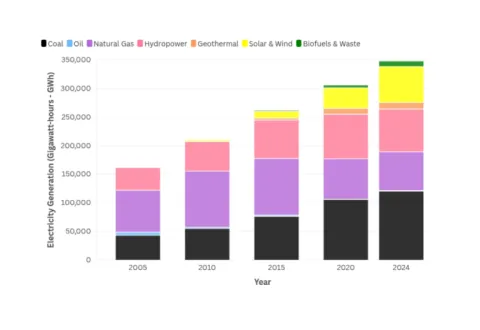
This positive structural transformation becomes much more evident when electricity generation data is examined. Although coal and natural gas power plants serve as the main actors ensuring the uninterrupted operation of the system in electricity generation, serious growth has been achieved in renewable energy, especially with the commissioning of wind and solar (PV) investments in the post-2010 period. Additionally, the strong integration of geothermal and biomass facilities into the system has been an important gain in terms of resource diversity and localization in energy. The share of hydroelectric power plants in electricity generation also supports this clean energy vision.
Türkiye - Electricity Generation by Source
In conclusion, the increase in Turkiye's energy efficiency and the rise in the share of renewable sources in both total energy supply and electricity generation present a remarkable picture. Although fossil fuels maintain their compulsory weight originating from transportation and industry; the increase in renewable energy source investments is one of the strongest pillars that enhance Turkiye's resilience against international energy shocks and secure its sustainable development goals.