
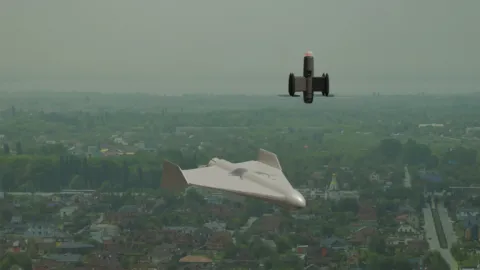
The Drone Wall should be assessed not merely as a technical initiative designed to strengthen border security against the growing unmanned aerial vehicle threat on Europe's eastern flank, but as a multi-layered counter-drone defence approach that needs to be integrated into NATO's deterrence and defence architecture. The Russia-Ukraine war has clearly demonstrated the capacity of low-cost drones and decoys to attrite air defence systems, deplete munition stocks, place critical infrastructure under pressure, and generate political-military risks within NATO airspace. Therefore, the strategic value of the Drone Wall depends not on the destruction of individual targets, but on its ability to integrate early warning, persistent surveillance, reliable identification, a shared air picture, proportionate engagement, and the protection of critical assets within a single architecture. Within this framework, the European Union can play a complementary role in financing, industrial scaling, regulation, and critical infrastructure security. However, the definition of operational requirements, the establishment of interoperability standards, and the testing of the concept in collective defence scenarios should remain NATO-centred. Otherwise, the Drone Wall may remain a politically visible but fragmented border surveillance project. If properly designed, however, it could evolve into a feasible defence layer that strengthens deterrence, force protection, and operational resilience against low-cost, high-volume, and hybrid unmanned threats on the eastern flank.
14 July 2026
From Regional Border Security to a European Defence Initiative: The Drone Wall and NATO Integration
This analysis examines the evolution of political approaches to the Drone Wall concept, its place within NATO's air and missile defence agenda, and the key parameters shaping its transformation into an Allianceintegrated counter-unmanned aerial systems (C-UAS) defence architecture.
File
From Regional Border Security to a European Defence Initiative: The Drone Wall and NATO Integration
(1.54 M)

RELATED PUBLICATIONS