
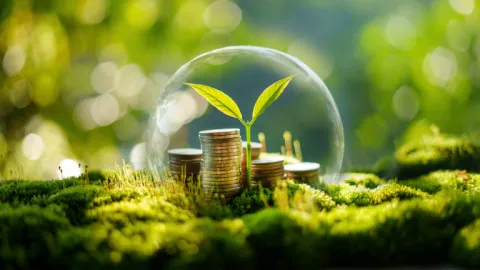
Climate change and environmental degradation have increasingly become an integral part of economic decisions and development strategies. Today, environmental policies are evaluated not merely as cost-generating regulations but as a framework that directly affects investment choices, competitiveness, trade flows, financing conditions, and consumption patterns. At the same time, phenomena such as climate-related disasters, drought, heatwaves, and ecosystem losses can create lasting pressures on production capacity, infrastructure resilience, and public budgets. In this context, the environment and economy heading refers to a multi-layered field that jointly addresses both the economic effects of environmental risks and the environmental consequences of economic growth and transformation processes.
The first dimension of the environment and economy relationship concerns the macroeconomic and sectoral impacts of climate and environmental risks. Damages caused by extreme weather events, insurance costs, production interruptions, and supply chain disruptions can exert pressure on growth, employment, and price stability. Drought conditions increase volatility in agricultural production while raising production costs in water-dependent industrial branches. Heatwaves can reduce labor productivity, increase health expenditures, and raise energy demand, thereby amplifying costs. Consequently, environmental risks are no longer assessed as local problems affecting only specific regions but as systemic risks that can affect the overall functioning of the economy. While these risks produce shocks in the short term, they also create a zone of uncertainty that influences investment decisions and growth trajectories over the medium and long term.
The second dimension concerns the effects of environmental policies on trade and competitiveness. Tools such as decarbonization targets, green industrial policies, and carbon border regulations are giving rise to new rules and cost elements in international trade. The European Union's Carbon Border Adjustment Mechanism (CBAM) constitutes one of the most concrete examples of this trend: carbon-intensive products such as steel, cement, aluminum, and fertilizers exported to the EU face a carbon cost corresponding to the emissions generated during their production process. This situation makes areas such as emission intensity of production processes, energy efficiency, and reporting capacity strategically important, particularly for export-oriented sectors. Within the environment and economy framework, the central question is how to maintain competitiveness in alignment with environmental goals and how to manage transformation costs. Here, not only large-scale firms but also SMEs, which constitute a significant portion of supply chains, directly feel the pressure of transformation. When capacity gaps emerge in areas such as product standards, supply chain transparency, carbon footprint measurement, and access to green finance, the economic impact of transformation can become more asymmetric.
The third dimension involves investment and financing dynamics. Climate policies and environmental standards have begun to rank among the key parameters directing the flow of capital. Green bonds, sustainable finance instruments, climate risk reporting, and the growing weight of environmental performance criteria in lending conditions are creating a new financial framework for both public and private sectors. Within this framework, the environment and economy heading covers not only green investment opportunities but also the impacts of climate risks on financial stability, risk premiums, and areas that create uncertainty in investment decisions. How to secure transformation financing, how public resources will create leverage effects, and under what conditions international funds will be mobilized are determinative questions for economic governance. Moreover, the financing discussion extends beyond investment volume alone: project feasibility, the predictability of the regulatory framework, data and reporting infrastructure, investor confidence, and currency risks can also affect costs and the capacity for acceleration.
The fourth dimension addresses the economic and societal consequences of transformation at the sectoral level. Energy-intensive industries, transportation, construction, and agriculture are sectors that sit at the focus of both emission reduction and adaptation policies. In these sectors, technology renewal, process transformation, and efficiency investments can affect production costs, employment structures, and regional development dynamics. For this reason, the environment and economy heading requires thinking about the "just transition" perspective alongside economic analysis. When the costs and benefits of transformation do not distribute equally across society, the feasibility of policies can weaken and impacts on income distribution become more visible. Fluctuations in energy and food prices play a critical role in the social acceptance of transformation policies. In this context, designing transformation policies with instruments that preserve production capacity while accelerating emission reduction, combined with mechanisms that support employment and protect vulnerable groups, gains importance.
The fifth dimension concerns the relationship of natural capital and resources to the economy. Forests, wetlands, coastal ecosystems, and biodiversity function not only as environmental values but also as infrastructures that support economic activities across a wide spectrum from agriculture to tourism, from fisheries to water management. Ecosystem loss can reduce production capacity and quality of life in the long term while creating income loss and employment pressure in specific sectors in the short term. For this reason, the environment and economy framework addresses growth and development debates together with the sustainable management of natural resources. Since factors such as land use preferences that increase disaster risks and unplanned urbanization can magnify the scale of economic losses, establishing a strong link between environmental planning and economic resilience is necessary. Preserving natural capital is therefore evaluated not merely as an environmental sensitivity but as a risk reduction approach that strengthens economic resilience.
The environment and economy heading also carries special importance for the design of public policies. Tools such as carbon pricing, emissions trading systems, incentives, tax regulations, public procurement, standards, and reporting obligations can determine the direction and pace of transformation. However, the effectiveness of these tools closely relates to implementation capacity and institutional coordination. Transformation policies must not remain at the goal-setting level alone; they require support through mechanisms that are implementable, monitorable, and measurable. At the same time, development strategies aligned with environmental goals require a framework consistent with industrial policy and employment policy. Here, the balance between economic rationality and societal acceptance is decisive: managing costs is important, but how to compensate for losses that may arise during the transition and how to support specific groups also forms part of policy design.
Another important axis concerns consumption patterns and market behaviors. Environmental policies affect not only production but also the demand side. Energy efficiency, shifts in transportation preferences, waste reduction, and circular economy approaches stand out among the fields that are transforming the economy-environment relationship. While these approaches carry the potential to lower costs by increasing resource efficiency, they also bring new debates around the regulatory framework, incentive design, and behavioral factors. Areas such as the circular economy, waste management, and secondary raw material markets serve as natural extensions of the environment and economy heading, with the potential to both reduce environmental pressures and generate new economic opportunities.
Türkiye occupies a position where it experiences both structural challenges and transformation opportunities at the intersection of environment and economy. Given that a significant portion of its exports are directed toward the EU market and that carbon-intensive sectors hold a dominant share in these exports, the impacts of carbon border regulations on the Turkish economy directly constitute an agenda item. The Climate Law that entered into force in 2025 and the national emissions trading system pilot studies represent steps toward converting these external pressures into domestic policy instruments. Green taxonomy, the green transformation certification system, and energy efficiency action plans stand out as frameworks aimed at strengthening the institutional infrastructure of the transformation.
Under this heading, topics such as the economic effects of environmental risks, the implications of climate policies on competitiveness and trade, transformation financing, cost-benefit balances at the sectoral level, the economic value of natural capital, and resource efficiency are addressed. The core set of questions includes the following: Through which channels do environmental risks affect economic stability? How are the costs and benefits of transformation shared? How can emission reduction accelerate while preserving competitiveness? Under what conditions do carbon pricing and emissions trading systems produce effective results? How do financing instruments and public policy design facilitate transformation? How does the sustainable management of natural resources strengthen economic resilience?
The environment and economy field represents an era in which climate and environmental policies are positioned not outside but at the center of economic management. For this reason, the heading considers global trends and different country experiences while treating Türkiye and the Mediterranean basin examples as a lens that enables comparison and gives concrete shape to policy options. The goal is to establish a discussion ground that evaluates environmental sustainability and economic resilience not as alternatives to each other but as two objectives that need to strengthen together.