Crisis in Syria: An Endless War?
| Moderator | Ufuk Ulutaş, Director, SETA Foreign Policy |
| Speakers |
|
| Moderator | Yavuz Güçtürk, Researcher, SETA Law and Human Rights |
| Speakers |
|
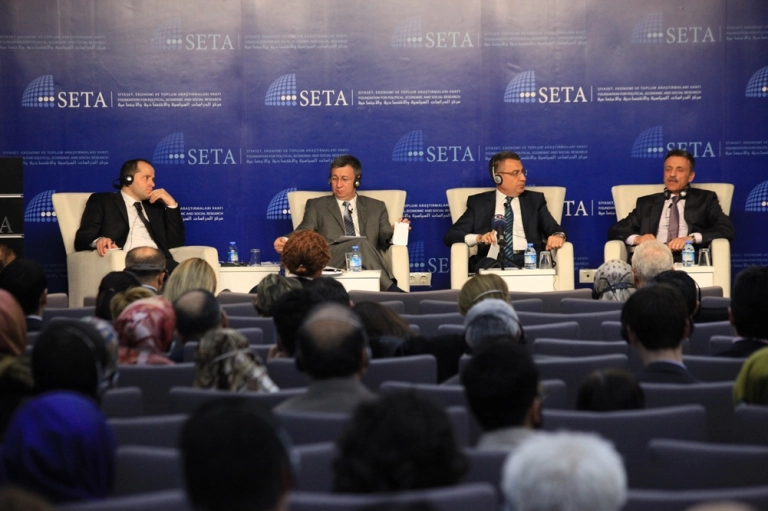
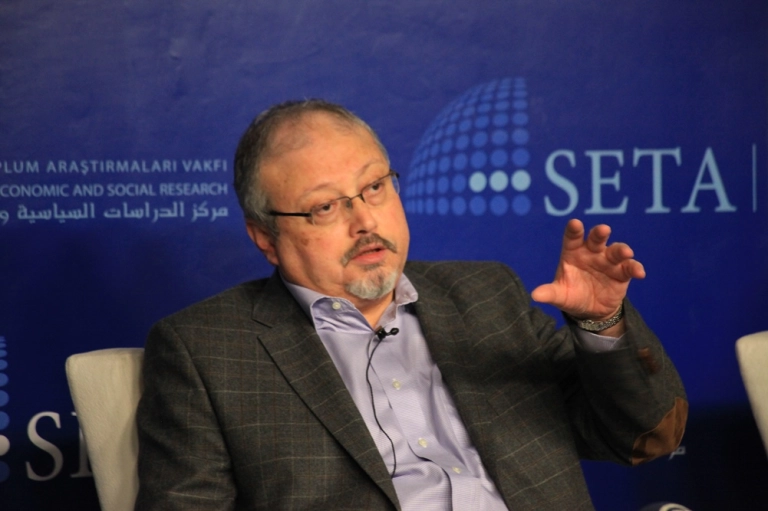
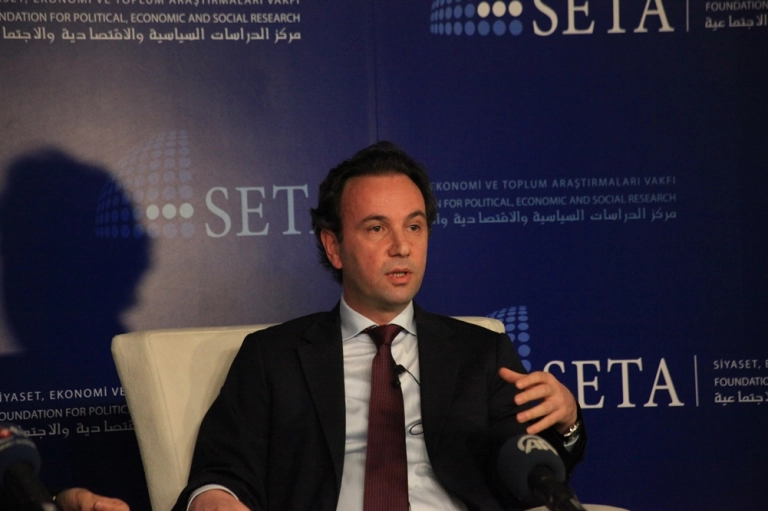
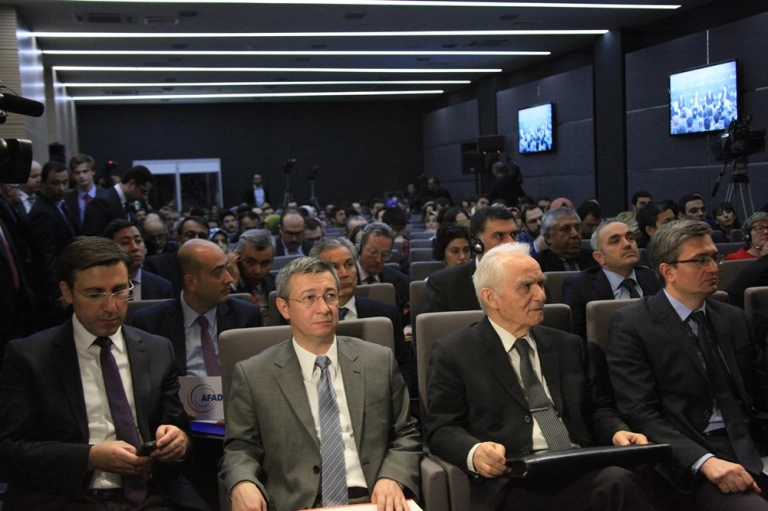
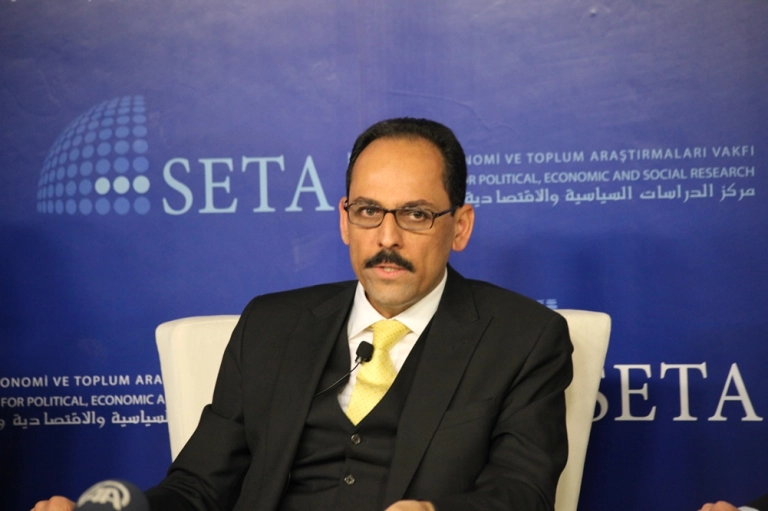
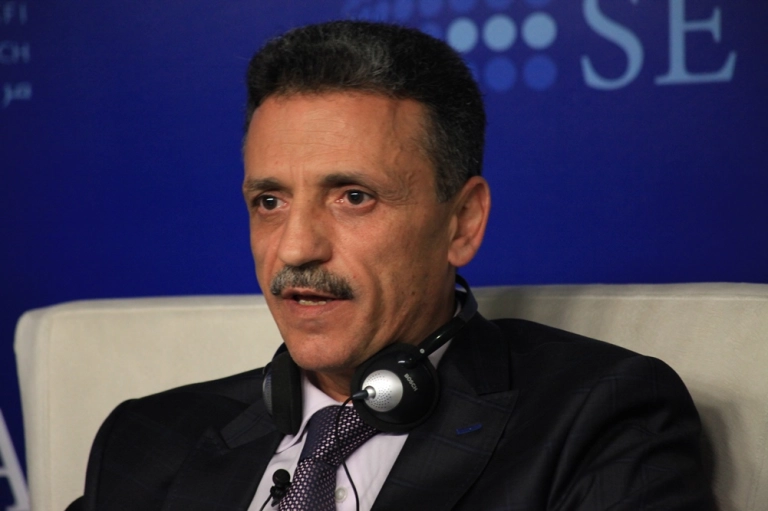
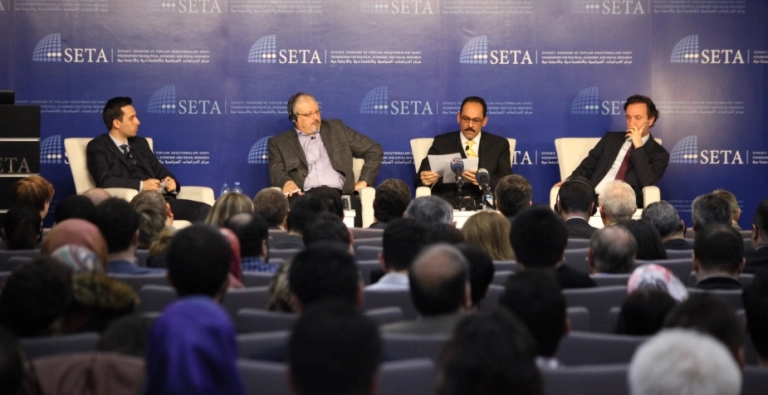
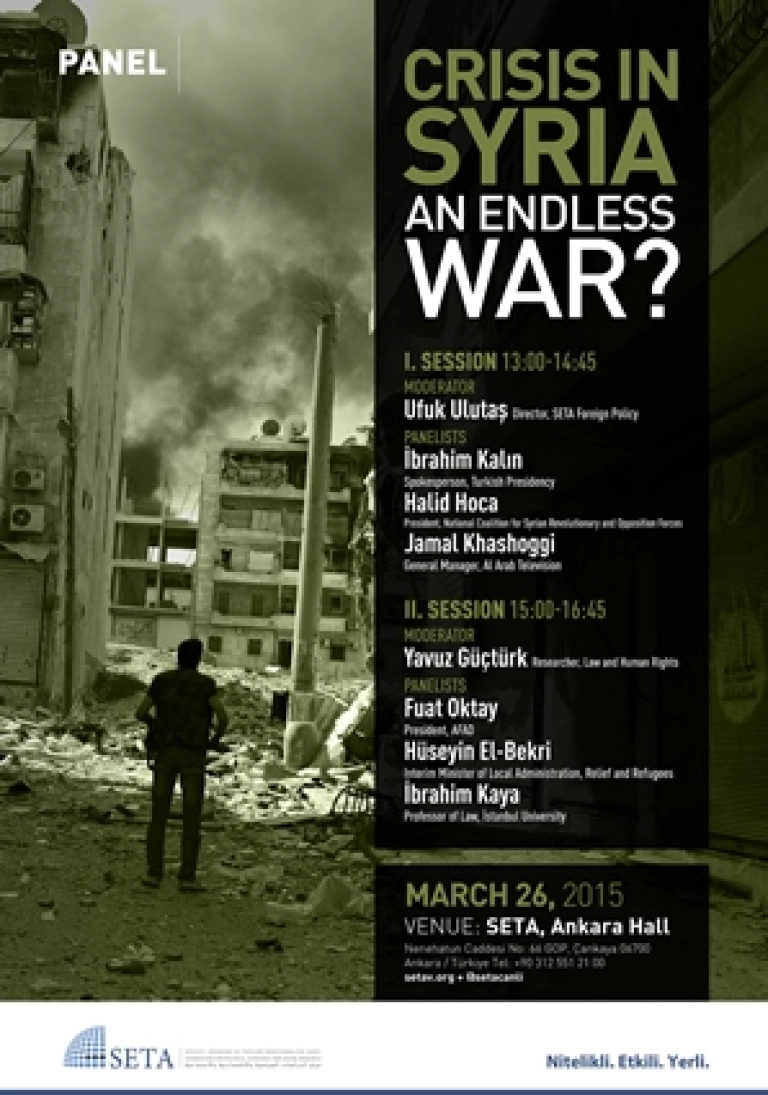
SETA Foundation hosted on March 26, 2015 a panel to discuss the Syrian Crises. The first session of the panel focused on the political aspect of the Syrian Crises while the second session discussed human rights violations and refugee situations. SETA was joined by İbrahim Kalın from the Turkish Presidency, as well as Halid Hoca the president of the National Coalition for Syrian Revolutionary and Opposition Forces, and Jamal Khashoggi the general manager of Al-Arab Television.
The first panelist İbrahim Kalın started the discussion by saying that the conflict in Syria is three dimensional; political, military, and human rights dimension and the international community has not shown enough support any of these matters. Kalın pointed out that from the results of the Geneva conventions it is clear that the international actors have not shown sufficient effort to put an actual end to the Syrian Crises. He highlighted the fact that the international community reacted militarily against ISIS but has failed to stop the Syrian regime from massacring his people. Kalın said that Turkey on the other hand did not remain silent towards the Syrian crises, both from political and humanitarian aspect, Turkey has spent 5 billion dollars as expenditures to support the Syrian refugees, and it currently hosts over 2 million refugees. During the Kobani Crises, Turkey hosted around 180 thousand refugee in one week, this clearly resembles Turkey’s humanitarian stand on this issue.
The second panelist Halid Hoca said that Bashar Al-Assad has reached a level where he is now targeting members of his own regime. People from within the regime were tortured and killed in Daraa, 15 of them were officers. In terms of zones of influence, Hoca stated that the Regime currently controls around 70 thousand km2, ISIS hold around 70 thousand km2 as well, the Free Syrian Army holds control of 17 thousand km2, and the Kurdish fighting forces(PKK) controls around 17 thousand km2. Hoca argues that if this segregation further expands, then civil war would become inevitable. He also pointed out to the chemical attacks, and said that the Assad Regime crossed the red lines of the United States by using chemical weapons in 2013. After submitting part of these weapons, he was granted a green light to continue in massacring the Syrian people, and the regime started using fluorine gas instead of siren gas in its chemical attacks. Hoca also noted that during the Kobani crises, the international community gave excessive aid and support to the Kurdish forces in an unprecedented way and gave them an advantage over the opposition.
The third panelist Jamal Khashoggi began by saying few words about the latest events in Yemen. Saudi Arabia had two goals behind the operation, first is to cripple the Houthi invasion of Yemen, and second is to stop Iran’s expansion in the area. Then he moved on to discuss Saudi Arabia’s point of view on Syria. Syria has strategic importance to Saudi Arabia, and the continuation of the war is a threat to everybody because it destabilizes the region. Khashoggi clarified why Saudi Arabia reacted fast in Yemen and not in Syria because the success ratio in Yemen is much higher than in Syria due to the fact that the opposition in Yemen is the government itself, while that is not the case in Syria. Another way to put an end to the Syrian Crises would be to boost Turkish and Saudi Support to the opposition in terms of military logistics and weaponry. In this regards, Jamal khashoggi said that: “If they have their own Qasem Soleimani, then we should have our own as well.” In his perspective, what happened in Yemen would encourage such move to happen somewhere else. There is a change in the foreign policy of Saudi Arabia; the operation “Storm of Resolve” put an end to Saudi Arabia’s reluctance. Only Turkey and Saudi Arabia can stop the decaying of the Middle East.